

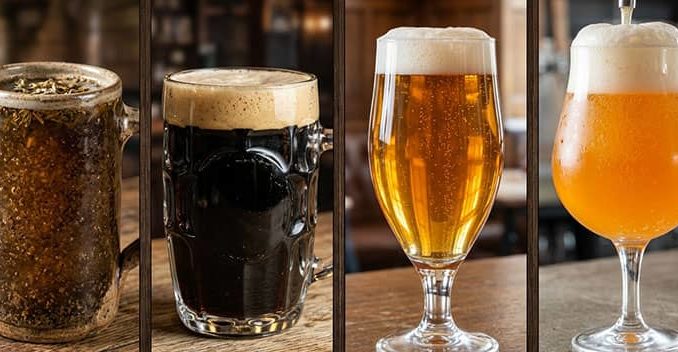
From medieval alewives stirring wooden mash tuns to modern craft pioneers experimenting with wild yeasts, the United Kingdom holds an undeniable, centuries-old devotion to the humble pint. Pub culture is brewed directly into the nation’s social fabric. It is a shared heritage built upon dark taverns, cobbled streets, bustling brewing fairs and massive gatherings like the Great British Beer Festival, where thousands assemble to celebrate the art of fermentation and worship at the alter of the bar, along with the odd drunken confessional to mates or the barman.
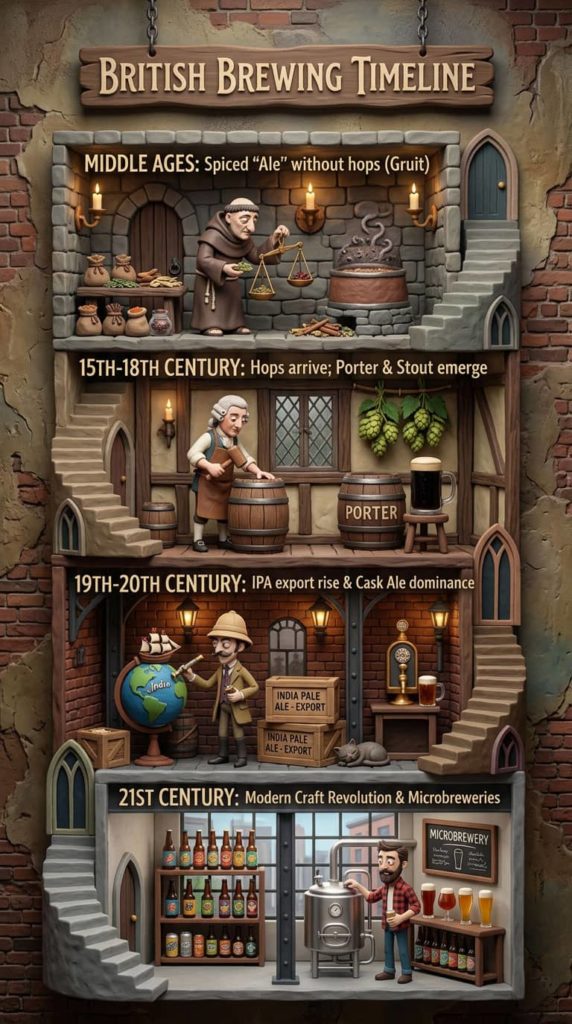
Across the ages, drinking habits have evolved dramatically. In the medieval era, unhopped ale served as a daily nutritional staple, primarily popular because it was safe to drink compared to local water sources. The introducing of Flemish hops in the 15th century transformed the industry, giving birth to long-lasting beers. Industrial innovation brought dark Porters and Stouts to the working classes of London, followed by pale, hop-forward IPAs shipped across the British Empire. Today, British beer sits at an exciting crossroads where centuries of cask conditioning meet modern, boundary-pushing craft techniques.
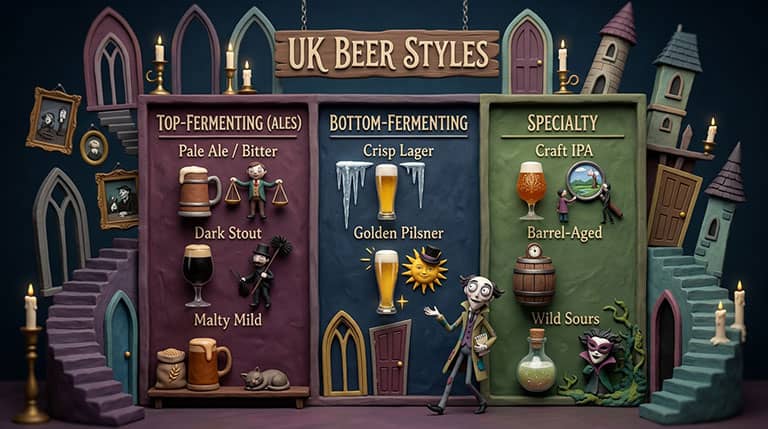
1. The spectrum of British Beer Styles
Britain produces a remarkably broad selection of distinct brewing styles, each defined by specific fermentation profiles, malt bills and hopping techniques.
2. Classic Ales: Five Standout UK Pints
Traditional British ale is top-fermented at warmer temperatures, producing rich, ester-driven flavours ranging from toasted caramel to subtle stone fruit.
| ALE | BREWERY | CHARACTER |
| London Pride | Fuller’s | Malty balance, marmalade |
| Landlord | Timothy Taylor’s | Classic Pale Ale, floral |
| Doom Bar | Sharp’s Brewery | Amber ale, delicate hop |
| Directors | Courage | Rich, fruity, spicy |
| Pedigree | Marston’s | Oak cask, earthy hop |
3. British Lagers: Crisp, Cold and Refreshing
Bottom-fermenting yeast aged at cold temperatures delivers the clean, refreshing character that defines Great British lagers.
| LAGER | BREWERY | CHARACTER |
| Tenant’s Lager | Tennent’s | Crisp, classic lager |
| Lost Lager | BrewDog | Pilsner style, citrus |
| Hells Lager | Camden Town Brewery | Helles/Pilsner hybrid |
| Carling | Molson Coors UK | Light, clean, pale |
| Whitstable Bay Lager | Shepherd Neame | Continental style, crisp |
4. Dark and Decadent: Five British Stouts
Born out of the London porter tradition, stouts utilise heavily roasted barley to craft pitch-black brews with intense dark-chocolate and coffee depth.
| STOUT | BREWERY | CHARACTER |
| Black Cab Stout | Fuller’s | Roasted malt, chocolate |
| Milk Stout | Wiper and True | Creamy, sweet, velvety |
| Obsidian Stout | Anarchy Brew Co | Espresso, dark cacao |
| Dragonhead | Orkney Brewery | Smoky, rich, spicy |
| Jet Black Heart | BrewDog | Oatmeal stout, vanilla |
5. Mild Ale: The Understated Heritage Classic
Low in bitterness with a gentle malt-forward accent, Mild is one of Britain’s oldest working-class styles, historically drunk by miners and industrial workers.
| MILD | BREWERY | CHARACTER |
| Ruby Mild | Sarah Hughes | Dark, strong, sweet |
| Black Country Mild | Pardoe’s | Nutty, caramel, smooth |
| Dark Mild | Bank’s | Easy-drinking, toasty |
| Maggs Leap | Moorhouse’s | Malty, dark chocolate |
| AK 1911 | McMullen’s | Historic light mild |
6. India Pale Ale: Hops Across the Empire
Originally brewed extra-strong with heavy hop loads to survive long sea voyages to India, the British IPA is a cornerstone of global beer history.
| IPA | BREWERY | CHARACTER |
| Jaipur | Thornbridge | Citrus, resinous, punchy |
| Proper Job | St Austell Brewery | Peppery, piney, bold |
| Bengal Lancer | Fuller’s | Traditional, floral |
| Punk IPA | BrewDog | Tropical fruit, bright |
| White Shield | Worthington’s | Bottle-conditioned, dry |
7. Traditional Beers: Heritage Pints
Broadly encompassing historic bitters, brown ales and strong export ales, these traditional beers form the backbone of British pub culture.
| BEER | BREWERY | CHARACTER |
| Newcastle Brown Ale | Heineken UK | Nutty, sweet caramel |
| Old Speckled Hen | Morland / Greene King | Toffee malt, smooth |
| Bishop’s Finger | Shepherd Neame | Strong Kentish ale |
| Taddy Porter | Samuel Smith’s | Historic, rich, woody |
| Broadside | Adnams | Fruitcake, dark ruby |
8. Craft Beer: Modern Innovation
The modern UK craft beer movement blends traditional British styles with experimental ingredients, bold hopping regimes and innovative brewing science.
| CRAFT BEER | BREWERY | CHARACTER |
| Faith | Northern Monk | Hazy pale ale, mango |
| Table Beer | The Kernel Brewery | Low ABV, high flavor |
| High Wire Tropical | Magic Rock Brewing | Mango, passionfruit |
| Pulp IPA | Verdant Brewing Co | Juicy, hazy, thick |
| Steady Rolling Man | Deya Brewing Company | Soft, pillowy, tropical |
9. Food Pairings, Health Considerations and Responsible Drinking
Matching beer with food enhances both the dish and the drink. Rich stouts pair seamlessly with oysters, chocolate desserts or blue cheese, while crisp lagers cut through spicy curries. Classic ales and bitters are natural companions to hearty pub food like fish and chips, steak pies and Sunday roasts.
PAIRING GUIDE
BEER STYLE & BEST FOOD MATCH
- Stout / Porter with Oysters, dark chocolate, stilton cheese
- Crisp Lager with Spicy curries, fish and chips, tacos
- Pale Ale / Bitter with Sunday roast beef, meat pies, cheddar
- Hazy Craft IPA with Fried chicken, tangy burgers, spicy dishes
From a health perspective, moderate beer consumption provides trace amounts of minerals, including dietary silicon which aids bone density, and dietary iron derived from unrefined dark malts. Dark stouts and porters, in particular, contain minor levels of bioavailable iron alongside antioxidant polyphenols from barley and hops.
However, moderation remains essential. UK health guidelines recommend that men and women consume no more than 14 units of alcohol per week, spread across three or more days. Excessive drinking carries serious risks, including liver disease, cardiovascular issues and heightened risk of long-term health complications. Enjoying beer responsibly ensures that the British pub tradition remains a safe, enjoyable part of social life.
Celebrating the British Pint
Great British beer is far more than an alcoholic drink; it is a living history told through yeast, grain and hops. Whether sipping a cask-conditioned bitter in a countryside pub, enjoying a crisp lager in a beer garden or trying a hazy craft IPA at a urban taproom, the variety available across England and the UK remains world-class.
As modern brewing techniques evolve alongside historical traditions, the future of British beer looks brighter than ever. By combining century-old recipes with contemporary creativity, UK brewers continue to produce some of the finest drinks on the planet.
Have Your Say!
What Is Your Ultimate British Pint?
Whether you are a staunch believer in traditional cask-conditioned bitter, a dark stout devotee or a follower of hazy craft IPAs, we want to hear from you! What is your favourite UK brewery, and which pint belongs in the hall of fame? Join the conversation or follow us on facebook, instagram, youtube, TikTok, LinkedIn and X/Twitter or why not submit your own article! Or email at contribute@criticalmatters.net
Discover more about the history and future of cask ale in The Craft Beer Channel’s deep dive into British Cask Ale, or explore the energy of the UK’s biggest beer event in this Great British Beer Festival tour.
What is Beer [Click to find out]
1. Water
- What it is: Pure spring, river, or groundwater.
- Least Processed Form: Untreated natural spring water or well water. Water makes up 90% to 95% of beer, and its natural mineral profile (like the calcium-rich water of Burton-on-Trent or soft water of Pilsen) historically determined what styles of beer a region could brew.
2. Malted Grain (Usually Barley)
- What it is: Whole grain seeds that have been sprouted in water and then dried.
- Least Processed Form: Raw whole barley grains that are soaked to sprout (malting), then air- or kiln-dried.
- Role: The natural enzymes in the sprouted seed convert the grain’s raw starches into simple sugars. These sugars feed the yeast to create alcohol and provide the malt flavor and color.
3. Hops
- What it is: The whole, raw flower (cone) of the Humulus lupulus vine.
- Least Processed Form: Fresh “green hops” picked directly from the vine, or dried whole-cone hops.
- Role: Hops add natural bitterness to balance the sweet malt sugars, impart herbal/citrus/floral aromas, and act as a natural preservative to prevent spoilage.
4. Yeast
- What it is: A single-celled, naturally occurring micro-organism (a fungus).
- Least Processed Form: Wild airborne yeast or cultivated liquid yeast slurry harvested directly from a previous batch.
- Role: Yeast consumes the sugars extracted from the malted grain and ferments them into alcohol and carbon dioxide ($CO_2$).
Historical Note: The Pre-Hop Alternative (Gruit)
Before hops became the universal standard around the 15th century, brewers used Gruit—a mix of unrefined, raw herbs and botanicals like sweet gale (bog myrtle), yarrow, and wild rosemary—to balance the sweetness of the malt and preserve the ale.


Be the first to comment