


For the past half-decade, the global red carpet has seemingly devolved into a wearying parade of hyper-exposed desperate click-bait stunts calculated purely to boost publicity. However, May 2026 has delivered a sharp, much needed and more aesthete correction. Guided by the Met Gala’s radical institutional theme, “Fashion Is Art,” and a relative stepping back sartorial chaos at other events like the Cannes Film Festival, the world’s potent force of female creatives and celebrity muses have pivoted toward a more sophisticated sublime over shock value stitches.
There may be a sensible shift away from fast-viral fashion occurring right now. According to institutional data released by the Metropolitan Museum of Art, the spring 2026 exhibition Costume Art spans nearly 12,000 square feet of the newly inaugurated Condé M. Nast Galleries, pairing roughly 400 objects of fine art directly with historical and modern garments. This academic elevation of the “dressed” body forces attendees to treat fashion not as a marketing billboard, but as an embodied art form. Across the Atlantic, the Cannes Film Festival organisers reinforced this mood by releasing strict guidelines discouraging oversized trains, attention-seeking stunts, and overt street-wear, reminding the cultural elite that fashion is not indexical to overt bombast but can also rise to new heights of elegance and true style. This briefing deconstructs some of the most definitive visual statements of the season. And, while there were so many exceptional designs and talent on show at the Gala we’ve curated our favourites.
The Strategic Fault Lines of 2026 Couture
To accurately dissect this seasonal evolution, our analysis categorises the arrivals across four conceptual paradigms:
- The Sculptural Living Canvas: Looks that rejected traditional draping to treat the human form as a literal three-dimensional piece of sculpture.
- The Historic Archival Revisionists: Muses who bypassed transient trends to engage in direct, scholarly dialogue with fashion and art history.
- The Fluid Jewel Landscapes: Ensembles where the boundaries between high jewellery, heavy metallics, and fabric completely dissolved.
- The Minimalist Power Silhouette: The emerging “armour dressing” that relies on immaculate construction and precise tailoring.
The Architectural Seduction: Tate McRae in Ludovic de Saint Sernin
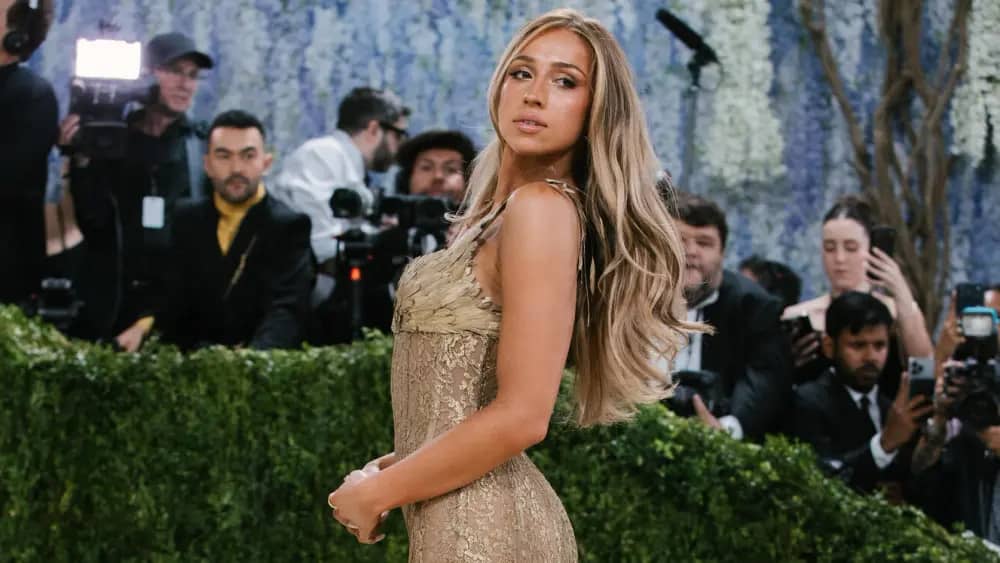
Precision Minimalism Meets Art History
Pop powerhouse Tate McRae stepped onto the red carpet in a custom piece by Ludovic de Saint Sernin that beautifully set the tone for the season’s structural focus. Rather than leaning into the easy theatricality of multi-layered tulle, the design focused on extreme fabric engineering. The gown utilised a sharply defined, asymmetric silhouette that wrapped the form like a modern canvas, balancing sharp angles with fluid motion.
For the modern style observer, this look succeeded by honouring the Fashion Is Art mandate through structural discipline rather than overt historical costume. De Saint Sernin’s creation operated as a piece of wearable minimalism, utilising an elongated neckline and flawless seams to draw the eye up. It was a mature, confident statement proving that the new guard can command a high-art theme without relying on superficial gimmicks.
The Statuesque Devotion: Anok Yai in Balenciaga
The Triumph of the Living Masterpiece
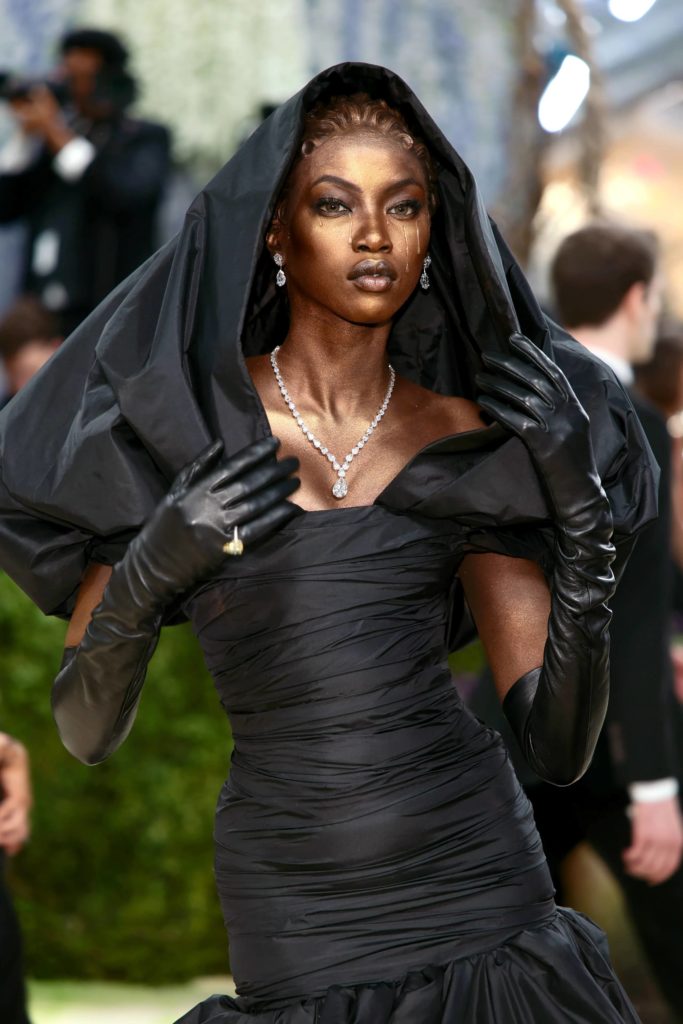
Supermodel Anok Yai delivered what was widely heralded as the emotional peak of the Met Gala, arriving in a custom Balenciaga look designed by Demna. The ensemble drew direct, heavy inspiration from classical depictions of the Mater Dolorosa (Our Lady of Sorrows), effectively transforming the runway icon into a walking religious icon.
The attention to detail was absolute. Yai revealed to Vogue that her transformation required a custom-molded prosthetic hairpiece to achieve a flawlessly smooth, stone-like texture, reinforcing her desire to appear as a physical statue pulled straight from a cathedral niche. The dress featured deep, meticulously crafted drapes that fell around the body with the heavy, calculated gravity of a Baroque marble sculpture, proving that true haute couture can still evoke a sense of genuine reverence.
Legacy Craft: Jisoo in Dior and Cartier
The Authority of the House Codes
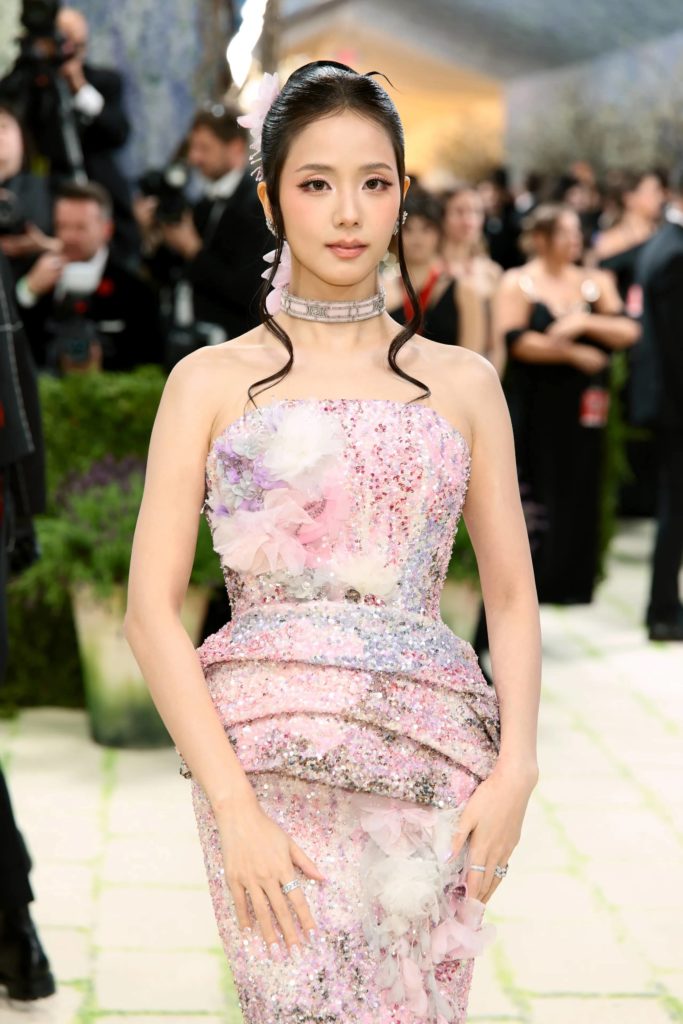
K-pop phenomenon and global style anchor Jisoo arrived representing the pinnacle of traditional French luxury, styled in a custom, structured gown by Dior, elevated by high-profile archival pieces from the Cartier vaults. The look was a calculated exercise in the “clean power silhouette,” relying on rich, structured velvet to create an elongated, statuesque frame that photographed with immense authority.
This appearance served as an important reminder that true artistic value often resides in unseen atelier craftsmanship. The immaculate boning of the corsetry and the precise, architectural framing of the shoulders offered a quiet counter-argument to the night’s more chaotic, animatronic experiments. By letting the flawless cut of the fabric and the brilliance of the Cartier diamonds do the heavy lifting, Jisoo maintained a commanding presence that felt entirely timeless.
The Hollywood Chic: Zoë Kravitz in Yves Saint Laurent
The Power of Edited Restraint
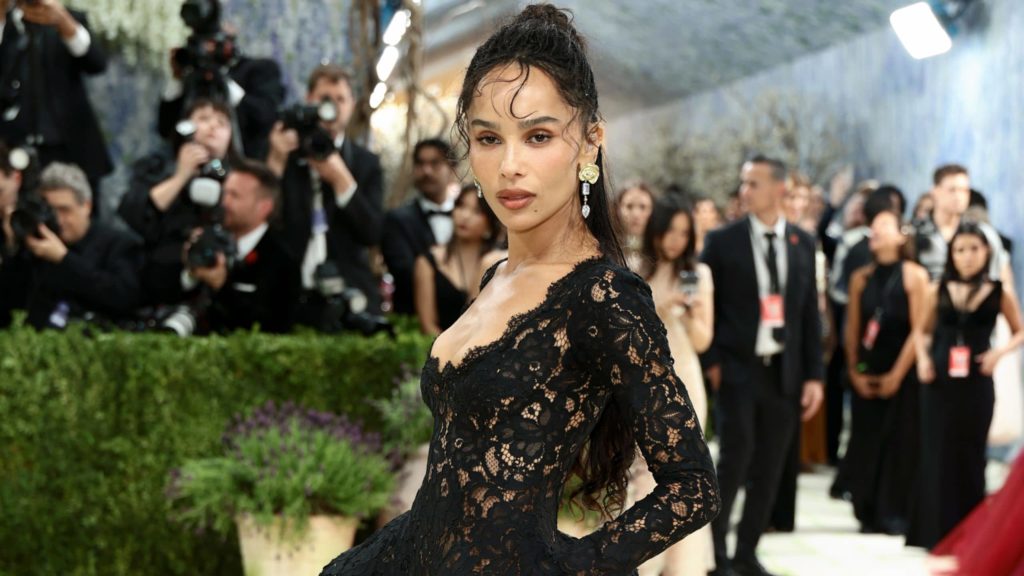
Zoë Kravitz masterfully demonstrated the art of editorial editing, ascending the steps in a sculptural lace column dress from Anthony Vaccarello at Yves Saint Laurent. The gown was a masterclass in texture, utilising dense, intricately woven lace to form a flawless, unbroken second skin that rejected any need for excessive trains or bulky structural undergarments.
While the fashion press scrambled to catch a glimpse of her brand-new, highly discussed Jessica McCormack engagement ring, the real triumph was the dress’s stark, graphic simplicity. Vaccarello’s design relied on a sharp, high-necked silhouette that allowed the natural texture of the fabric to provide the visual narrative. It was an edgy, matter-of-fact look that cut through the noise of the evening with effortless coolness.
Quick Silver The Art of Movement: Teyana Taylor in Tom Ford
Teyana goes full Kinetic Art on the Red Carpet
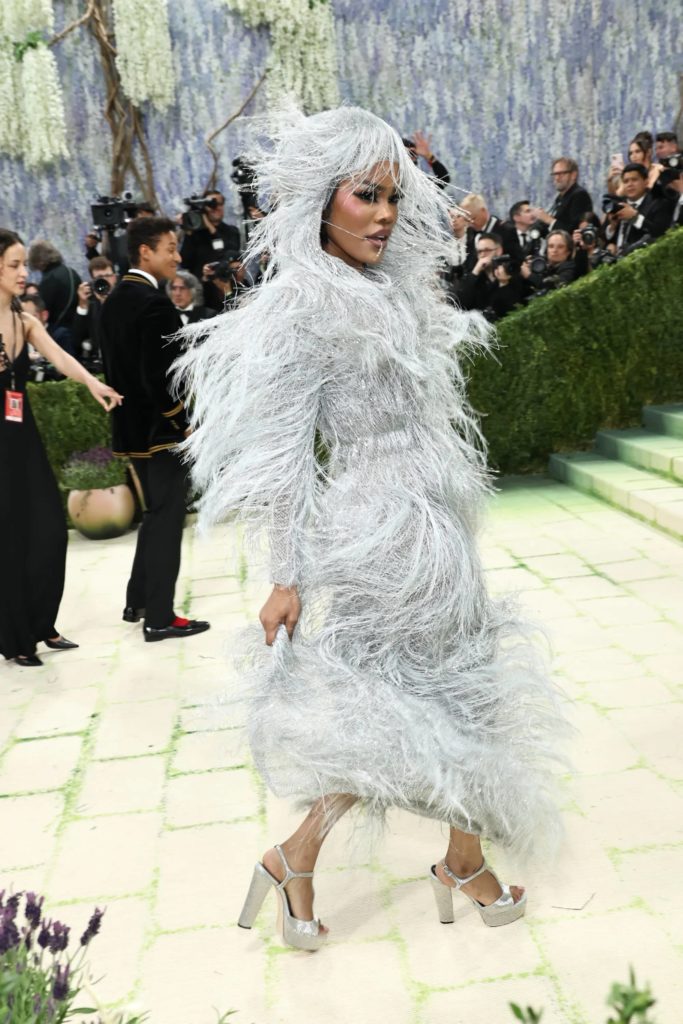
Multi talented Teyana Taylor brought kinetic sculpture to the steps, committing to a head-to-toe silver look from the house of Tom Ford. The garment was a brilliant interpretation of the living canvas theme, constructed with thousands of individual metallic strands that shifted shape, caught the light, and re-formed with every single step she took up the stairs.
The visual effect was mesmerising, creating the illusion of pure motion bringing real energy to the red carpet. Taylor’s performance background allowed her to maximise the garment’s design, transforming a traditional award-season silhouette into a dynamic piece of performance art. It was a playful yet undeniably powerful statement that perfectly balanced commercial glamour with avant-garde execution.
The Modern Romantic: Daisy Edgar-Jones in Alexander McQueen and Boucheron
Navigating the New Era of British Design
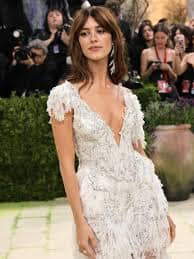
British actress Daisy Edgar-Jones championed the new creative direction of Alexander McQueen, arriving in a sharply tailored, romantic gown that perfectly matched the season’s shift toward simplicity yet with infinite attention to detail. The dress paired a cinched, structured bodice with fluid fabric draping, creating an intriguing tension between ethereal strength and vulnerability.
Elevated by architectural jewellery pieces from Boucheron, the look was an intentional nod to the historic, boundary-pushing legacy of British fashion design. The intricate, hand-stitched detailing across the torso echoed the anatomical themes featured heavily in the museum’s Costume Art exhibition, proving that new creative leadership can successfully honour a house’s radical roots while maintaining high-street relevance. A shame there was not a larger picture.
The Deconstructed Maternity: Adwoa Aboah in Simone Rocha
Challenging the Boundaries of the Dressed Body
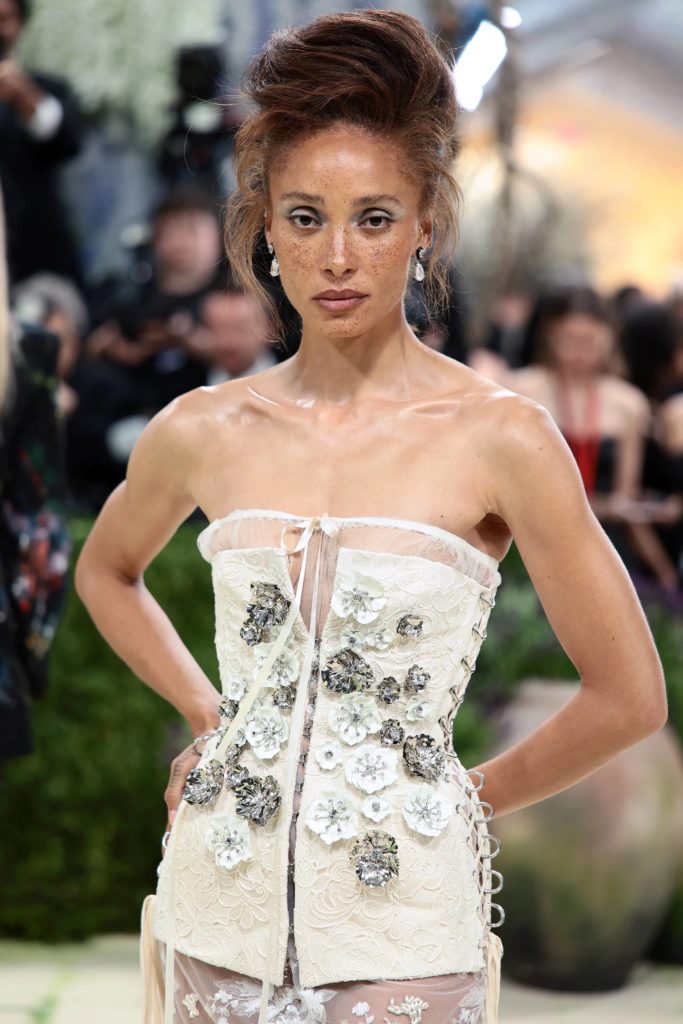
Model and activist Adwoa Aboah delivered one of the most conceptually challenging looks of the night, wearing a custom, multi-layered tulle and taffeta creation by London-based designer Simone Rocha. The look was a direct, aligning perfectly with the museum’s goal of highlighting art and creativity coupled with the designers delicate treatment of fabrics adorned a beautiful figure.
Rocha’s design bypassed standard eveningwear shapes in favour of an exploded, deconstructed silhouette that utilised composition, adornments, areas of interest and texture to frame the body. It was a exemplary choice that sparked immediate discussion across social platforms, successfully elevating the red carpet from a simple glamour runway into a provocative space for artistic self-expression.
The Hand-Sewn Goddess: Laura Harrier in Di Petsa
Reviving the Classical Hellenistic Fluidity
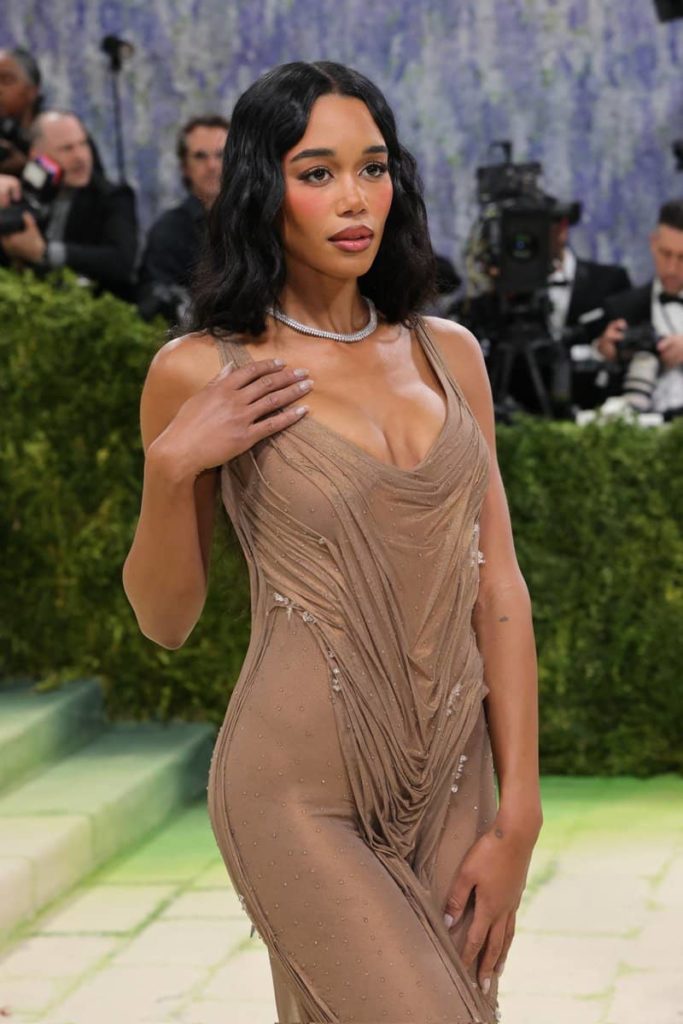
Actress Laura Harrier leaned heavily into classical antiquity, collaborating with Greek designer Di Petsa to deliver an immaculate, wet-look goddess gown. The piece was an incredible display of manual craftsmanship; Harrier was meticulously sewn into the fluid, white textile by hand just hours before arriving at the venue, completely eliminating the need for traditional zippers or fasteners.
The resulting garment perfectly mimicked the wet-drapery techniques found in ancient Greek marble masterpieces, such as the Winged Victory of Samothrace. By treating the fabric as a fluid medium that clung precisely to the human form, the look bridged the gap between ancient sculpture and modern garment engineering, earning a well-deserved spot on the evening’s best-dressed list. The result was akin to a second skin more like to skin itself.
The Cinematic Tribute: Sabrina Carpenter in Dior and Chopard
Celluloid Glamour on the Museum Steps
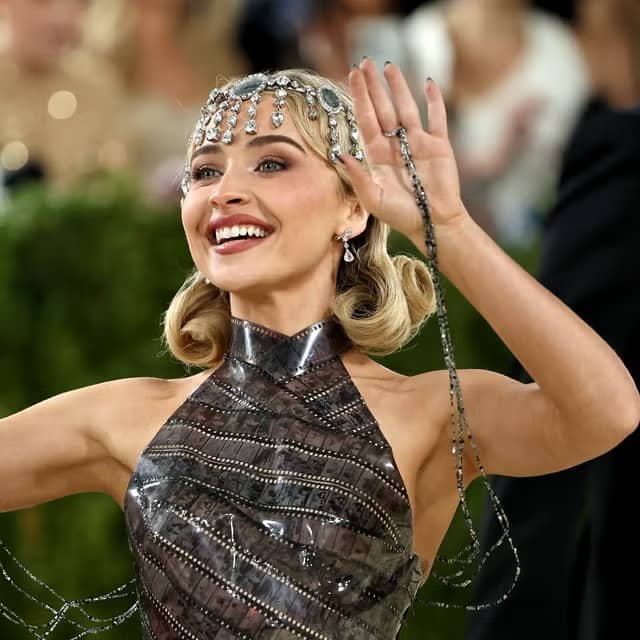
Pop sensation Sabrina Carpenter brought a clever touch of cinematic wit to the Metropolitan Museum, uniting with the house of Dior for a custom gown that appeared to be constructed entirely from old, repurposed celluloid film strips. The structural ballgown silhouette featured a fitted bodice that erupted into a massive, architectural skirt made from woven, dark film reels that caught the flashing cameras with a distinct, glossy sheen.
The look was a deliberate, clever, layered homage to Hollywood history, referencing old film archives while maintaining a hyper-modern, pop-star energy. Accompanied by exceptional diamonds from Chopard, Carpenter managed to balance high-art theatricality with genuine high-fashion execution, proving that conceptual dressing can still be incredibly chic when backed by a flawless fit. The garments were worn with such energy that was a great coupling between theme, concept embodied effortlessly by Sabrina.
The Golden Age of Glamour: Suki Waterhouse in Michael Kors and Boucheron
The Return of Decadent Liquid Metallics
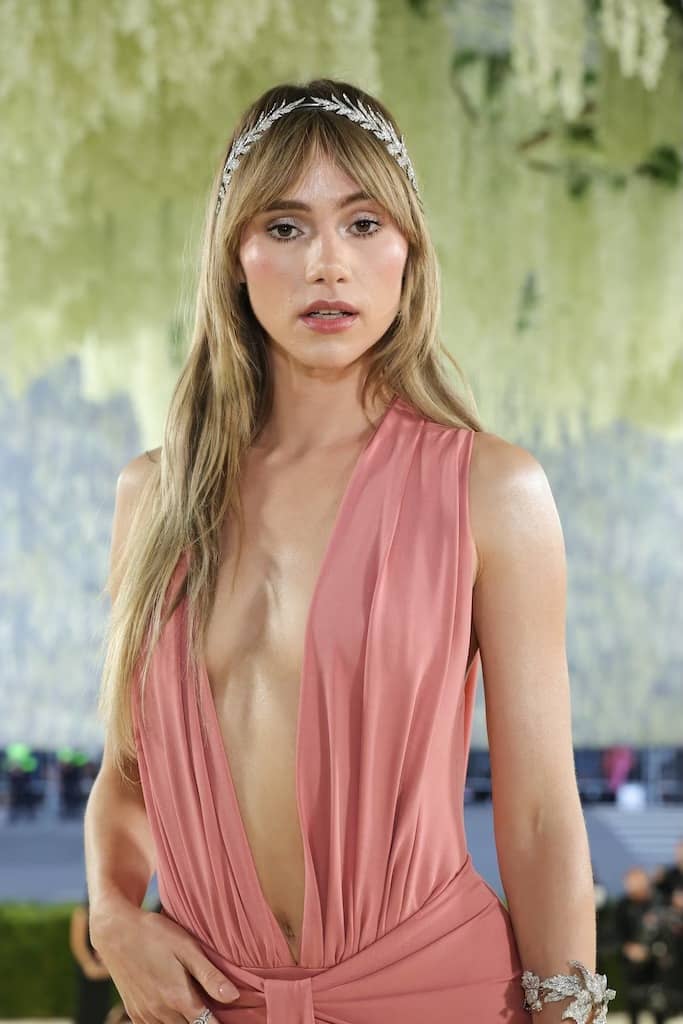
Suki Waterhouse brought old-school cinematic opulence to the forefront, wearing a refined classic garment in a peach pink hue. The dress was a stunning nod to the glamorous screen sirens of the 1930s, featuring a beautiful laurel wreath tiara, truly enigmatic.
The look embraced a sense of superlative luxury that felt perfectly calibrated for an international arts festival. By prioritising impeccable light fabric weight and accentuating the flawless figure left by standers looking – as if – at a classical sculpture in relief.
The Cyber Sculpture: Hoyeon in Louis Vuitton
Merging Traditional Tailoring with Sci-Fi Asymmetry
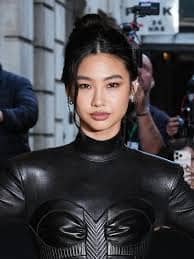
Global actress and model Hoyeon brought a distinct, forward-looking energy to the circuit, wearing a sculptural dress custom-designed by Nicolas Ghesquière for Louis Vuitton. The look was a combination of proportions with a figure hugging upper body, coupled with unique treatment of the hips and low torso returning to a compact and elegant finish around the legs. The brief was definitely met with a combination of drama on the red carpet modelled perfectly.
The garment succeeded by directly mirroring the “Anatomical Body” themes explored inside the new Condé Nast Galleries. Ghesquière’s precision tailoring mapped out the lines of the body with technical, almost military-grade accuracy, offering a cool, matter-of-fact vision.
The Power Couple Coalition: Russell Wilson and Ciara
The Architectural Harmony of Duo Styling
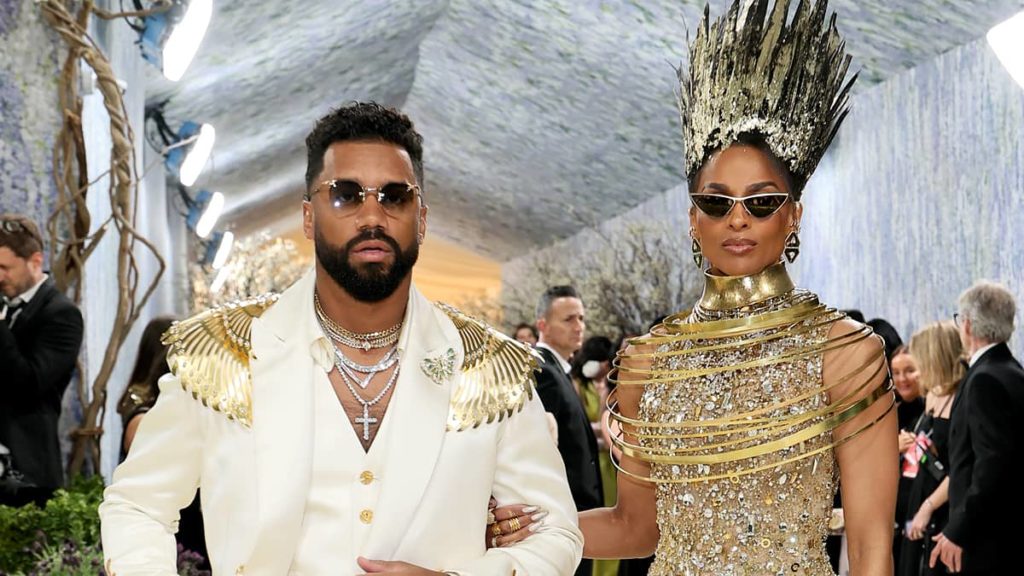
Power couple Russell Wilson and Ciara delivered a masterclass in coordinated red-carpet presentation, arriving in perfectly balanced, complimentary tailored ensembles that emphasised the season’s focus on structured restraint. Wilson donned a sharp, clean-lined tuxedo that subverted traditional proportions, while Ciara stunned in a sweeping, architectural column gown that focused entirely on form and silhouette. The look was inspired by historical nods to ancient times of dynastic elegance and Egyptian Pharaohs. Ciara wore a gold gown designed by Celia Kritharioti, while Russell’s ivory and gold suit was designed by Brandon Blackwood.
The strength of the presentation resided in its absolute lack of superficial decoration. By abandoning chaotic patterns and excessive embellishments, the duo allowed the clean, graphic lines of their garments to create a striking visual harmony. It was a professional, highly sophisticated performance that proved that red-carpet impact is often achieved through strict editing and mutual aesthetic alignment.
The Surrealist Flame: Lisa in Robert Wun and Bulgari
The Intersection of Haute Couture and Fine Art

Global pop icon Lisa made a show-stopping arrival in an extraordinary, avant-garde creation by independent designer Robert Wun, elevated by historic, multi-million-pound high jewellery from Bulgari. The see through sheer elements left an other worldly statement-piece of wearable art, designed to appear as if the edges of fabric came from the heavens of another world. The iconic and signature statement was that of the four hands evoking once again a nod to Thai culture and pantheons.
Wun’s signature execution provided a brilliant interpretation of the Fashion Is Art theme, treating the fabric with the precision of a master craftsman working the delicate lines between a dramatic visual story, concept and adornment of the young star who wore it.
The Playful Avant-Garde: Joey King in Miu Miu
The Youthful Defiance of the New Guard
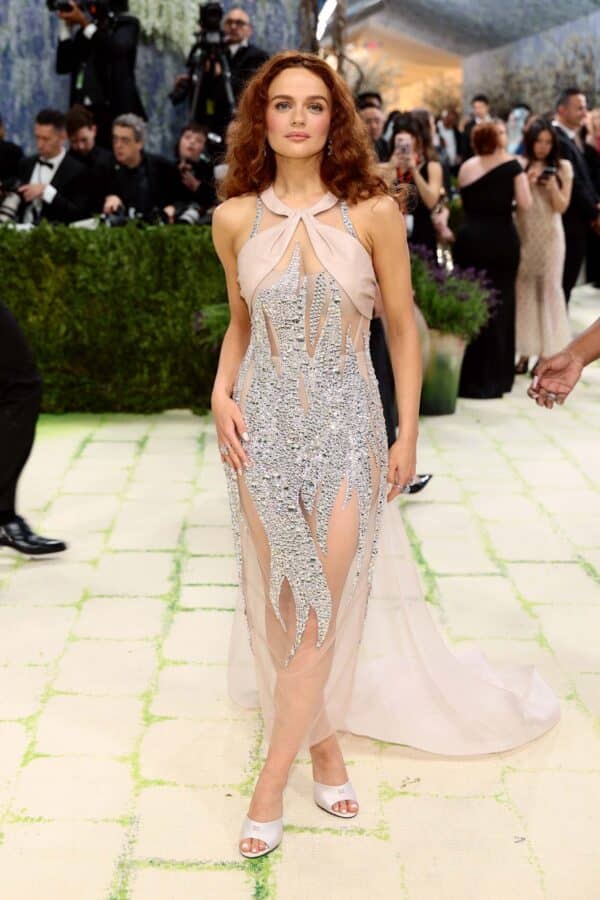
Actress Joey King brought a hip, youthful irreverence to the carpet, wearing an eclectic, sixties-inspired structured shift dress from Miu Miu. The garment was a triumph of detail where meets beauty meets elegance and vibrant ideation. The garment draws attention to the figure subtly and not overdone. The shapes of what can be described as metallic flames licking down from the mid hip region to the knee left the viewer with intrigue that was tastefully executed.
The look worked by offering a playful, slightly rebellious alternative to the night’s heavy, floor-sweeping goddess gowns. Miu Miu’s signature focus on subverted retro glamour felt fresh and perfectly calibrated for a modern, informed audience, proving that high art can possess all the things a great garment should have desire, glamour and charm without losing its high-fashion integrity.
The Crystalline Skeleton: EJAE in Swarovski
The Dissolution of Fabric into Pure Light
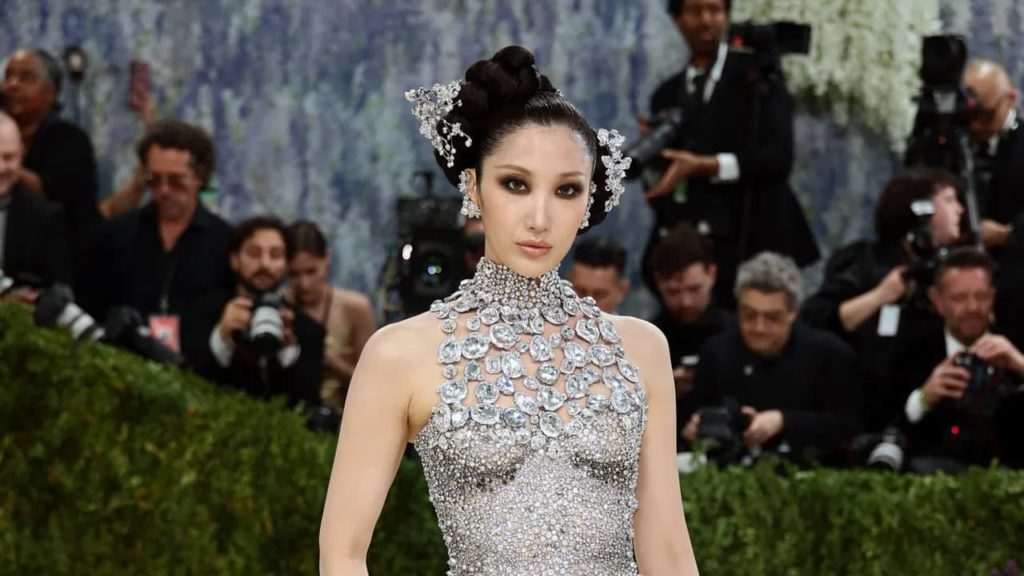
EJAE made a striking red-carpet statement, arriving enclosed in an extraordinary, custom bejewelled sculpture truly dazzling with what looked like an almost infinite array, hyper-faceted Swarovski crystals. The garment completely abandoned traditional textiles, using structural wire networks to float the stones directly across the contours of the body. For execution alone the dress is standalone, but when coupled with the enigmatic yet intense look and dark eye make up contrast brought out both the beauty of the wearer and dress.
The look operated as a literal extension of the museum’s “Anatomical Body” exhibit, mapping out the human skeletal structure in pure, refracting light. It was a daring, high-risk fashion choice that required immense physical discipline to wear, transforming the red carpet into a brilliant gallery space for experimental material design.
The Baroque Rebellion: La La Anthony in Wiederhoeft and Jimmy Choo
Merging Historical Intricacy with Modern Edge
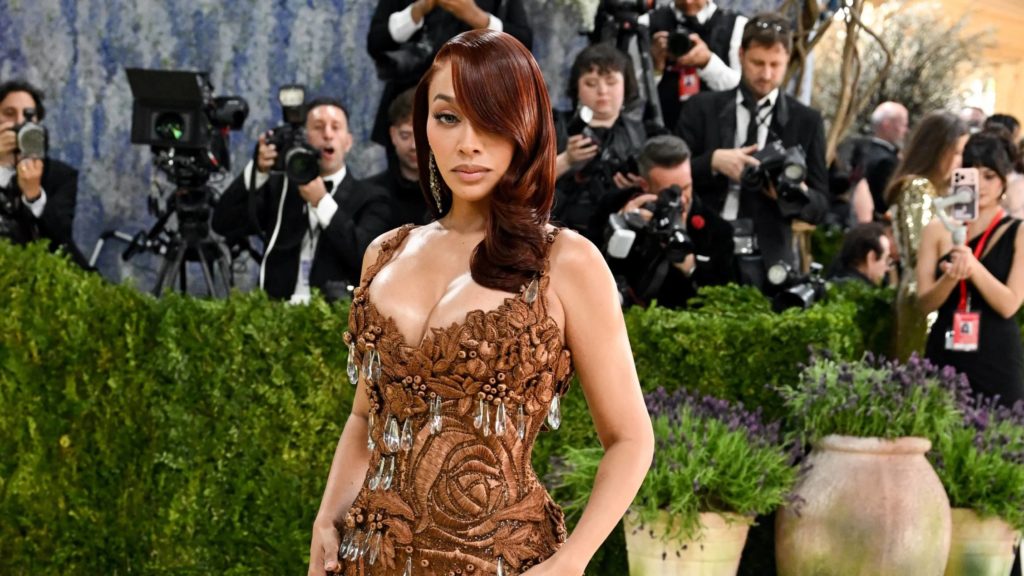
Media personality La La Anthony leaned into the surrealist spirit of the season, wearing a demure, and refined, tightly corseted drop-waist ballgown by rising American couturier Wiederhoeft, paired with sleek, modern footwear. The dress featured decorative embossing and a three dimensional quality. The autumnal hues coupled with the flawless hair, evoked ‘Jessica Rabbit’ in the best possible way, a seemingly effortless art-deco style that was worn to perfection.
Wiederhoeft’s design succeeded by taking traditional stitching and lacing techniques and elevating them directly into twentieth-century.
The Metamorphosis: Emma Chamberlain in Mugler and Chopard
The Dark Romanticism of Living Art
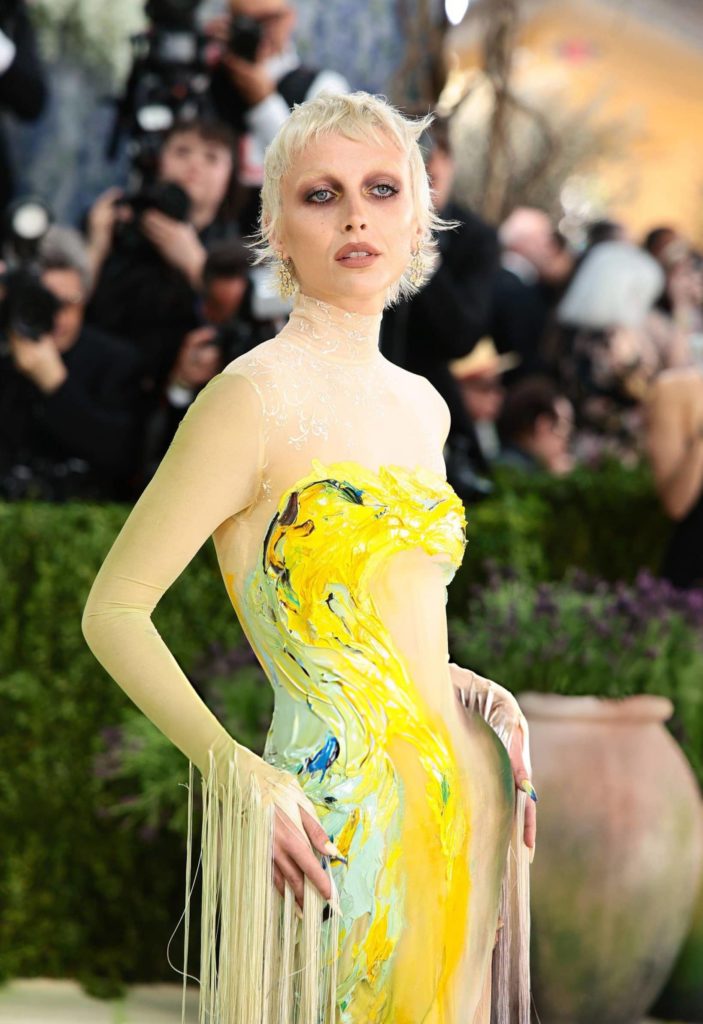
Red-carpet fixture Emma Chamberlain delivered a dark, poetic masterpiece, wearing a custom Mugler creation by Miguel Castro Freitas. The gown drew heavy inspiration from the house’s legendary 1997 archival collections, featuring an intricate, hand-painted design that resembled the textured, organic layers of a wilting chrysalis or a butterfly wingspan. There are very strong organic and natural themes of the kind of beauty and form that only occurs in nature and fine art. From expressionist painting, to impasto to colours of flowers or butterflies, its a technical triumph yet minimal and very well modelled.
The look was a perfect embodiment of the Fashion Is Art ethos, blurring the line between nature and high-fashion tailoring. Backed by exceptional, deep-hued gemstones from Chopard, Chamberlain managed to bring a sophisticated, slightly gothic mood to the steps, showing a deep maturity and understanding of fashion history that captivated both photographers and critics.
The Trompe L’oeil Canvas: Isla Johnston in Loewe
The Intellectual Playfulness of Modern Surrealism
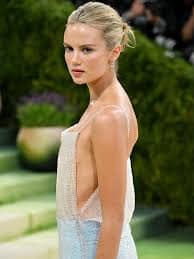
Rising British actress Isla Johnston made an unforgettable Met Gala impression, wearing a combination of trousers and dress on top. Designed by Jonathan Anderson for Loewe. Where art is concerned this was pure minimalism and executed with much attention to detail and layering of fabric. The colour palette was light and futuristic and the tied back hair of Isla Johnston revealed an exceptional décolletage in a classic high fashion style evoking in my mind the 80s reimagined for the 21st century.
Anderson’s design was an intellectual triumph that engaged directly with the core themes of the spring exhibition. It was an ultra cool, chic statement that solidified Johnston’s status as a serious fashion muse to watch.
The Californian Monument: Venus Williams in Swarovski
Personal Narrative Meets Monumental Sculpture
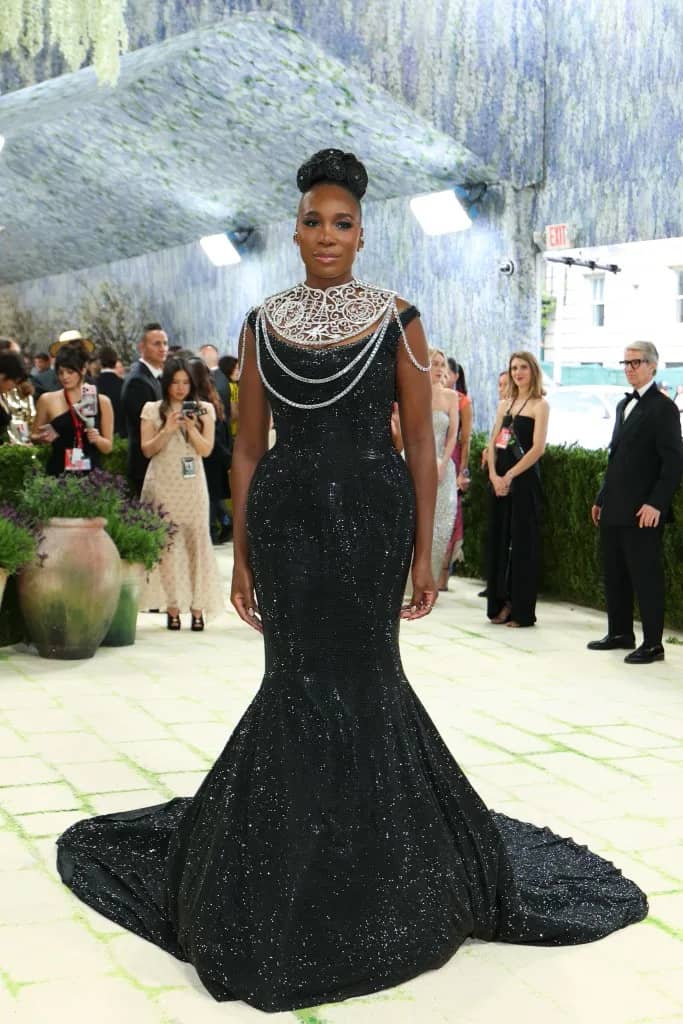
Tennis legend and Met Gala co-chair Venus Williams closed out the definitive statements of the season, arriving in a monumental, custom-sculpted gown engineered in collaboration with Swarovski. The central feature of the dress was a massive, architectural crystal neckplate that Williams custom-designed herself, incorporating distinct symbols representing her personal history and Californian roots.
Among the gleaming, intricate patterns, keen-eyed observers could spot a distinct silhouette referencing Los Angeles’ iconic Watts Towers—a brilliant, highly personal wink to outsider art history. The dress paired this rigid, shimmering jewelry sculpture with clean, structural draping, ensuring that the legendary athlete stood as a powerful, self-determined monument to modern black excellence and high-art design.
Ultimately, the high-fashion arrivals of May 2026 prove that the era of empty red-carpet spectacle has reached its logical conclusion. The brilliant curation of the Metropolitan Museum’s Costume Art exhibition, combined with the disciplined, protective rules implemented on the coast of Cannes, has successfully forced the global fashion industry to rediscover its core integrity. The most successful style icons of the season succeeded not by screaming for attention through cheap exposure, but by engaging in a serious, creative dialogue with wit, couture, art history and artisan craftsmanship.
For an informed public, this shift represents a welcome return to genuine creativity. When fashion is treated as an embodied art form rather than a quick social media asset, the results are mesmerising—generating dynamic performance pieces like Teyana Taylor’s silver motion, deep conceptual statements like Isla Johnston’s Loewe dress, and timeless monuments like Anok Yai’s Balenciaga sculpture. As the industry moves forward through 2026, the lesson is clear: in a world saturated with fleeting digital images, true luxury and lasting cultural impact belong to precision, editing, and the absolute mastery of form.
Verified Facts
- Met Gala 2026 Theme & Curation: The 2026 Met Gala took place on Monday, May 4, 2026, celebrating the opening of the Costume Institute’s spring exhibition, Costume Art, housed in the new 12,000-square-foot Condé M. Nast Galleries at the Metropolitan Museum of Art.
- Exhibition Composition: The Costume Art exhibition features nearly 400 objects from the museum’s permanent collection, explicitly organising garments alongside historical artworks across universal bodily themes including the “Naked Body” and the “Anatomical Body.”
- 2026 Gala Leadership Co-Chairs: The official co-chairs for the 2026 fundraiser event alongside Anna Wintour included global superstar Beyoncé, legendary actress Nicole Kidman, and tennis icon Venus Williams.
- Cannes 2026 Regulations: The Cannes Film Festival organisers released strict red-carpet regulations for May 2026, including specific prohibitions on oversized trains, naked dresses, and orchestrated viral stunts to refocus attention on cinematic presentation.
- Anok Yai Balenciaga Collaboration: Model Anok Yai confirmed to Vogue that her custom Balenciaga look required a custom-molded prosthetic headpiece to mirror the historic, smooth textures of classical cathedral statues.


Be the first to comment