

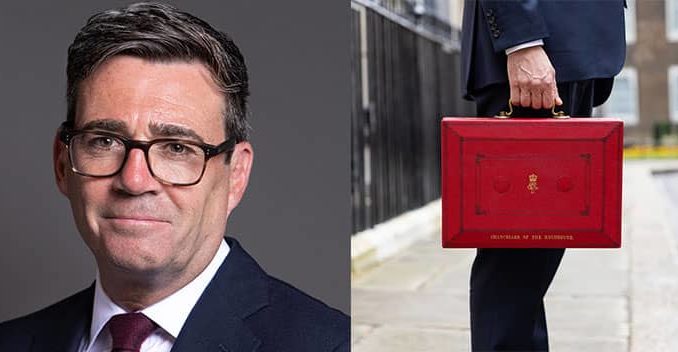
The autumn air across Westminster brings more than just a turn in the weather; it carries the distinct, unmistakable scent of structural change. As the nation adjusts to the inaugural reset under Andy Burnham’s premiership and brace for a pivotal Autumn Budget, the United Kingdom finds itself at an economic and geopolitical crossroads. The persistent financial headwinds of recent years—ranging from volatile global energy markets to the lingering operational friction of leaving the European Union—continue to test domestic resilience. Yet, against this challenging backdrop, a clear sense of movement is taking hold. From regional devolution to redefined international trade ties, the UK is attempting to chart a ambitious course through turbulent economic waters across all four quarters. Here’s some of the talking points on the table.
1. The Vaping Products Duty: A Health Policy with a Tax Hook
VAPING PRODUCTS DUTY (OCTOBER 2026)
Standard Flat Rate: £2.20 per 10ml of E-Liquid. Applies to:
- 10ml Bottles (Freebase & Nic Salts)
- Disposable Vapes (2ml capacity -> +£0.44 duty)
- Shortfills (100ml bottle -> +£22.00 duty)
Companion Policy: Tobacco Duty increased by RPI + 2%
Target: Curb youth access while preserving smoking offset
A headline shift arriving this autumn is the introduction of the Vaping Products Duty. Slated to levy a flat rate of £2.20 per 10ml of e-liquid regardless of nicotine strength, the measure represents a major overhaul of public health taxation. The treasury’s primary objective is clear: reduce accessibility and appeal among younger generations without destroying the financial incentive for adult smokers to switch to less harmful alternatives.
To maintain that vital differential, Tobacco Duty is simultaneously being raised by RPI plus 2%, along with an additional flat bump matching the vape tax. Nevertheless, the real-world impact on consumers will be immediate. While a standard 2ml disposable vape sees an extra 44p added, heavy users purchasing 100ml shortfills face a sudden £22 duty spike—often exceeding the original retail price of the liquid itself. Retailers have been given a grace period to clear existing untaxed stock, but the message from the Exchequer is explicit: consumer habits are expected to help fill state coffers.
2. Wealth Creation and Business Relief: Balancing Income and Enterprise
Addressing the cost of living while stoking the engine of private enterprise requires a delicate balancing act. Proposals circulating around the upcoming fiscal statement suggest targeted relief designed to keep money in working pockets while shielding high-growth businesses.
TAX RELIEF & ENTERPRISE PROPOSALS
MEASURE | INTENDED TARGET
- Personal Allowance Adjustment | Middle-income earners & working families
- Targeted Business Rate Caps | High-street retail & hospitality
- Energy Cost Mitigation Schemes | Energy-intensive industrial sectors
An adjustment to personal income allowances aims to prevent fiscal drag from quietly eroding real household earnings. By raising the baseline threshold at which income tax kicks in, the government hopes to deliver direct relief to squeezed families. On the business side, commercial rate caps and energy-intensity rebates are slated to support high-street retail and manufacturing, preventing premature insolvencies and encouraging private investment amidst elevated overheads.
3. Unlocking the Door: Modernised First-Time Buyer Schemes
Navigating the housing market remains one of the toughest challenges for young adults. In response, renewed government schemes are stepping in to replace older iterations of ‘Help to Buy’, specifically focusing on modern new-build developments.
- Underwritten Deposit Guarantees: Lowering the barrier to entry by enabling 95% loan-to-value mortgages backed by state guarantees.
- Developer Build Incentives: Fast-tracking planning permissions for housing associations and builders that commit at least 30% of new developments to below-market starter homes.
- Shared Equity Modernisation: Offering flexible equity loans on new builds to keep monthly mortgage obligations manageable during high-interest periods.
These measures aim to build a stable pipeline of affordable housing, shifting the paradigm from developer speculation to sustainable homeownership for first-time buyers.
4. Energy Cost Assistance and the Reimagined Grid
Energy price volatility continues to act as a drag on economic recovery, leaving the government to weigh short-term subsidies against systemic reform. The current strategy blends direct assistance with increasing state involvement in core energy infrastructure and services like water.
ENERGY STRATEGY DUAL-TRACK
SHORT-TERM DIRECT ASSISTANCE | LONG-TERM STRUCTURAL CONTROL
- Targeted winter energy credits | Great British Energy investment
- Cap on Standing Charges | Co-ownership of core nuclear
- Emergency relief for vulnerable | Partial nationalisation of grid
- 0% Domestic energy supplies | government controlled, 6 month duration
Support measures remain vital, long-term policy is tilting firmly towards structural reform. Through Great British Energy and new infrastructure initiatives like Great British Grid, state-backed entities are aiming to co-invest alongside private capital to secure energy sovereignty. While total nationalisation of existing energy majors remains off the table, bringing crucial distribution networks under public stewardship signals a permanent departure from purely market-led approaches.
5. Reallocating the Triple Lock: Funding a National Care Service
Few topics generate as much political heat as the state pension triple lock, yet its long-term sustainability has forced a major policy pivot. Rather than abandoning older citizens, the government is proposing a phased transition that adjusts the triple lock after 2030, redirecting the resulting fiscal capacity straight into social care.
THE STATE PENSION & CARE REALIGNMENT (POST-2030)
OLD MODEL: Triple Lock Guarantee
- Higher of: Inflation OR Average Wage Growth OR 2.5%
NEW MODEL: Adjusted Indexation + Care Infrastructure
- Pension rises by Inflation or 2.5% (linked to earnings)
- Ring-fenced savings fund a new National Care Service
- Free personal care at point of need for older adults
Note: Potentially leaving the triple lock for the most in need, means tested.
Under this settlement, the state pension will continue to rise with inflation or a 2.5% baseline, but savings generated from modifying the earnings link will fund a dedicated National Care Service. Designed to mirror the founding ethos of the NHS, this service aims to provide free personal care based on need rather than personal wealth. By easing the immense pressure on hospital beds caused by delayed discharges, the state seeks to solve two structural crises at once.
6. Defence Commitments and Civic Readiness
Geopolitical volatility across Eastern Europe and the Middle East has cemented defence as a non-negotiable priority. The UK’s commitment to supporting Ukraine remains steadfast, with long-term security pledges baked directly into multi-year defense budgets.
DEFENCE & CIVIC ENGAGEMENT DUAL-TRACK
| MILITARY ALLOCATION | CIVIC & COMMUNITY INITIATIVES |
| Multi-year aid framework for Ukraine | Voluntary Civic Service Pathways |
| Domestic industrial ammunition ramp | Skills training for young adults |
| Enhanced NATO deployment capability | Community resilience & public safety |
Simultaneously, debate around national service has evolved into a structured voluntary pathway rather than mandatory conscription. Modern proposals focus on equipping young people with cyber-defence, emergency response, and engineering skills. This dual strategy ensures the UK meets its NATO obligations while building a resilient domestic workforce capable of responding to national crises.
7. Domestic Empowerment: Youth Engagement, AI and Sovereign Capabilities
Tackling economic inactivity among young people—specifically those Not in Education, Employment, or Training (NEETs)—is central to domestic policy. Rather than relying on punitive sanction regimes, new frameworks combine targeted vocational training with cutting-edge technology sectors.
SOVEREIGN AI & NEET STRATEGY
| SKILLS & INCLUSION | SOVEREIGN INFRASTRUCTURE |
| Bootcamps for NEET youth | UK-hosted compute clusters |
| AI literacy in colleges | AI Security Institute safety |
| Targeted regional apprentices | Public dataset deployment |
By expanding local apprenticeships and digital bootcamps, the state aims to draw disengaged youth directly into high-growth industries. Crucially, this connects to the UK’s ambition in Sovereign AI. Rather than relying entirely on foreign technology conglomerates, heavy investments in domestic compute infrastructure and state-backed research bodies (such as the AI Security Institute) ensure the UK builds secure, in-house capabilities while generating technical jobs for a new generation.
8. European Relations: The ‘Canada Plus’ Reset and EU Perception
A fundamental shift in foreign policy involves recalibrating the UK’s relationship with the European Union. Moving past the ideological confrontation of previous years, the government is pursuing a pragmatic alignment similar to dynamic bilateral models like the EU-Canada Comprehensive Economic and Trade Agreement (CETA).
- Veterinary and SPS Agreement: Reducing border checks on agricultural and food exports to ease supply chain delays.
- Mutual Recognition of Qualifications: Opening smoother avenues for professional service providers across sectors.
- Security and Energy Cooperation: Establishing formal channels for joint intelligence sharing and European grid integration.
Response from Brussels and member states has been cautiously warm. While key figures stress that access to the single market requires strict adherence to level playing field rules, European leaders welcome a stable, reliable partner on their western flank. This measured approach offers a realistic path toward reducing trade friction without re-entering the single market or customs union.
9. The Four-Year Horizon: What It Means for the UK
Looking ahead across the next four years, the UK is laying the groundwork for a steady economic recovery. By combining fiscal discipline with targeted investments in infrastructure, energy, and human capital, the trajectory shifts from reactive crisis management toward long-term stability.
FOUR-YEAR ECONOMIC TRAJECTORY
| PHASE | PRIMARY FOCUS | EXPECTED OUTCOME |
| Year 1 (2026-2027) | Fiscal Stabilisation | Lower inflation & rate cap |
| Years 2-3 (2027-29) | Structural Delivery | Grid & Care Service launches |
| Year 4 (2029-2030) | Sustainable Growth | Higher productivity & trade |
While challenges like persistent debt servicing costs and demographic pressures will not disappear overnight, a clear strategic framework provides businesses and households with the certainty required to plan ahead.
Summary: A Nation Resetting Its Blueprint
The emerging domestic and international outlook highlights a nation taking stock of past hurdles and charting a pragmatically balanced forward strategy. On the home front, the government is combining fiscal adjustments—such as targeted duties and tax thresholds—with ambitious social programs, including a modernized housing policy and a redefined social care model funded through pension adjustments.
Internationally, a realistic reset with European partners and a clear commitment to national security and sovereign technology position the country as a resilient global actor. Though the path requires careful navigation through persistent economic headwinds, the structural pieces now moving into place provide a clearer, more predictable foundation for future growth.
Have Your Say!
What Are Your Thoughts on the UK’s New Direction?
From radical shifts in social care and tax reform to a refreshed trading partnership with Europe, the choices made today will shape Britain for the next decade. Do you agree with redirecting pension growth to fix social care? How do you feel about closer alignment with the EU? We want to hear from you! Join the conversation or follow us on facebook, instagram, youtube, TikTok, LinkedIn and X/Twitter or why not submit your own article! Or email at contribute@criticalmatters.net
Extra detail:
An overview of Andy Burnham’s speech outlining the government’s plans for a National Care Service and pensions reform provides direct context for the policy changes discussed in the article.


Be the first to comment