

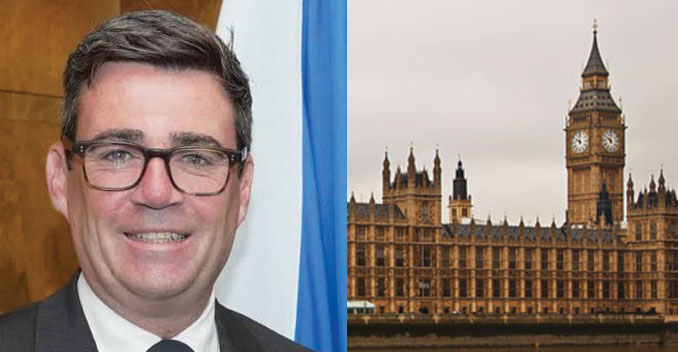
In British political life, Seventeen days can feel like a lifetime, yet it represents barely a blink in the arc of statecraft. Following the rapid resignation of Sir Keir Starmer after June’s Makerfield by-election, Andy Burnham accepted King Charles III’s invitation on 20 July 2026 to form a government, becoming the first Labour and Co-operative Party Prime Minister in British history. The transition from regional mayor to Downing Street occupant was executed with breathtaking speed, leaving Westminster apparatus, financial markets and international observers scrambling to calibrate what a Burnham premiership genuinely portends for the United Kingdom.
For a nation weary of rapid prime ministerial turnover—Burnham represents the seventh prime minister in a turbulent decade—the immediate question is whether this administrative reset brings pragmatic stability or merely a geographical relocation of ideological tensions. Burnham’s arrival at Number 10 was defined by a characteristically symbolic gesture: establishing “No. 10 North” at Heron House in Manchester, overseen alongside London operations by First Secretary of State Louise Haigh within a newly forged Office of the Prime Minister and Cabinet. It is an explicit declaration that power will no longer be hoarded exclusively in SW1. Yet beneath the compelling rhetoric of regional rebalancing, the cold arithmetic of governance remains unchanged: high debt, sluggish growth, public sector decay and an increasingly hostile global environment.
Seventeen Days in Downing Street: Rebuilding the Political Compass
Just Seventeen days into Andy Burnham’s tenure as Prime Minister, the political spectrum is offering sharply divergent reactions to the new administration. Within Labour ranks, there is a palpable sense of relief coupled with cautious expectation; backbenchers who grew restless under Starmer’s cautious technocracy view Burnham’s left-of-centre, devolution-focused posture as a vital renewal of the party’s core purpose. However, the Parliamentary Labour Party remains a broad church and fiscal realists in the party are nervously watching how the new Prime Minister intends to finance his ambitious social programs without alarming global capital markets.
The official Conservative opposition has targeted the administration’s spending signals, warning that Burnham’s historical reputation for expansive public expenditure will inevitably trigger substantial tax hikes. Meanwhile, Reform UK, which finished second in the recent Makerfield by-election and the Greater Manchester mayoral by-election, portrays the shift as internal establishment musical chairs that fails to address broader public anxiety over border control and systemic economic stagnation. Yet among the wider electorate, initial sentiment reflects a pragmatic wait-and-see attitude. Voters appear intrigued by a Prime Minister who built a strong reputation outside London, though they remain intensely sensitive to whether this leadership reset will deliver tangible improvements to household finances and local infrastructure.
Policy Pivots: Devolution, VAT Scrappage and T Skills Realignment
The early policy footprint of the Burnham ministry reflects a distinct shift toward immediate cost-of-living interventions and deep structural devolution. Chief among the early economic measures is the scheduled removal of the 5% Value Added Tax on household energy bills set for October 2026, funded directly by scrapping the previous administration’s proposed digital ID scheme. Furthermore, to bolster local public transport, bus fares outside London will be capped at £2 from January 2027, reversing previous scheduled fare rises. On homelessness and social infrastructure, Burnham has committed to aggressive council home building and direct interventions inspired by his regional initiatives in Greater Manchester.
In a substantial decentralisation move, the government announced plans to return a portion of VAT receipts directly to regional mayors, empowering local authorities with direct financial levers. Conservatives have urged extreme caution, arguing that fragmenting national taxation frameworks risks systemic revenue instability and regional inequality. On defence and energy posture, Burnham has maintained the United Kingdom’s commitment to NATO obligations while adopting a pragmatic approach to Net-Zero, framing environmental transition around regional industrial rejuvenation rather than central mandates. Additionally, the administration announced a major overhaul of technical education, pivoting toward enhanced “T Skills” apprenticeships tailored specifically to regional manufacturing and green technology needs.
Whitehall Reshuffle: Strategic Appointments and Backbench Shifts
The composition of Burnham’s inaugural Cabinet signals both institutional continuity and significant strategic realignment. Angela Rayner returns to her pivotal position as Secretary of State for Housing, Communities and Local Government, tasked with transforming the Prime Minister’s devolution framework into legislative reality. Lucy Powell has been appointed Education Secretary to oversee the technical skills overhaul, while Yvette Cooper moves to the Department of Health and Social Care to address long-standing NHS operational challenges.
The most profound structural innovation is the breakup of traditional Cabinet Office functions to create the Office of the Prime Minister and Cabinet, directed by Louise Haigh. This body transfers strategic local growth teams directly under central prime ministerial authority, unifying policy execution across London and Manchester. While several figures from Starmer’s frontbench remain in key departmental seats, former senior strategists have been nudged toward backbench roles, clearing space for a tighter circle of regional allies who share Burnham’s vision of devolved governance.
Party Harmony: The Reinstatement of Diane Abbott
A notable early internal development was the full whip restoration and formal reintegration of Diane Abbott into the parliamentary Labour fold. While the administrative machinery for whip restoration was formally executed through internal party governance, Burnham played an influential mediating role behind the scenes. Recognising that prolonged internal disputes over veteran left-wing MPs created unnecessary factional friction, Burnham prioritised resolving long-standing disciplinary grievances to project party unity.
The move was received warmly by the left wing of the party, signaling a deliberate departure from the factional management style that characterised recent years. By bringing senior parliamentarians back into the fold early, the Burnham administration successfully neutralised potential backbench rebellions ahead of upcoming legislative battles over taxation, housing and local government reform.
Manchester’s New Mayor: Bev Craig Takes the Reins
The departure of Andy Burnham from Greater Manchester triggered a high-stakes mayoral by-election held on 30 July 2026. Labour candidate Bev Craig, previously the Leader of Manchester City Council, secured victory to succeed Burnham as Mayor of Greater Manchester. Craig won 47.1% of first-preference votes in a crowded field, ultimately securing 66.3% in the final round against Reform UK candidate Sian Astley, who finished second with 33.7%.
Craig brings extensive local government experience, having spearheaded major urban regeneration, housing initiatives and transport developments across Manchester. Her decisive victory over Reform UK provided an immediate boost to Labour’s regional standing, proving that the party’s electoral coalition in northern metropolitan areas remains intact despite national political turbulence.
Diplomatic Crucible: Domestic Reputation Meets Global Reality
While Andy Burnham’s domestic credentials as a effective communicator and regional manager are widely acknowledged, his international profile presents an untested frontier. Skeptics in diplomatic circles have questioned whether a politician whose primary focus has been domestic devolution and municipal administration can seamlessly transition to high-stakes global diplomacy.
Early international interviews and bilateral exchanges have seen Burnham emphasise economic diplomacy and trade partnerships, seeking to position British regional industries on the global stage. However, facing complex geopolitical tensions across Europe, the Middle East and global trade networks, the Prime Minister will need to quickly demonstrate foreign policy gravitas. The transition from regional advocacy to international statesmanship remains his steepest learning curve.
Early Polls and the Long Road Ahead
As the political system digests these rapid changes, current opinion polling suggests that the initial honeymoon period remains firmly intact. Public satisfaction metrics indicate a modest bounce for the Labour administration, driven by early announcements on energy VAT relief and transport fare caps. However, pollsters note that underlying voter volatility remains high, with Reform UK maintaining a firm baseline in industrial heartlands and Conservatives regrouping to critique fiscal strategy.
The political outlook for the Burnham government hinges on execution. Symbolism and structural realignments like No 10 North provide political momentum, but long-term success will be judged on hard economic metrics: inflation control, public sector efficiency and tangible growth across all regions. The honeymoon will inevitably fade, leaving a government that must deliver on ambitious promises in an unforgiving global landscape.
Summary of Political Realignment
The table below outlines key developments and electoral metrics across the new political landscape:
| Entity / Event | Key Detail & Metric | Political Implication |
| Prime Minister Andy Burnham | Took office 20 July 2026; MP for Makerfield | First Labour & Co-operative Prime Minister |
| Greater Manchester Mayoral By-Election | Bev Craig won with 66.3% in final round (30 July 2026) | Labour retained regional stronghold against Reform UK |
| Office of PM and Cabinet | Overseen by Louise Haigh across London & No 10 North | Re-centralises devolution strategy within Downing Street |
| Energy VAT Policy | 5% VAT scrapped on home energy starting October 2026 | Funded by canceling proposed digital ID scheme |
Have Your Say
As Andy Burnham begins reshaping Whitehall and setting a new domestic trajectory, how do you view the government’s focus on regional devolution and immediate energy tax relief? Will the shift to a dual London-Manchester premiership deliver meaningful growth, or does it risk administrative duplication?
Join the conversation or follow us on facebook, instagram, youtube, TikTok, LinkedIn and X/Twitter or why not submit your own article! Or email at contribute@criticalmatters.net.
More Info
Facts
- 18 June 2026: Andy Burnham won the Makerfield parliamentary by-election with over 25,000 votes.
- 20 July 2026: Andy Burnham was appointed Prime Minister of the United Kingdom by King Charles III.
- 21 July 2026: Formation of the Office of the Prime Minister and Cabinet led by Louise Haigh, establishing “No 10 North” in Manchester.
- 30 July 2026: Bev Craig was elected Mayor of Greater Manchester, defeating Reform UK candidate Sian Astley.
- October 2026: Scheduled implementation of 0% VAT on household energy bills in Great Britain.
Links
- Travers Smith – What to expect from Andy Burnham: Potential legal and policy changes under the new UK Prime Minister
- Georgetown University – Five questions about new UK Prime Minister Andy Burnham
- Wikipedia – Premiership of Andy Burnham
- Wikipedia – 2026 Greater Manchester mayoral by-election
- County Councils Network – Cabinet appointed as Andy Burnham becomes Prime Minister
- Andy Burnham wins UK by-election: Labour politician expected to challenge PM Starmer – This video provides crucial news coverage detailing Andy Burnham’s decisive parliamentary by-election victory in Makerfield, which set the stage for his entry into Parliament and subsequent leadership of the government.


Be the first to comment