

[Update 9th July 2026]: Al Carns Steps back to support Andy Burnham.
In British politics, what is left unsaid is frequently far more consequential than what resounds on the tabloids or backbenches. As the United Kingdom navigates Sir Keir Starmer’s resignation on 22 June 2026, Westminster has shifted towards speculation about what happens next. This is not at all helped by Burnham’s silence, the UK is responding to World Events now the British Electorate does not get a holiday. Two years after a landslide general election victory in July 2024, the managerial technocracy of Starmerism fractured under the weight of plummeting popularity, local election defeats in May and high-profile front bench resignations over defence spending and party direction.
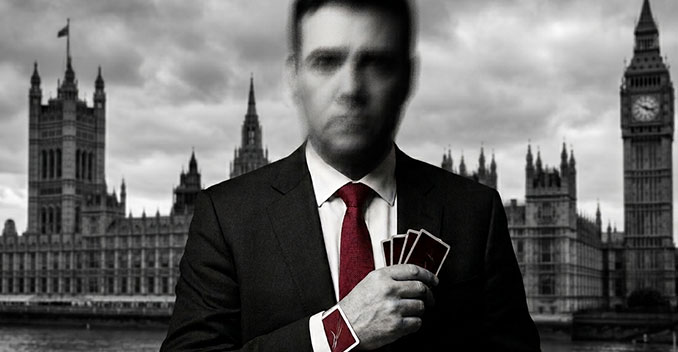
Into this vacuum steps Andy Burnham. Having strategically engineered his exit from the Greater Manchester Mayoralty via the Makerfield by-election on 18 June 2026—winning with a resounding majority of over 9,000 votes—Burnham stands as the undisputed frontrunner to enter Number 10. Yet, for a politician historically defined by his accessible, emotive and highly communicative style, his current public demeanour is remarkably guarded. He is playing an exceptionally tight-lipped game, keeping his cards buried deep within his chest.
This is not a historical anomaly; it is a calculated pragmatic strategy with clear precedents in modern political history. When a leadership transition resembles a coronation rather than a contest, the incoming leader faces a distinct set of structural risks. In 1976, James Callaghan operated with similar administrative caution during the transition from Harold Wilson. More pointedly, in 2007, Gordon Brown’s long-awaited, uncontested ascension to prime minister was marred by a deliberate vagueness designed to maintain party unity, a choice that ultimately left his ideological framework ill-defined when the global financial crisis struck. Burnham, a seasoned operator who bore front-row witness to the New Labour civil wars, understands that early definitions invite early rebellions. By remaining silent, he allows various factions within the Parliamentary Labour Party (PLP) to project their own hopes onto his impending premiership. Nevertheless, while it may be a somewhat savvy ploy, it would be good to understand at least broad brush what Burnham stands for.
The Ideological Void
To analyze Burnham’s current ideological positioning requires separating his historical voting record from his recent executive rhetoric. Throughout his tenure as Mayor of Greater Manchester (2017–2026), Burnham championed what his allies term “Manchesterism”—a brand of municipal, interventionist social democracy that prioritised public control of infrastructure, visible local investment and a distinct rhetorical distance from the Westminster establishment.
However, as he transitions from regional chief executive back to the national stage, the precise policy mechanics of his platform remain deliberately obscure. And implementing Manchesterism across the nation may not work. In early June 2026, sources close to his camp indicated a strong policy focus on the public control of water and energy, including calls for the nationalisation of Thames Water. Yet, in his meetings with trade unions and backbench MPs, he has remained highly evasive on specific topics and what the vision is. Union leaders have openly demanded clarity on his positions regarding oil and gas licensing, defence and care worker visas, areas where Starmer’s previous compromises deeply alienated the party’s traditional base.
This ideological ambiguity is a classic centrist maneuver designed to preserve maximum executive flexibility. Historically, politicians who run on highly specific ideological blueprints find themselves trapped by those parameters once the reality of governance takes hold. Burnham’s current silence is an attempt to cultivate a broad-church appeal, but common sense dictates that this vacuum cannot be sustained indefinitely. A prime minister cannot govern on a platform of pure vibe; eventually, a definitive fiscal and structural strategy must be articulated.
Hearts, Minds and a Fractured Party
The immediate challenge confronting Burnham is not necessarily winning a public vote—the next general election does not need to be held until August 2029—but rather securing the internal stability of a highly volatile PLP. While many rivals have declined to stand including, former Health Secretary Wes Streeting, David Lammy and others swiftly withdrew, the path to Number 10 is fraught with internal friction. Al Carns, who resigned over military spending – potentially stepping up to challenge. Has also now stepped back paving the way for a coronation.
Burnham must simultaneously win over these groups:
- The Parliamentary Labour Party: Over 200 MPs rapidly backed his candidacy post-by-election, yet many remain deeply loyal to the centrist stability of the Starmer era or are highly anxious about sudden ideological lurches. Figures like former Armed Forces Minister Al Carns have already laid down “five tests” for the new leader, demanding ironclad commitments to increased defence spending and infrastructure targets.
- The Trade Unions: Affiliated unions represent the financial and organisational bedrock of the movement. Their leaders are inherently pragmatic and expect concrete commitments on workers’ rights and public ownership in exchange for their formal nominations.
- The Rank-and-File Membership: There is a tangible, growing anger among constituency party members who feel entirely disenfranchised by the lack of a competitive contest. The National Executive Committee (NEC) has faced severe criticism for designing a compressed timetable that effectively guarantees a coronation, raising concerns of mass membership departures if the wider movement feels ignored.
- The British Electorate, The Nation (including protest voters of Reform and the Greens). Time will tell.
Downing Street in the North?
One of the quirkier ideas we have heard surrounding Burnham’s return to Westminster is the idea that he will fundamentally decentralise British political power, effectively establishing a metaphorical “Downing Street in the North.” This narrative is structurally flawed and ignores the constitutional realities of the United Kingdom’s highly centralised state machinery.
The argument that regional devolution can seamlessly translate into national executive power is often a form of tokenistic pandering. While Burnham successfully integrated Greater Manchester’s transport system via the Bee Network, national governance requires managing macro-economic policy, international diplomacy and state defence—areas completely detached from mayoral competencies. The idea that northern regionalism can serve as a substitute for a coherent national fiscal strategy is short-sighted.
Furthermore, historical parallels show that regional popularity rarely survives the brutal, zero-sum environment of Whitehall. The structural layout of British governance inherently centralises power within the Treasury and the Cabinet Office. Any attempt to run a national government through the lens of regional favouritism would instantly alienate the rest of the country, particularly southern suburban seats that are vital to maintaining a parliamentary majority. Burnham’s regional record is a potent marketing tool, but as a model for national administration, it remains entirely unproven.
The Legislative Record: A History of Competing Factions
To understand the core political instincts of the man likely to become prime minister, one must examine parliamentary voting records prior to his departure for Manchester in 2017. First elected as the MP for Leigh in 2001, Burnham’s legislative history reflects a politician who consistently prioritised party discipline and executive loyalty over ideological purity.
During the New Labour administrations of Tony Blair and Gordon Brown, Burnham served in several high-profile roles, culminating in his appointment as Chief Secretary to the Treasury (2007–2008), Culture Secretary (2008–2009) and Health Secretary (2009–2010). His voting record during this era aligns precisely with the mainstream party line: he consistently voted for the Iraq War, supported the introduction of tuition fees and backed the expansion of the private sector within the National Health Service through the Private Finance Initiative (PFI).
This record is a double-edged sword. To the right of the party, it demonstrates a proven track record of ministerial competence and a willingness to make difficult, unpopular executive decisions. To the left, however, it remains a source of deep suspicion. It paints the picture of a highly flexible political operator whose principles are secondary to the prevailing consensus of the time. Burnham’s subsequent pivot to the left during his mayoral years—champions-in-chief of public ownership and critics of Westminster austerity—must therefore be viewed with a degree of analytical skepticism. Is it a genuine ideological evolution, or merely an astute reading of the changing political weather?
The Mayoral Greatest Hits and Misses
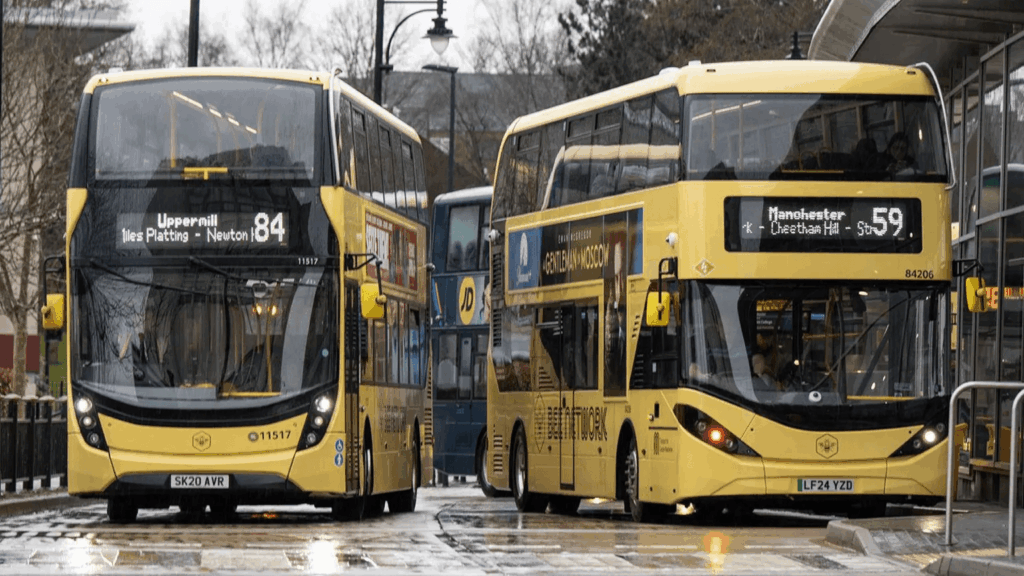
A balanced assessment of Burnham’s executive credentials requires a rigorous evaluation of his nine-year tenure as the Metro Mayor of Greater Manchester. His greatest undisputed triumph was the implementation of the Bee Network, an ambitious, integrated public transport system that brought the region’s fragmented bus network back under public control for the first time since deregulation in 1986. The initiative was a major commercial and logistical success, delivered on time and widely praised across the political spectrum for improving regional connectivity.
However, his executive record is also marked by notable administrative failures. His signature mayoral pledge to end rough sleeping in Greater Manchester by 2020 was a significant policy miss. Despite substantial public funding and the creation of the “A Bed Every Night” scheme, systemic economic pressures and structural execution failures meant the target was repeatedly missed, drawing sharp criticism from local advocacy groups.
More damagingly, his administration faced intense scrutiny over its handling of the Greater Manchester Police (GMP). In December 2020, Her Majesty’s Inspectorate of Constabulary placed the force into special measures after revealing that officers had failed to record over 80,000 crimes in a single year. While Burnham eventually dismissed the Chief Constable and oversaw the force’s removal from special measures in 2022, the scandal highlighted significant oversight failures within the mayoral office, proving that his executive management was frequently reactive rather than proactive.
The Manchester Inner Circle vs. The Whitehall Adjacent
As Burnham prepares for the transition to national power, a quiet but fierce bureaucratic conflict is brewing between his trusted regional inner circle and the entrenched establishment of Whitehall. In Manchester, Burnham’s executive style relied on a small, intensely loyal group of advisors and local political heavyweights. This inner circle included figures like Sir Richard Leese, the long-standing former leader of Manchester City Council and highly trusted policy chiefs who managed the complexities of the devolution deals.
This regional cabal is about to collide directly with the reality of the civil service and the adjacent runners and riders in Westminster. Senior civil servants in the Cabinet Office and the Treasury, focused entirely on maintaining institutional continuity and safeguarding their own career promotions, view the influx of potential “Manchester outsiders” with considerable caution.
Simultaneously, senior figures from the Starmer Cabinet who endorsed Burnham—such as Deputy Prime Minister David Lammy and Chancellor of the Duchy of Lancaster Darren Jones—are actively maneuvering to protect their briefs. The political jockeying is intense; allies of old-guard figures like Ed Miliband are reportedly jostling for key energy positions, while Burnham’s regional team is demanding structural changes to how domestic policy is formulated. The successful coordination of these two distinct factions will dictate the administrative competence of his initial months in office. Putting the wrong cabinet can seriously scupper the effort.
The Blueprint of a Burnham Administration
What will a Burnham-led Number 10 actually look like? While his current silence obscures the details, the structural context of the 2026 political landscape allows us to project the broad contours of his government with reasonable accuracy. It will likely be an administration characterised by a high-stakes attempt to blend New Labour’s economic pragmatism with a more vocal, interventionist approach to public infrastructure.
Burnham’s premiership may almost certainly prioritise visible, domestic infrastructure projects as a means of restoring public trust. Policing may feature highly alongside allowing businesses to operate more freely, freeing up red tape is also quite likely on the agenda given Burnham’s stance on centralisation. However, by decentralising one risks creating even more threads that can get quickly tangled. Expect immediate legislative movement toward nationalising failing public utilities and accelerating regional devolution frameworks to other English metropolitan areas. In doing so, he will attempt to institutionalise the “Manchester model” on a nationwide scale.
However, this interventionist domestic agenda will immediately confront severe fiscal realities. The Treasury remains constrained by sluggish economic growth and volatile global markets. Burnham will not have the luxury of the significant public spending surpluses that funded the early years of the Blair government. His administration will be forced to operate with extreme fiscal discipline, meaning that many of his loftier social ambitions will likely be deferred in favour of core stability. It will be a government perpetually caught in the tension between its municipal socialist rhetoric and the rigid financial constraints of the state.
Contest or Corronation, Now All But Answered
At the time of writing, we are currently at Monday, 6th July 2026. The official machinery of the Labour leadership transition is structured to move with extraordinary velocity over the coming weeks. According to the definitive timetable released by the National Executive Committee, the entire process is designed to minimise public instability and ensure a rapid transfer of executive power.
The formal contest kicks off on Thursday, 9th July 2026, when nominations from members of the Parliamentary Labour Party officially open. Candidates require the formal backing of at least 20% of the PLP—equating to 81 MPs—to progress. PLP nominations will close on Wednesday, 15th July, immediately followed by a brief window for affiliate and trade union nominations on 15th and 16th July.
If, as expected, Burnham remains the sole validly nominated candidate who commands the necessary threshold of parliamentary support, there will be no ballot of the wider membership. The entire transition will bypass the Constituency Labour Parties entirely. A special conference will be convened on Friday, 17th July 2026 to officially confirm the result. Following the weekend transition protocols, Sir Keir Starmer will formally tender his resignation to King Charles III on Monday, 20th July 2026 and Andy Burnham will be invited to form a new government, entering Number 10 as the prime minister of the United Kingdom.
High-Stakes Political Silence
The unfolding leadership transition represents one of the most critical junctures in the modern era of British current affairs. Andy Burnham’s deliberate strategy of political silence is an astute, short-term mechanism to secure an uncontested path to national power. By remaining tight-lipped and keeping his cards close to his chest, he may have averted a divisive public reactions within his party and secured the backing of both centrist backbenchers and powerful trade union leaders. But for how long.
However, common sense and historical context dictate that this strategy carries a profound long-term risk. A coronation built on an ideological vacuum leaves an incoming prime minister exceptionally vulnerable once the initial honeymoon period concludes. Without a clear, publicly debated mandate, Burnham will enter Number 10 facing an immediate onslaught of complex domestic crises—from defence spending disputes to public utility collapses—without a definitive consensus behind his solutions. His silence has secured him the crown; his ability to articulate a clear, pragmatic vision over the coming weeks will determine whether he can actually wear it.
Have Your Say
Is Andy Burnham’s tight-lipped strategy a masterclass in political pragmatism, or is a prime-ministerial coronation without a competitive debate a disservice to party democracy? Can his regional “Manchesterism” successfully scale up to solve national crises, or is the concept of a decentralised Whitehall pure political tokenism?
Join the conversation or follow us on facebook, instagram, youtube, TikTok, LinkedIn and X/Twitter or why not submit your own article! Or email at contribute@criticalmatters.net and let us know your thoughts.
Facts and Links
Facts Section
- Keir Starmer Resignation: Formally announced on Monday, 22 June 2026, following systemic cabinet instability and backbench pressure.
- Makerfield By-Election: Held on Thursday, 18 June 2026, triggered by the resignation of Josh Simons MP to allow Andy Burnham to contest the seat. Burnham won with a majority exceeding 9,000 votes.
- Leadership Nomination Threshold: Under the revised 2021 Labour Party Rule Book, candidates require the formal nomination of 20% of the Parliamentary Labour Party (PLP), currently requiring 81 MPs.
- Leadership Transition Timetable: Confirmed by the NEC on 25 June 2026. PLP nominations open on 9 July and close on 15 July 2026. Affiliate and trade union nominations close on 16 July 2026.
- Uncontested Special Conference: Scheduled for Friday, 17 July 2026 to declare the winner if only one candidate successfully secures the necessary nominations.
- Expected Prime Ministerial Appointment: Monday, 20 July 2026, following the formal resignation of Keir Starmer to King Charles III.
- Andy Burnham Parliamentary Service: Served as MP for Leigh from 2001 to 2017. Held Cabinet positions including Chief Secretary to the Treasury (2007–2008), Secretary of State for Culture, Media and Sport (2008–2009) and Secretary of State for Health (2009–2010).
- Greater Manchester Police Special Measures: Force placed into advanced oversight framework by HMICFRS in December 2020 after failing to record 80,100 crimes; officially removed from special measures in October 2022 under Burnham’s mayoral oversight.



Be the first to comment