

The Summer the Sky Turned Molten
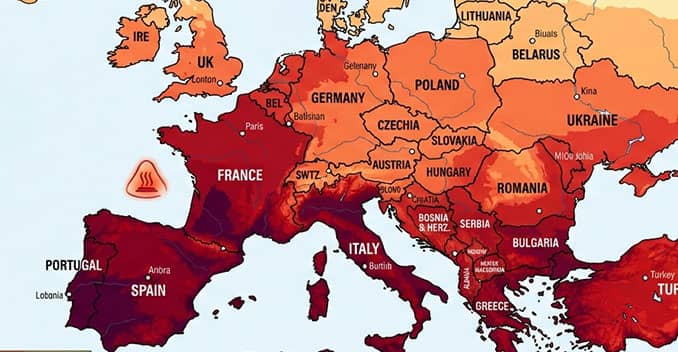
In late June 2026, the reassuring cliché of the “pleasant British summer” evaporated entirely. Western Europe found itself pinned beneath a meteorological vice known as an Omega block—a high-pressure heat dome of exceptional intensity that effectively anchored a mass of scorching, compressed air directly over the English Channel. Within days, the atmospheric phenomenon transformed the temperate cities of the UK, France, Spain and Germany into functional ovens. It is no longer an occasional seasonal anomaly; it is an aggressive, system-wide environmental shift that challenges our physical infrastructure, our bodily resilience and our psychological equilibrium.
As the mercury systematically shatters historic baselines, our collective relationship with hot weather must undergo an immediate psychological overhaul. For generations, a spike in the thermometer was met with immediate celebration—an unthinking rush to coastal beer gardens and public parks. Today, facing a climate that physically expands the atmosphere, we are forced to treat extreme heat not as an extended bank holiday, but as a severe health hazard. Surviving this modern climate reality requires an approach to self-care that combines rigorous biological science with radical, mindful somatic awareness. We must learn to listen to the subtle warning signs of our bodies before the environment forces the issue for us.
Navigating this unprecedented heatwave demands a careful balance between external environmental vigilance and internal bodily awareness. The heat does not merely stress our physiological systems; it directly degrades our emotional stability, mental processing speeds and nervous system regulation. This guide explores the systemic reality of the 2026 crisis, offering actionable, zero-cost physical interventions, structural coping mechanisms and a balanced perspective on enjoying the unique benefits of a domestic summer without compromising safety.
The Anatomy of the 2026 Heat Dome
The historic heatwave of June 2026 is driven by an intense atmospheric configuration that has caught the attention of global climate scientists. A massive ridge of high pressure, retrograding westward, has settled over the continent to create a highly efficient heat dome. This atmospheric barrier systematically deflects incoming Atlantic storm systems, leaving a vast stretch of land exposed to uninterrupted, baking sunshine.
As the high pressure forces air downward, the air mass physically compresses and heats up, causing the atmosphere to bulge upward like a giant dome. This underlying thermal amplification is layered on top of a multi-decadal baseline of rising global temperatures. The resulting system behaves like an active greenhouse, trapping intense surface heat during the day and preventing nighttime cooling, forcing metropolitan centers to endure stifling, tropical nights with zero thermal relief.
Tropical Dynamics on Temperate Soil
The sheer scale of the 2026 heat dome means that Western Europe is regularly recording daytime and nighttime indices that directly mirror, or exceed, those found in traditional equatorial and tropical zones. The key difference lies in environmental acclimatisation. Populations residing in the tropics have spent generations developing architectural, cultural and physiological defense mechanisms to mitigate extreme UV and thermal stress.
In contrast, northern and western European populations are navigating these tropical dynamics with zero evolutionary or structural preparation. The sudden imposition of sustained 35°C to 44°C temperatures on populations unaccustomed to such extremes creates an immediate, acute physiological shock. Without the cooling benefits of regional sea breezes or adapted building designs, the human body is forced to work twice as hard simply to maintain a stable internal core temperature.
Records Broken Across Europe
The geographic epicenter of this atmospheric crisis covers the most densely populated nations of Western Europe. National weather agencies from France to the UK and Spain are tracking record-breaking data points across their entire observation networks. In southern Spain, the national agency AEMET tracked brutal daytime highs hitting 44°C across regions like Córdoba, while Germany’s national service, the Deutsche Wetterdienst (DWD), warned of unprecedented regional anomalies up to 10°C above seasonal averages.
The most severe spikes converged on Tuesday, 23 June 2026, when France recorded its hottest day since measurements began in 1947, driven by a national heat index of 30°C. The mercury reached a devastating peak of 44.3°C in the southwestern town of Pissos, while Bordeaux sweltered at 42.1°C. Simultaneously, the UK Met Office confirmed that England shattered its all-time June record, with temperatures climbing to a provisional high of 36.1°C at Gosport, Hampshire, illustrating that no corner of the continent remains insulated from the crisis.
Red Alerts
As the heat dome intensified, European governments moved swiftly to issue unprecedented top-level red warnings to protect the public. In France, Météo-France expanded its absolute red alert tier to encompass 72 individual departments, affecting more than three-quarters of the entire population. Concurrently, the UK Met Office hoisted only its second extreme-heat red warning in British history, while Switzerland deployed top-level alerts across major urban centers including Zurich and Geneva.
A formal red weather alert is not an invitation to sunbathe; it is a clear executive declaration that the prevailing environmental conditions pose a direct threat to human life, even among healthy individuals. Public health authorities used these declarations to urge citizens to cancel non-essential travel, shorten school days and keep domestic pets securely indoors. These emergency frameworks highlight a grim reality: when the environment crosses a specific thermal threshold, standard daily routines must be paused to prevent mass casualties.
Casualties of the Heatwave
The immediate human cost of this early summer heatwave became painfully clear in the casualty reports released by emergency services. In France, Prime Minister Sébastien Lecornu convened an urgent ministerial crisis meeting following a “tragic scourge” of drownings across the country. Since the heatwave intensified on 18 June, at least 48 people lost their lives in water-related accidents as they sought desperate relief from the stifling conditions.
The vast majority of these fatalities occurred among young people swimming in unsupervised, unauthorised locations. Public safety officials note that when individuals encounter extreme air temperatures, they often dive unthinkingly into natural bodies of water without calculating the hidden danger of cold water shock. This physiological response triggers an immediate, involuntary intake of breath and a rapid spike in heart rate, which can quickly lead to panic, loss of swimming control and sudden drowning.
Europe’s Architectural and Building Flaws
The severity of the current health crisis is heavily compounded by a fundamental structural deficit: European infrastructure was simply never engineered to handle sustained, tropical thermal loads. In the UK and France, residential and public buildings were historically built to retain heat during damp winters, utilising thick brickwork and minimal ventilation. When pinned beneath a heat dome, these buildings turn into thermal traps, absorbing solar radiation all day and radiating it inward throughout the night.
This structural failure is most visible across public transport networks. The steel rails of national rail systems can easily warp when surface temperatures exceed the higher temperatures, greater strain is put on the steel which can warp – forcing operators to implement severe speed restrictions and scale down timetables. Below ground, deep transit networks like the London Underground and Paris Métro can become incredibly stuffy, humid environments. Lacking modern, system-wide air conditioning across all lines, some of these subterranean corridors pose a serious risk of dehydration and heat exhaustion for stranded commuters.
Thinking and Cognitive Work Becomes Harder
Surviving this environmental shift requires strict adherence to practical, science-backed personal safety routines. The primary rule is simple: stay aggressively hydrated. Individuals must adopt a preventative approach, carrying their own water bottles everywhere rather than waiting until they feel thirsty. Planning ahead for transport delays is equally vital; getting stuck on a halted train without water can quickly escalate into a medical emergency.
Furthermore, we must recognise the deep cognitive toll that sustained heat places on the human brain. Prolonged thermal stress triggers physical fatigue, mental exhaustion and a significant drop in sleep quality. This aggregate exhaustion directly impairs cognitive processing and slows down human motor reflexes. Drivers must exercise extreme caution on the roads, maintaining longer braking distances and staying alert for erratic behavior from other road users who may be experiencing heat-induced brain fog.
Domestic Microclimates
Finding the Balance Between Sanctuary and Exposure
The flip side of this intense meteorological event is that your home garden or local green space is currently experiencing a microclimate that directly matches the thermal profile of traditional tropical destinations like Brazil, Thailand, or the Caribbean. For those fortunate enough to have outdoor space, it represents an opportunity to experience an authentic summer experience right at home, provided it is approached with respect for the sun.
Enjoying this domestic sanctuary safely requires dressing appropriately in lightweight, loose-fitting natural fabrics that allow the skin to breathe. Applying high-factor, broad-spectrum sunscreen is mandatory to protect against elevated UV indexes and any outdoor relaxation should be paired with a cool drink and plenty of shade. However, body positivity during a heatwave means listening to your unique physical needs; not everyone handles thermal stress the same way and knowing when to retreat indoors away from the midday sun is a sign of true self-care.
Managing the Indoor Workspace
Adapting the Remote Working Environment
With millions of professionals now working permanently from home, managing the temperature of the indoor workspace has become a vital component of occupational health. Because air conditioning has historically been an uncommon luxury in residential properties across the UK and northern Europe, remote workers are finding themselves attempting to maintain focus in home offices that regularly cross the 30°C threshold.
Investing in a portable air conditioning unit or a high-efficiency air-cooling fan can provide an essential safety margin, taking the edge off peak afternoon temperatures. While these appliances carry an upfront financial and energy cost, the return in terms of cognitive preservation, reduced cardiovascular strain and sustained focus is significant. For the modern remote worker, creating a cool domestic workspace is no longer a matter of luxury; it is a basic requirement for maintaining professional and physical well-being.
Summary: Cultivating Somatic Intelligence in a Changing World
“The true measure of health during an extreme weather event is not how much we can endure, but how gracefully we can adapt our routines to protect our biology.”
The unfolding environmental realities of June 2026 demonstrate that extreme heatwaves are no longer transient weather events—they are structural features of our modern life. Protecting our well-being under these conditions requires moving beyond simple survival tips and developing a deeper, more intuitive style of physiological intelligence. We must learn to treat our bodies not as rigid machines that can be pushed through any environment, but as delicate biological systems that exist on a broad spectrum of thermal tolerance.
Whether you are managing your weight, navigating chronic health vulnerabilities, or simply trying to stay focused in a sweltering home office, your primary responsibility is to err on the side of caution. Pay attention to early indicators of heat stress—such as a persistent headache, sudden dizziness, or unusual lethargy—and never hesitate to contact your GP or local health services if you suspect your body is struggling to cope. By grounding our lifestyle choices in firm scientific realities and prioritising mutual care, we can safely enjoy the unique pleasures of a bright British summer while protecting the health of our communities.
Have your say
Join the conversation and drop a comment below or follow us on facebook, instagram, youtube, TikTok, LinkedIn and X/Twitter or why not submit your own article! Or email at contribute@criticalmatters.net
Verified Facts
- The extreme European heatwave of late June 2026 was driven by a powerful atmospheric configuration known as an Omega block, which trapped a high-pressure heat dome directly over Western Europe.
- Météo-France confirmed that Tuesday, 23 June 2026, was France’s hottest day since records began in 1947, featuring a national daily heat index average of 30°C and a record peak temperature of 44.3°C in Pissos.
- Between 18 June and 23 June 2026, at least 48 people reportedly died from drowning in France, largely due to young individuals swimming in unsupervised locations to escape the extreme heat.
- On Wednesday, 24 June 2026, the UK Met Office recorded a provisional temperature of 36.1°C at Gosport, Hampshire, officially breaking the nation’s all-time daily record for the month of June.
- The Spanish national weather agency, AEMET, tracked widespread temperatures exceeding 40°C across southern and central regions during the final week of June 2026, with maximums topping 44°C in the province of Córdoba.
Links
- World Meteorological Organisation: WMO and partners mobilize heat-health action plans as extreme heat grips Europe
- The Guardian: UK records its hottest June day and France its hottest day ever as heatwave sweeps Europe
- Al Jazeera: France struggles with extreme heat and power grid challenges as 40 drown trying to escape heatwave
- The Times of Israel: France reports dozens of weather-related deaths as record heat wave sweeps Western Europe
- NHS England: Heatwave Plan for England: Protecting health and reducing harm from severe heat


Be the first to comment