

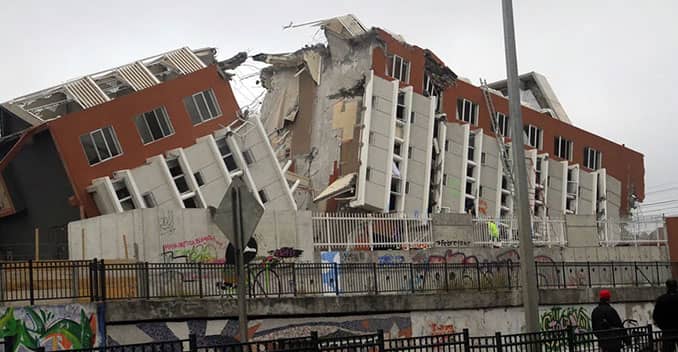
On the evening of Wednesday, 24 June 2026, Venezuela was violently disrupted by a rare and catastrophic seismic event. What began as a quiet national holiday commemorating the historic 1821 Battle of Carabobo rapidly turned into an existential rescue operation. In a span of less than forty seconds, north-central Venezuela was struck by a powerful “earthquake doublet”—a phenomenon where an initial high-magnitude rupture fails to stabilise a fault, instead transferring its tectonic load further along the rock seam to trigger an even larger mainshock. The shallow twin tremors ripped through the nation’s most densely populated urban corridors, flattening high-rise architecture and plunging an already volatile political landscape into an immediate state of national emergency.
The timing of this natural disaster introduces a layer of acute geopolitical complexity. Venezuela is currently navigating a highly delicate governance transition under acting President Delcy Rodríguez, following the extraction of former leader Nicolás Maduro by United States forces. For a nation already isolated by years of economic blockades, hyperinflation and institutional deterioration, the structural failure of its infrastructure acts as an amplifier of human suffering. As international rescue teams from Washington, the United Nations and European capitals scramble to deploy personnel into the disaster zone, the crisis transcends a simple humanitarian emergency, evolving into a complex geopolitical arena where global powers vie for influence over a transitioning South American state.
Geology and Geopolitics
The catastrophe in Venezuela highlights the deep structural vulnerability that occurs when failing infrastructure meets inevitable geophysics. This analysis moves past the immediate emergency tickers to dissect the disaster through three core lenses: the mechanics of the rare earthquake doublet, the institutional legacy of substandard metropolitan construction and the intense international diplomatic jockeying underway as Western and allied states deploy material aid to establish an administrative foothold in the post-Maduro era.
Seismic Doublets
The Doubling Effect
The disaster began at 18:04 local time (VET) on 24 June 2026, when a magnitude 7.2 earthquake erupted at a shallow depth of approximately 22 kilometres. Centred in the Veroes municipality of the Yaracuy State, near the coastal town of Morón, the tremor was initially classified as a major standalone event. However, just 39 seconds later, the fault ruptured again. The second, more devastating mainshock measured a massive magnitude 7.5 at an even shallower depth of 10 kilometres, releasing a multi-fold increase in destructive kinetic energy.
Seismologists from the United States Geological Survey (USGS) confirmed that this sequence qualifies as a classic, rare earthquake doublet. In standard seismic events, a massive mainshock is followed by smaller, dissipating aftershocks. In this instance, the initial 7.2 foreshock shifted its stress load directly onto an adjacent stretch of the active fault line, breaking it almost immediately. Because the breaks occurred so close to the surface, there was minimal rock mass to absorb the shockwaves, causing violent, prolonged vertical and horizontal ground displacement across the entire region.
Shockwaves Beyond the Epicentre
A Regional Tectonic Shock
While the epicentral zone was localised southwest of Morón, the sheer magnitude of the 7.5 mainshock caused seismic waves to propagate across thousands of kilometres of the South American landmass. The violent tremors radiated outward from the state of Yaracuy, heavily shaking neighbouring states including Carabobo, Aragua, Miranda and La Guaira. In the capital district of Caracas, located roughly 160 kilometres east of the epicentre, the ground shook violently for over a minute, triggering immediate mass evacuations.
The reach of the doublet extended far beyond Venezuela’s sovereign borders. Tremors were felt clearly across northeastern Colombia, prompting office evacuations in the high-rise districts of Bogotá. To the south, seismic monitors in northern Brazil recorded the passage of the waves, causing panic and building evacuations in cities as distant as Manaus, Macapá and Belém, over 1,700 kilometres away from the Caribbean coast. The event also triggered transient sea-level anomalies and brief tsunami warnings across Aruba, Bonaire and Curaçao.
The Rising Toll
Accounting for the Missing
The human cost of the doublet began mounting immediately, though the total scale of the tragedy remains heavily obscured by a collapse in regional telecommunication networks and emergency services. In her initial national address following the disaster, Interim President Delcy Rodríguez confirmed that at least 164 people had died across the primary impact zones, with more than 971 individuals treated for severe injuries. On the second day that amount have increased to over 500 casualties and more than 3,000 injured and many more requiring immediate hospitalisation in facilities that are already facing resource scarcity.
However, humanitarian agencies warn that these official figures represent a fraction of the eventual toll. A specialised missing persons database set up in the hours following the twin quakes registered more than 14,000 individuals as unaccounted for. Because the disaster struck on a major national public holiday, families were overwhelmingly gathered inside residential structures rather than commercial offices, trapping thousands beneath collapsed masonry when the building stock failed.
Structural Collapse in the Capital Zone
Stark rubble and Closed Gateways
The architectural destruction across the capital city of Caracas and its surrounding coastal infrastructure is extensive. Interior Minister Diosdado Cabello reported that the eastern municipalities of Chacao, Los Palos Grandes and Altamira suffered the highest concentration of structural failures. In Altamira, at least three high-rise residential buildings collapsed entirely, including a prominent 22-storey tower that pancaked into its own footprint, trapping hundreds of residents inside.
The destruction extended north over the coastal mountain range to the state of La Guaira, which has been formally designated an absolute disaster zone. The Simon Bolívar International Airport in Maiquetía, the country’s primary aviation gateway serving Caracas, sustained critical infrastructure damage to its terminal buildings and control facilities, forcing the immediate cancellation of all inbound and outbound flights. Furthermore, high-rise military installations, including the Military Academy of the Bolivarian Navy in Catia La Mar, suffered catastrophic column failures and partial collapses.
Geopolitical Aid, Race Against Time
Diplomatic Leverage on a Broken Fault
In the wake of the disaster, a high-stakes diplomatic aid campaign has materialised, highlighting the intense geopolitical competition over Venezuela’s political future. Standing in Bahrain, US Secretary of State Marco Rubio promised a “whole-of-government” American response that would be “big, fast and effective,” confirming that the US Department of Defence would play a primary logistical role in moving supplies into the country. This rapid deployment represents a strategic effort by Washington to solidify its influence with the interim administration.
Concurrently, messages of solidarity and material aid commitments have poured in from across the globe. European Commission President Ursula von der Leyen, along with French President Emmanuel Macron and Spanish Prime Minister Pedro Sánchez, confirmed the immediate activation of European humanitarian channels. Spain has readied 54 specialist army rescuers from its military emergencies unit, the Netherlands allocated €2 million to deploy a specialised canine rescue team and Switzerland mobilised its elite 80-member Swiss Rescue Chain. Even traditional allies of the previous regime, such as Iran and Turkey, have publicly offered rescue contingents, turning the humanitarian relief space into a mirror of global factional politics.
The Physics of the Fault Lines
The Grind of the Boconó System
The root cause of this historic disaster lies in the fundamental geophysics of northern South America. The region sits directly atop a transform plate boundary where the Caribbean tectonic plate grinds eastward past the South American plate at a rate of approximately 20 millimetres per year. This immense, continuous horizontal friction is taken up by a network of complex, compressional strike-slip faults known as the Boconó fault system—Venezuela’s structural equivalent to California’s San Andreas Fault.
According to data analysed by the GFZ Helmholtz Centre for Geosciences, the June 2026 doublet represents the most violent rupture along this specific fault boundary since 1900. Seismologists note that the fault line had spent decades locking up, accumulating massive amounts of elastic strain energy. When the 7.2 foreshock broke the initial segment in Yaracuy, the lateral displacement fractured an estimated 150-by-20-kilometre area of rock, instantly overloading the adjacent section and triggering the 7.5 mainshock less than a minute later.
Rescue Horizon
Logistics in a Fractured State
The immediate recovery operations mobilised on the ground face an incredibly complex, exhausting operational horizon. While the Venezuelan Red Cross and national civil protection units deployed ambulances and search teams into municipal sectors immediately, their efforts are severely hampered by the secondary effects of the doublet. Massive landslides triggered along the mountainous highways connecting Caracas to the coast have severed primary supply arteries, slowing the movement of heavy earth-moving equipment.
Interim President Rodríguez confirmed that specialised rescue teams certified by the United Nations are arriving in the country to provide centralised coordination for the international contingent. However, international search professionals note that the window of viability for locating survivors beneath pancaked concrete structures rarely extends past 72 to 96 hours. Given the widespread interruptions to water, electricity and basic communications, the rescue phase is projected to last weeks, transitioning into a multi-year reconstruction effort that will drain the state’s limited financial reserves.
The Cost of Institutional Neglect
Lessons Written in Ruined Concrete
The sheer scale of building collapses across Caracas and La Guaira has re-ignited a fierce debate surrounding building regulations and construction standards. While a 7.5 magnitude earthquake is inherently destructive, structural engineers emphasise that modern, seismically reinforced buildings are engineered to deform and crack rather than undergo total structural collapse. The widespread pancaking of high-rise structures points directly to decades of regulatory evasion and institutional neglect.
During the boom periods of recent decades, rapid urban expansion occurred without strict adherence to the national seismic code (COVENIN). Substandard concrete mixtures, inadequate structural rebar reinforcement and the illegal addition of heavy upper floors to older towers created a highly vulnerable building stock. The doublet has exposed these systemic construction shortcuts, leaving the nation with the bitter lesson that poor regulatory oversight in a known seismic zone inevitably extracts its price in human lives.
The Ground Reality
Surviving the Immediate Aftermath
This natural disaster strikes Venezuela at a moment of profound systemic vulnerability. The extraction of Nicolás Maduro by American forces had already left the public administration operating in a state of hyper-stress and the doublet has effectively paralysed the basic functions of the state. To mitigate the immediate threat of catastrophic gas explosions among the collapsed ruins of Caracas, the government ordered the absolute shutdown of the city’s main gas pipelines.
The impact on the daily lives of citizens is immediate and severe. Services on the Caracas Metro have been entirely suspended and the Ministry of Education has ordered all schools to remain closed indefinitely. With the main international airport closed and telecommunications towers offline across central states, the population is experiencing a total disruption to transport, employment and banking. The disaster has compressed the complex political debates of the capital down to a raw, daily struggle for clean water, medical access and physical security.
A Sovereignty Tested by Sovereign Forces
The Confluence of Nature and its Devastating Power
The devastating twin earthquakes of June 2026 have fundamentally reshaped the trajectory of Venezuela’s national recovery. The physical destruction of the country’s economic and administrative heartland serves as a brutal equaliser, forcing an interim government caught in the throes of a complex geopolitical transition to pivot entirely toward raw survival. The speed with which external powers have mobilised aid underscores that the response to this natural disaster is inextricably bound to the ongoing struggle for political alignment in the post-Maduro era.
As the international community watches rescue workers dig through the ruins of Altamira and La Guaira, the true test for Venezuela lies in how it manages both its natural and its political architecture. If the interim administration can transparently coordinate international aid without sacrificing its sovereign independence to competing global donors, it may find a path toward genuine institutional renewal. If, however, the relief effort becomes bogged down in factional blockades and administrative corruption, the ruined foundations of Caracas will stand as a tragic monument to a state undone by both the movements of the earth and the calculations of men.
Is anyone you know affected by this Unfortunate Tragedy?
We know its sensitive, but if you want to let the world know what’s happening on the ground, Join the conversation and drop a comment below or follow us on facebook, instagram, youtube, TikTok, LinkedIn and X/Twitter or why not submit your own article! Or email at contribute@criticalmatters.net
Verified Facts
- On Wednesday, 24 June 2026, a powerful earthquake doublet struck north-central Venezuela, consisting of a magnitude 7.2 foreshock at 18:04 local time (VET), followed 39 seconds later by a magnitude 7.5 mainshock.
- The epicitres of both earthquakes were located within the Veroes municipality in the state of Yaracuy, occurring along the strike-slip boundaries of the Boconó fault system.
- Interim President Delcy Rodríguez declared a formal state of emergency across the country and designated the coastal state of La Guaira a disaster zone.
- Initial casualty figures released on Thursday, 25 June 2026, confirmed at least 164 deaths and more than 971 injuries, with thousands of individuals registered as missing on local tracking platforms.
- Severe structural collapses occurred throughout Caracas, specifically within the Altamira and Los Palos Grandes districts, including the complete collapse of a 22-storey residential tower in Altamira.
- The Simón Bolívar International Airport in Maiquetía, La Guaira, sustained major structural damage to its facilities, resulting in the indefinite cancellation of all flights.
- US Secretary of State Marco Rubio, speaking during an official visit to Bahrain, promised a comprehensive, fast and effective “whole-of-government” response utilising the logistical capabilities of the Department of Defence.
Links
- ReliefWeb: International Federation of Red Cross Situation Report – Venezuela Earthquakes June 2026
- The Hindu: Venezuela earthquake LIVE updates – Casualties mount as international teams deploy
- Anadolu Agency: Twin earthquakes kill at least 32, injure over 700 in Venezuela – Live Blog Tracker
- Global Disaster Alert and Coordination System (GDACS): Red Alert Dashboard for Magnitude 7.5 Earthquake in Venezuela
- The Landslide Blog – AGU: Landslides and liquefaction from the 24 June 2026 doublet earthquakes in Venezuela



Be the first to comment