

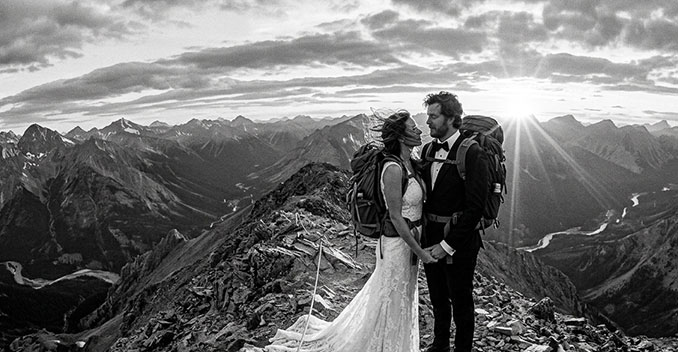
Alright, let’s talk honeymoons. These days we’re well-travelled, well-read, well-fed and for an intrepid few, quite possibly a bit over the traditional tropical cliché. I love philosophy, adventure and I tend to look for meaning in the journey, but practically speaking? I also look for incredible beaches, bustling markets, vibrant souks, restorative health holidays, hidden spas and local street food. And a brilliant night out followed by an excellent glass of wine is non-negotiable.
So when it comes to planning the ‘big trip’ after saying ‘I do’, I have some strong opinions. Firstly, safety while abroad is paramount. Not cutting corners is an absolute rule. Common sense, logistics, preparation, practicality and meticulous planning are your best friends here. You don’t need to sacrifice adventure to stay secure.
Clichés are out. The over-tourism of predictable white sands where you do nothing but sweat and drink sweet cocktails is appealing but for those that want more and are willing to compromise why not include an experience to get the best or both worlds. We want discovery, energy and a touch of the unusual, all while getting the best value for money. Let’s look at some of the quirkiest places on Earth to launch your marriage, with a healthy dose of upbeat energy. A lot of these destinations can be extremely expensive so think of them as themes, mood boards or the art of the possible. While you may not visit an underwater hotel, a hotel room or villa connected via Jetty outlooking the ocean may be more attainable and for others perhaps adding in some sailing or scuba diving.
1. The Underwater Hotel (Manta Resort, Tanzania)
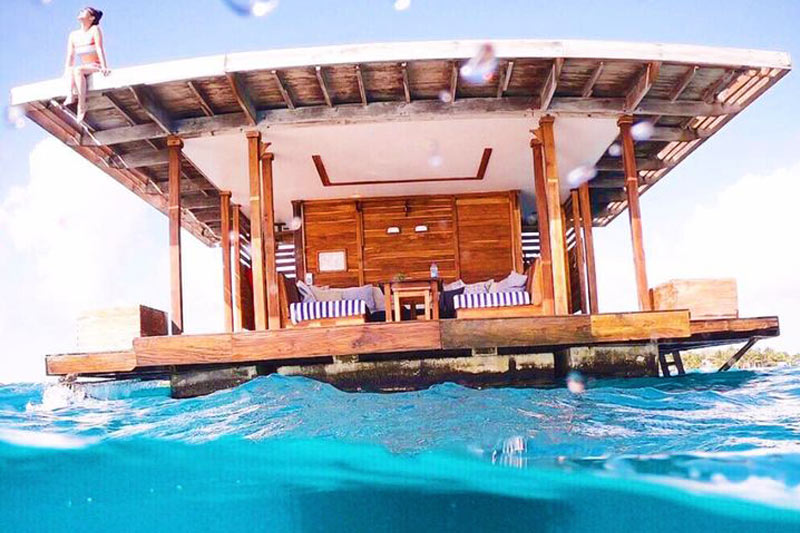
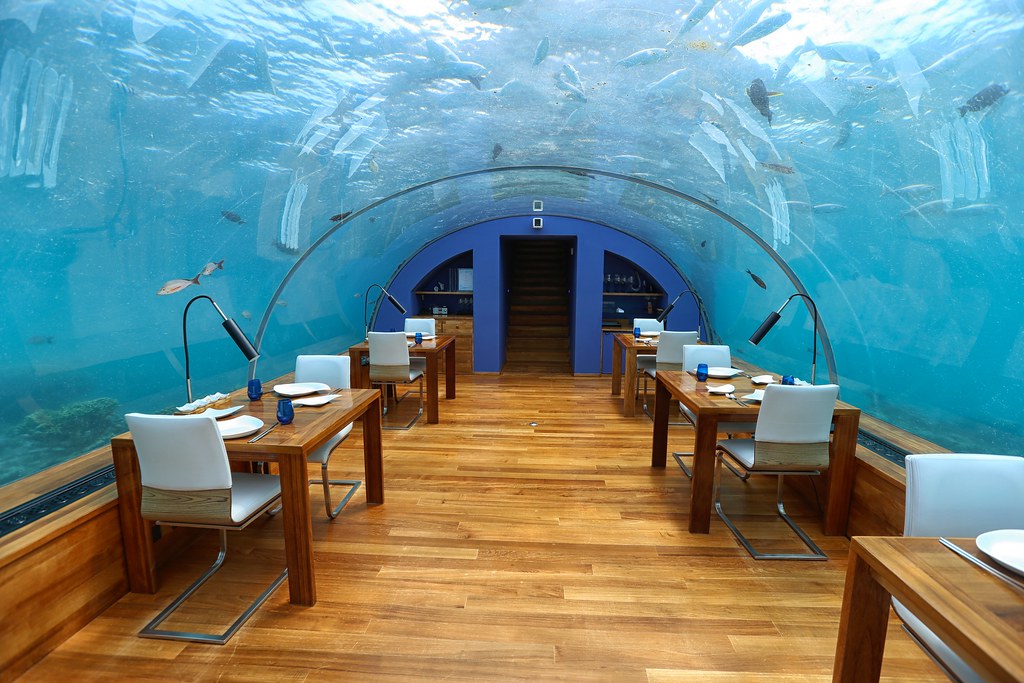
Forget a simple room with a sea view; we are going under it. The Manta Resort’s Underwater Room, floating approximately 250 metres off the coast of Pemba Island in Tanzania, is the absolute zenith of marine isolation. Engineered by Swedish design masters in November 2013, this three-level structural marvel features a submerged glass bedroom where trumpetfish and octopuses do the stargazing and you are the main exhibit.
The locality is steeped in the rich history of the Zanzibar Archipelago, a historical trading hub where Arabic, Swahili and European cultures collided. The regional character is wonderfully tranquil, completely detached from mainland chaos. For food, you will be feasting on fresh catch seasoned with Zanzibar clove, nutmeg and cinnamon—the local street food scene in Stone Town is a sensory festival you must plan into your itinerary.
While Pemba doesn’t have grand historic skyscrapers, its natural landmarks are the pristine coral climate refuges of the Pemba Channel. The local accent is a soft, rhythmic Swahili-infused English that makes you feel instantly welcome. A cheaper alternative? Book a classic eco-lodge on the Pemba mainland and hire a private dhow boat for sunset snorkelling.
- Website: themantaresort.com
- An honourable mention and slightly more upmarket shout out goes to the Conrad Maldives Undersea Hotel
2. The Mountain Top (Rifugio Lagazuoi, Italian Dolomites)
If your idea of romance involves high-altitude clarity, high art landscapes and crisp alpine air, skipping the beach for a mountain summit is peak common sense. Rifugio Lagazuoi sits perched at a staggering 2,752 metres in the Italian Dolomites, offering a panoramic overview of UNESCO-protected peaks that look like frozen stone waves.
This geographic area is fundamentally shaped by historical events; it was a brutal, volatile front line during the First World War and the mountain is carved with a labyrinth of historic tunnels you can still explore. Today, the character of the place is one of quiet majesty, far removed from urban noise. Notable sons of the region include mountaineering legend Lino Lacedelli.
Film buffs will recognise these dramatic limestone cliffs from Sylvester Stallone’s 1993 action classic Cliffhanger. When it comes to regional food, you are looking at hearty South Tyrolean fare like canederli (bread dumplings) and protected local cheeses like Puzzone di Moena, paired beautifully with a glass of crisp Alto Adige Pinot Nero. The regional accent shifts fascinatingly between Italian, German and Ladin. A cheaper alternative is staying in a valley chalet in Cortina d’Ampezzo and riding the cable car up for sunset.
- Website: https://rifugiolagazuoi.com
3. The Rainforest Canopy (Mashpi Lodge, Ecuador)
For a health holiday with a shot of adrenaline, hiding away in a glass-walled sanctuary amidst the Ecuadorian cloud forest is unmatched. Mashpi Lodge, opened in 2012 within a 3,000-acre private reserve, is a stunning modernist building that sits like a luxury spaceship in the middle of a prehistoric jungle.
The locality is part of the Chocó-Andean region, a biodiversity hotspot where scientists routinely discover new species of frogs and orchids—veritable notable daughters of the forest. The character of the place is intense, humid and utterly alive. Cinema has often tried to capture this green abyss, with the surrounding wilderness echoing the raw visual energy of films like The Mission (1986).
The regional food is a celebration of Ecuadorian coastal-mountain fusion: think ceviche with crunchy plantain chips and rich heirloom cacao hot chocolate. Ecuador’s protected produce includes its legendary single-origin dark chocolate, which you will likely consume in vast quantities at the lodge’s spa retreats. The local accent is clear, melodic Ecuadorian Spanish. If Mashpi stretches the budget, a fantastic cheaper alternative is finding a highly rated eco-pousada in Mindo, which offers similar cloud forest magic for a fraction of the cost.
- Website: mashpilodge.com
4. Deep Underground (Sala Silvermine, Sweden)
If you find the sun a bit too mainstream, how about sleeping 155 metres below the earth’s surface? The underground suite at Sala Silvermine in Sweden is officially the deepest hotel room in the world. Carved painstakingly by miners over centuries using the historic fire-setting technique, this pocket of warm air is surrounded by vast, dark galleries and subterranean lakes.
The mine was Sweden’s economic engine from the 15th century until production ceased in 1908, welcoming historic monarchs like King Gustav Vasa. The character of the locality is beautifully eerie, silent and entirely dark once you turn off the lamps. Notable sons of the wider Västmanland region include legendary silver artisans who shaped the nation’s visual heritage.
The regional food is robust Swedish comfort: think cured venison, wild lingonberries and Västerbottensost cheese. While no blockbusters have used this specific chamber as a set, the dark, industrial-gothic architecture heavily channels the brooding mood of The Girl with the Dragon Tattoo (2011). The regional accent is a lilting, melodic Swedish. A cheaper alternative? Stay in a boutique hotel in nearby Västerås and take the deep-mine guided day tour instead.
- Website: salasilvergruva.se
5. The Historical Fortress (Fort Clonque, Alderney)
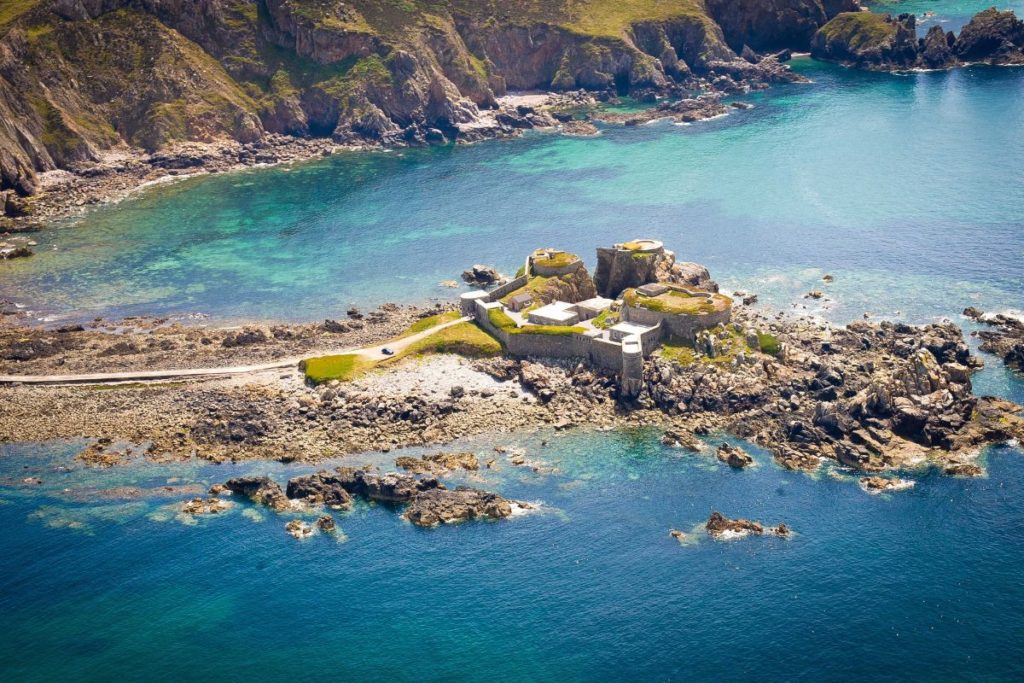
For those who want history, absolute solitude and zero chance of uninvited guests, Fort Clonque is a mid-19th-century fortress built on a massive rock off the coast of Alderney in the Channel Islands. Connected to the mainland only by a tidal causeway, you are completely cut off from the world when the tide rushes in.
Completed in 1855 to defend against perceived French aggression under Napoleon III, this landmark is a maze of granite quarters, vaulted magazines and gun emplacements. The character of the island is delightfully retro, windy and fiercely independent. Alderney’s most famous daughter is author Elisabeth Beresford (1926–2010), creator of The Wombles.
The island’s rugged coastlines have featured in various British maritime documentaries and independent coastal dramas. Feast on regional treasures like Alderney beef, locally caught lobster and rich Guernsey cream cheeses. The local accent is a delightful blend of maritime British English with a subtle Norman-French undertone. A cheaper alternative for history lovers is booking a quaint, land-locked Martello tower along the UK coast through the Landmark Trust.
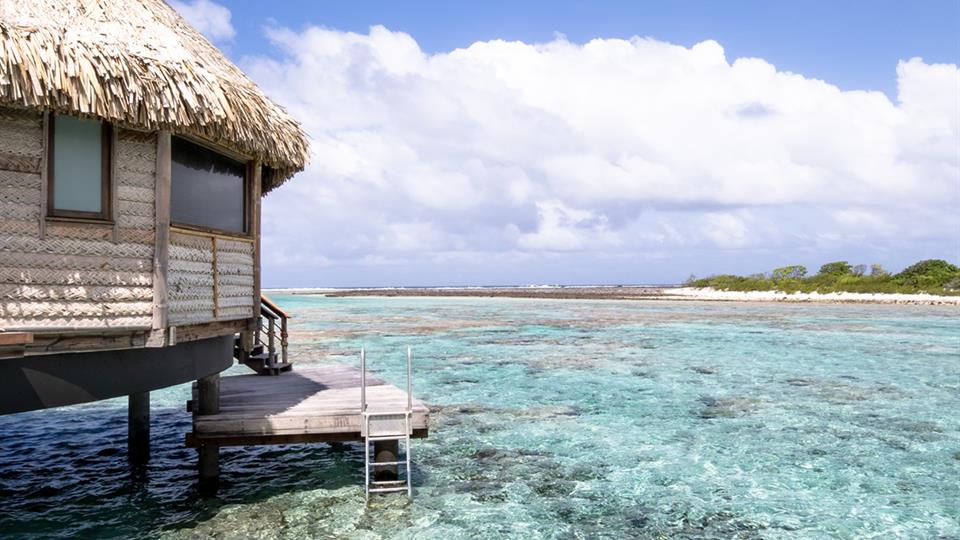
6. The Remote Desert Island (Tikehau Pearl Beach, French Polynesia)
If we must do an island, let’s make it so remote that maps barely recognise it. Tikehau is a coral atoll in the Tuamotu Archipelago of French Polynesia, shaped like a giant crown of wild coconut groves surrounding a pink-sand lagoon. The character of this locality is pure, unadulterated isolation—a sanctuary where the marine life outnumbers the humans a million to one.
Historically, the legendary oceanographer Jacques Cousteau explored these waters in 1987, declaring it to have the highest concentration of fish in any Tuamotu atoll. Cultural life here revolves around the Heiva festival in July, a vibrant explosion of traditional Polynesian dance, music and sports.
The region’s jaw-dropping beauty was famously captured in cinematic masterworks like The Thin Red Line (1998), filmed across the wider South Pacific. Regional food means poisson cru (raw tuna cured in lime juice and fresh coconut milk) and local tropical fruits. French Polynesia’s protected treasures include its world-famous black Tahitian pearls. The local accent is a soft, musical mix of Tahitian and French. A cheaper alternative? Look into local family-run guesthouses (pensions) on the neighboring atoll of Rangiroa.
- Website: https://www.chateaulemarara.org/en
7. The Wilderness Savannah (Angama Mara, Kenya)
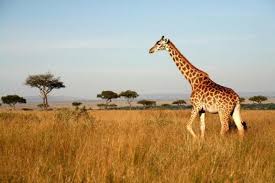
For a honeymoon surrounded by raw, unfenced natural life, standing on the edge of Kenya’s Great Rift Valley is unbeatable. Angama Mara sits suspended in mid-air above the Maasai Mara savannah, where millions of wildebeest, zebras and lions navigate their daily lives right below your private deck.
The historical weight of this landscape is immense; it is the ancestral land of the Maasai people, whose cultural festivals and striking red shúkàs define the human spirit of the region. This exact hillside is a famous landmark, serving as the romantic backdrop for Sydney Pollack’s iconic 1985 romantic drama Out of Africa, starring Meryl Streep and Robert Redford.
The character of the place is epic, ancient and deeply humbling. The regional food includes delicious Swahili-inspired curries, nyama choma (roasted meats) and fresh chapatis, often paired with protected Kenyan tea or coffee. The local accent is an elegant, impeccably clear Kenyan English. A cheaper alternative that doesn’t compromise on safety? Opt for an authentic, mid-range tented camp inside the Mara ecosystem that partners directly with local conservancies.
- Website: angama.com
8. The Future Sky Cruise (The Conceptual Airship)
Now, let’s look forward with a bit of creative foresight. The ‘Sky Cruise’—a massive flying hotel concept designed to hover above the clouds for years at a time—is not available to book yet. However, the aviation industry’s current investment in luxury airships suggests that high-altitude hospitality is making a massive comeback.
Historically, this draws on the grand, romantic era of the 1930s zeppelins, before the Hindenburg disaster of 1937 brought the industry to a tragic halt. The character of future airship travel will be pure, serene luxury, gliding silently over major global landmarks.
Aviation culture has always inspired cinema, from the futuristic retro-futurism of Sky Captain and the World of Tomorrow (2004) to the classic luxury airships seen in the Bond film A View to a Kill (1985). The dining onboard these future vessels will likely feature high-end molecular gastronomy and protected luxury goods like Scotch whisky and fine French cheeses. Until this launches, a brilliant and available cheaper amd much more down to earth is booking a luxury sleeper train journey like the Venice Simplon-Orient-Express to get that old-world, moving-view romance or hopping on a sea cruise.
9. Low Orbit Space (The Orbital Outpost)
If you have an astronomical amount of disposable cash and want a truly once-in-a-lifetime pre-honeymoon trip, commercial low Orbit space flights are now a reality albeit for minutes rather than hours or days. Looking down at the curvature of the Earth while floating in zero gravity is the ultimate statement in elite, avant-garde travel.
The historical timeline of space tourism kicked off in earnest in April 2001 when American businessman Dennis Tito became the first self-funded space tourist, paying a staggering sum to visit the International Space Station. The character of this environment is clinical, surreal and utterly weightless.
Space cinema has evolved from the practical models of Stanley Kubrick’s 2001: A Space Odyssey (1968) to the hyper-realistic digital compositing of Gravity (2013). Food in orbit is a triumph of food science—freeze-dried and vacuum-packed, though luxury commercial operators are now partnering with Michelin-starred chefs to create space-friendly gourmet pastes. The accent onboard is decidedly international, a mix of Houston English and Star City Russian. A cheaper, slightly more grounded alternative? Book an intense, zero-gravity parabolic flight experience right here on Earth.


10. The Ice Hotel (Icehotel Jukkasjärvi, Sweden)
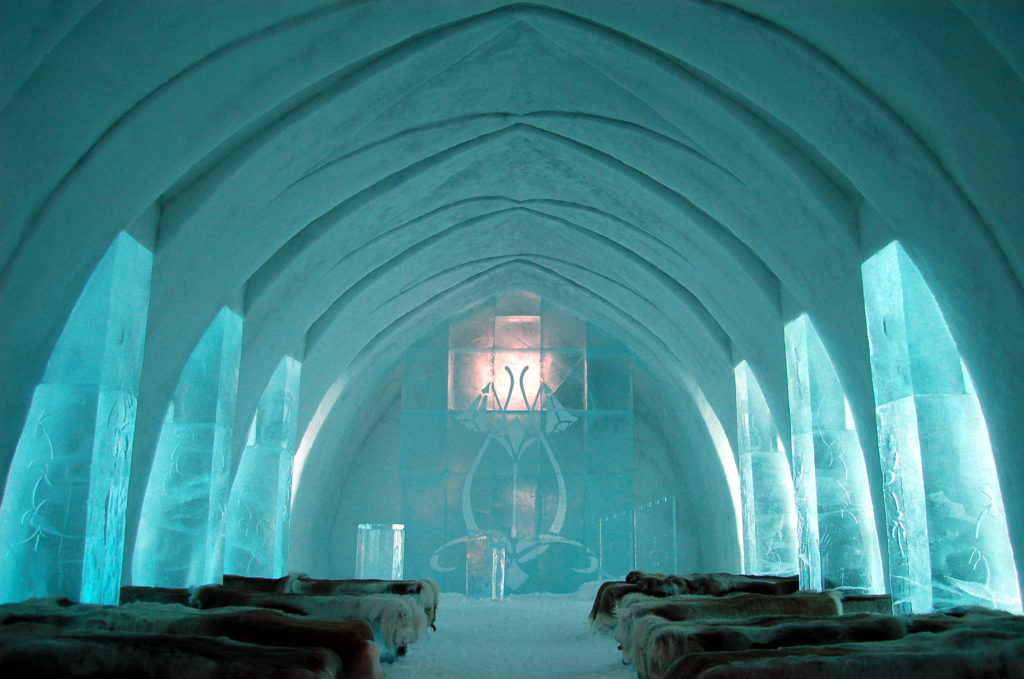
For couples who want to snuggle out of pure survival necessity, travelling 200 kilometres north of the Arctic Circle to Jukkasjärvi, Sweden, is an absolute masterclass in cool. Founded in 1989, the world’s original Icehotel is rebuilt every single winter using thousands of tonnes of pristine ice harvested directly from the frozen Torne River.
The locality is the heart of Sámi culture, the indigenous people whose historical events and reindeer herding traditions have shaped the Arctic for millennia. The character of the hotel is ephemeral, silent and beautifully sculpted, with temperature levels inside hovering around a steady -5°C. Notable sons of the region include acclaimed ice sculptors who gather annually to carve the themed suites.
The striking, crystalline architecture looks like a high-concept fantasy film, heavily echoing the ethereal winter aesthetics of Disney’s Frozen (2013) or the frozen landscapes of Die Another Day (2002). The regional food is fantastic: think smoked reindeer meat, cloudberry preserves and local Arctic char, served alongside shots of vodka in glasses carved entirely from river ice. The local accent is soft, melodic Swedish and northern Sámi dialects. A cheaper alternative? Visit the hotel for a day tour and stay in one of their warm, traditional wooden cabins nearby.
- Website: icehotel.com
11. The Cave Hotel (Kelebek Special Cave Hotel, Cappadocia, Turkey)
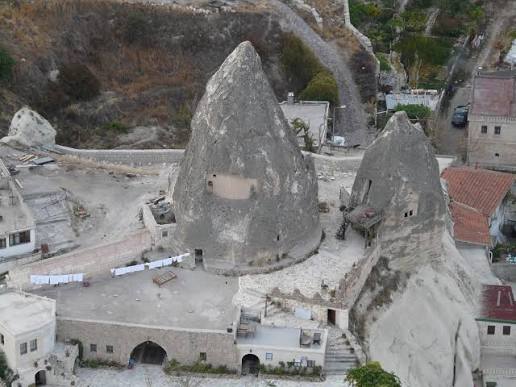
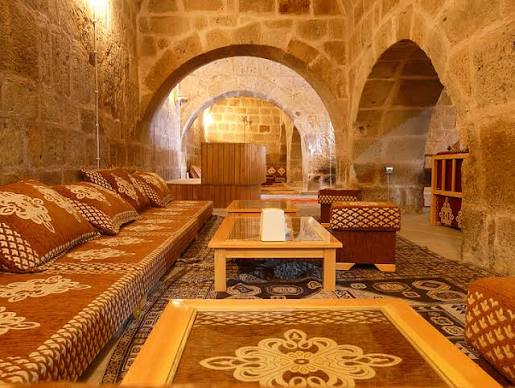
To close our list, let’s travel to a landscape that looks entirely alien yet is deeply rooted in human history. Cappadocia in Turkey is famous for its “fairy chimneys”—bizarre, towering rock formations into which ancient communities carved vast subterranean cities, churches and homes. Kelebek Special Cave Hotel allows you to sleep directly inside these historic tufa rock walls.
The region’s history is staggering, serving as an early Christian sanctuary during the Roman Empire, with the Göreme Open Air Museum standing as a premier cultural landmark. The character of Cappadocia is magical, especially at dawn when hundreds of colourful hot air balloons drift silently over the valleys. Notable figures from the wider region include ancient philosophers and theologians who shaped early Eastern thought.
This surreal landscape was a primary visual inspiration for the desert planet aesthetics in early Star Wars concepts and featured prominently in the thriller Ghost Rider: Spirit of Vengeance (2011). The regional food is phenomenal: try the testi kebab (meat cooked inside a sealed clay pot that is cracked open at your table) and local Turkish cheeses, washed down with Cappadocia’s surprisingly robust, award-winning local wines. The accent is warm, hospitable Central Anatolian Turkish. A cheaper alternative? Cappadocia is packed with incredible budget-friendly cave pensions that offer the exact same rock-cut architecture and rooftop views.
- Website: kelebekhotel.com
Beyond the Horizon of the Conventional Honeymoon
The trajectory of modern romance reveals that the most memorable journeys are those that challenge our perspectives and engage our sense of adventure. The honeymoons that truly break the mould are never those that rely on predictable, mass-produced luxury; they are the ones that understand the delicate balance between deep cultural immersion and impeccable practical planning. Whether you are floating over a coral garden in Tanzania, exploring WWI history on an Italian peak, or sleeping in a room carved from Arctic ice, these quirky destinations function as brilliant, vibrant oases of discovery.
They succeed because they refuse to cut corners on the quality of the experience. These locations show that the creative spirit of hospitality is at its best when it treats travellers with respect, offering unique regional food, deep historical context and architectural wonder. As the travel landscape continues to evolve away from static resorts toward meaningful storytelling, choosing a path less travelled feels increasingly vital—a testament to a partnership built on curiosity, discovery and a shared lifelong adventure.
Have Your Say
Which of these quirky honeymoon destinations sets your adventurous heart racing? Would you prefer the silent, submerged magic of an underwater bedroom, or does snuggling under reindeer furs in an ice suite sound like your perfect romantic getaway? Perhaps you have discovered an incredible, off-the-beaten-track escape that we have criminally missed.
Join the conversation or follow us on facebook, instagram, youtube, TikTok, LinkedIn and X/Twitter or why not submit your own article! Or email at contribute@criticalmatters.net and let us know your thoughts.
facts and links
Supported Facts
- Manta Resort Underwater Room: Designed by Genberg Underwater Hotels, opened in November 2013 off Pemba Island, Tanzania, featuring a bedroom structure anchored five metres below the surface of the Indian Ocean.
- Rifugio Lagazuoi: Perched at 2,752 metres in the Italian Dolomites, situated within a historic WWI battleground site near Cortina d’Ampezzo.
- Mashpi Lodge: Opened in 2012 within a 3,000-acre private reserve in the Chocó-Andean cloud forest of Ecuador.
- Sala Silvermine Underground Suite: Located in Sweden, situated 155 metres underground, making it the deepest hotel room in the world.
- Fort Clonque: A Victorian-era coastal fortress built on Alderney in the Channel Islands, completed in 1855 and currently managed by the Landmark Trust.
- Tikehau Atoll: Part of the Tuamotu Archipelago in French Polynesia, noted by Jacques Cousteau in 1987 for its extraordinary marine density.
- Angama Mara: A luxury tented camp overlooking Kenya’s Maasai Mara, built on the exact site where key romantic scenes for the 1985 movie Out of Africa were filmed.
- Icehotel Jukkasjärvi: Founded in 1989 in Swedish Lapland, constructed annually using ice blocks harvested from the Torne River.
- Kelebek Special Cave Hotel: Traditional cave dwelling accommodation located in Göreme, Cappadocia, Turkey, carved into historical volcanic tufa rock formations.


Be the first to comment