

Introduction: The Tuber That Built Nations
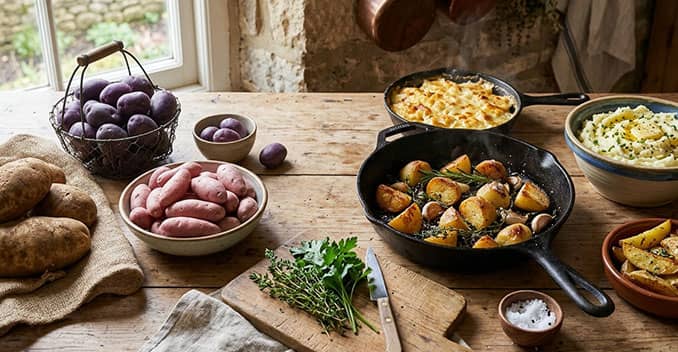
Potatoes have an undeniable claim to being the absolute king of the vegetable kingdom. From the ultimate, unpretentious home comfort food to the heights of Michelin-starred fine dining, this energy-rich tuber remains the understated star of the global plate. It acts as the ultimate supporting act, yet when executed with culinary precision, it effortlessly takes the lead role in its own right. They arrive in our kitchens in an astonishing array of shapes, colours and sizes. Whether scrubbed clean or left with skins on, mashed into a buttery base below a nourishing crisp or roasted to a shattering crisp, the universal truth remains: humanity is collectively in love with the spud.
Yet, the modern supermarket shelf obscures the epic, centuries-long historical arc of this magnificent root. Long before it became a staple of the British Sunday roast, the potato was the foundational fuel of ancient civilisations. It has transitioned through history from a revered mountain crop to an unfairly maligned “peasant food,” and finally into a global nutritional powerhouse. In an era dominated by concerns over ultra-processed foods, returning to the whole, home-cooked potato is one of the most radical, health-positive choices a casual cook can make. It is an ingredient that offers deep complex carbohydrates, vital micronutrients and an unmatched culinary versatility that bridges cultures across the globe.
Holistic Nutritional Value
To fully appreciate the potato, we must root out the myth that carbohydrates are the enemy of well-being. Grounded in firm nutritional science, whole potatoes are naturally fat-free, cholesterol-free and exceptionally high in dietary potassium—outclassing even bananas. When prepared mindfully at home without industrial additives, the potato provides stable, long-lasting glucose to the brain and muscles. It also delivers a powerful dose of Vitamin C and Vitamin B6. This guide explores eighteen iconic preparations, unpacking a rich cultural history, flavours and how to optimise preparation for maximum holistic health benefits.
1. Mashed Potatoes
The Comfort of the Andes
- Taste and Mouthfeel: Rich, deeply comforting, naturally sweet with a clean, earthy undertone. The mouthfeel is a luxurious, wholesome feel that melts effortlessly across the palate, mimicking the satisfying richness of dairy even when prepared simply with butter.
- Appearance and Feel: Smooth, matte-white or cream-coloured, aerated pockets. In the hand, a raw floury potato (like a Maris Piper or King Edward) feels dry, rough and distinctly dusty with loose starch.
- Cultivation and Origin: Originating high in the Peruvian Andes near Lake Titicaca between 8000 and 5000 BC, the potato was first domesticated by Inca ancestors. Main crop varieties for mashing are typically cultivated in loose, well-drained soil for 15 to 20 weeks before harvest.
- Health Values and Pairings: An exceptional source of Vitamin B6 and potassium, supporting nervous system health. When allowed to cool slightly, mashing produces resistant starch, which acts as a powerful prebiotic for gut health. Pairs beautifully with roasted root vegetables or a lean, home-made lentil stew and goes with almost all proteins.
- Fun Fact & Cultural Arc: The Incas freeze-dried mashed potatoes into a lightweight, survival food product called chuño, which could be stored in state warehouses for years to safeguard populations against crop failures.
2. Patatas Bravas
Spain’s Fiery Street Soul
- Taste and Mouthfeel: Bold, smoky and intensely savoury, punctuated by the fiery kick of cayenne pepper and pimentón. The mouthfeel delivers a distinct structural contrast—a sharp, crisp outer shell yielding to a hot, creamy center.
- Appearance and Feel: Chunky, irregular 2-centimetres, diced and glistening with a light coating of olive oil, tinted orange by spiced paprika. In the hand, raw waxy potatoes feel dense, firm and smoothly cold.
- Cultivation and Origin: Hailing from the bustling tapas bars of Madrid, Spain, this dish celebrates the potato’s post-1532 arrival in Europe via Spanish conquistadors. Waxy varieties take roughly 12 to 14 weeks to mature in sunny, temperate climates.
- Health Values and Pairings: By choosing to oven-roast the cubes in heart-healthy extra virgin olive oil at home rather than deep-frying, you retain the potato’s rich Vitamin C payload while adding powerful antioxidants from the garlic and tomatoes. Pairs perfectly with grilled Mediterranean vegetables or fresh seafood.
- Fun Fact & Cultural Arc: Originally a humble, inexpensive peasant food devised to warm citizens in Madrid’s working-class taverns, Patatas Bravas has evolved into the undisputed benchmark of Spanish street gastronomy.
3. Dauphinoise Potatoes
The Elegant Construction of France
- Taste and Mouthfeel: Decadent, garlic-infused and deeply nutty. The mouthfeel is incredibly silky and uniform; the thin layers slide smoothly against each other, offering a luxurious tenderness.
- Appearance and Feel: A highly structured, multi-layered golden brick, bubbling at the edges with caramelised proteins. In the hand, a raw potato sliced for this dish feels paper-thin, flexible and wet with natural starches.
- Cultivation and Origin: Created in the historic Dauphiné region in southeastern France, this dish was officially recorded on 12 July 1788 during a dinner thrown for municipal officials. It relies on medium-firm potatoes grown in fertile, stone-free soils over a 16-week cycle.
- Health Values and Pairings: While traditionally heavy, a nutrition-focused home cook can utilise skimmed milk mixed with calcium-rich Greek yogurt to slash saturated fats while boosting protein. The potato layers provide excellent satiety metrics, preventing overeating. Pairs magnificently with a crisp, bitter green salad.
- Fun Fact & Cultural Arc: This dish represents the ultimate food arc—transforming from a rustic, cold-weather peasant gratin designed for Alpine survival into a definitive masterpiece of classic French fine dining.
4. Chips
A Cornerstone of British Pub Gastronomy
- Taste and Mouthfeel: Earthy, robust and deeply satisfying. The mouthfeel is substantial and dense; a thick, satisfying crunch gives way to a floury, steaming interior that mimics the texture of freshly baked bread often contrasted with the cold wet feel of sauces like ketchup, brown sauce or mayo.
- Appearance and Feel: Blocky, thick rectangular batons with soft, golden-yellow edges. In the hand, a raw, thick-cut chip feels substantial, weighty and rigid.
- Cultivation and Origin: Born in the industrial heartlands of 19th-century Britain, thick-cut chips became a foundational working-class survival fuel. They are best made from Maris Piper potatoes, which thrive in Britain’s damp, cool climate over a 120-day growth cycle.
- Health Values and Pairings: Thick pub chips absorb significantly less oil than thin fries due to their lower surface-area-to-volume ratio. Par-boiling them before baking in an oven at 200°C creates an exceptionally healthy, non-ultraprocessed complex carbohydrate source. Pairs flawlessly with line-caught fish, Steak, Burgers or home-made mushy peas.
- Fun Fact & Cultural Arc: By 1910, there were over 25,000 fish and chip shops operating across the UK, cementing the thick-cut chip as a key driver of the British domestic economy during the industrial era.
5. Skin-On Chips
Keeping Nature’s Shield Intact
- Taste and Mouthfeel: Intensely rustic, nutty and packed with an authentic, unpeeled potato flavour. The mouthfeel features an extra structural chew from the crisp, roasted skin, followed by a light, fluffy core.
- Appearance and Feel: Varied golden shades with dark, fiber-rich brown borders running down the length of each baton. In the hand, they feel texturally complex, dry and rustic.
- Cultivation and Origin: Emerging from the modern slow-food movement across the UK and Ireland, this style rejects the wasteful industrial peeling processes of ultra-processed fast food. The potatoes are often harvested from organic farms where soil health is prioritised over aesthetics.
- Health Values and Pairings: Leaving the skin on preserves up to 50% of the potato’s total dietary fiber, which dramatically slows glucose absorption into the bloodstream, lowering the glycemic impact. It also locks in the Vitamin C located directly beneath the skin. Pairs beautifully with grilled organic chicken, other proteins or baked beans.
- Fun Fact & Cultural Arc: Historically, eating skin-on potatoes was a marker of rural poverty; today, it is celebrated by health-conscious chefs as a badge of sustainable, whole-food integrity.
6. Wedges
The Robust Crescents of Home Cooking
- Taste and Mouthfeel: Savoury, robust and highly seasoned. The mouthfeel is incredibly meaty and filling, offering the highest ratio of fluffy interior to crisp exterior among all sliced styles.
- Appearance and Feel: Large, distinctive crescent-moon shapes with thick, unpeeled backs. In the hand, a raw wedge feels substantial, heavy and angular.
- Cultivation and Origin: Popularised across home kitchens in North America and the UK during the late 20th century as a simple, knife-friendly alternative to complex slicing. They are grown using large main crop tubers that require plenty of space to swell over 140 days.
- Health Values and Pairings: Because they are large, they require only a minimal coating of oil to bake to perfection. High in magnesium and potassium, they support muscle recovery after exercise. Pairs wonderfully with a homemade yogurt-and-chive dip or grilled turkey burgers and all proteins.
- Fun Fact & Cultural Arc: The unique wedge shape allows the potato to cook evenly on a flat baking tray without needing to be turned constantly, making it a classic favourite for busy, time-poor families.
7. French Fries
The Thin Line of Precision
- Taste and Mouthfeel: Lightly salted, clean and delicate. The mouthfeel is brief and snappy—a quick, fragile crunch followed by an instantaneous melt-in-the-mouth sensation.
- Appearance and Feel: Ultra-thin, uniform rectangular straw-like matchsticks, pale straw in colour. In the hand, they feel incredibly light, delicate and slender.
- Cultivation and Origin: Despite the name, the historical roots trace back to Belgium, where poor villagers along the River Meuse traditionally fried thin strips of potato when the river froze over in winter, preventing them from catching fish.
- Health Values and Pairings: Industrial, ultra-processed french fries are frequently coated in modified starches and flash-frozen in poor-quality oils. However, slicing fresh Russet potatoes at home and air-frying them allows you to enjoy this classic shape with zero industrial additives. Pairs naturally with a fresh garden salad, most meats and all savoury sauces.
- Fun Fact & Cultural Arc: Thomas Jefferson is credited with introducing the French-cut fry to America in 1802, requesting “potatoes served in the French manner” for a White House dinner.
8. Fries with Seasoning (Cajun Style)
The Spicy Fry of the Delta
- Taste and Mouthfeel: Piquant, earthy and highly aromatic, with a subtle creeping heat from white pepper and garlic. The mouthfeel is intensely stimulating to the salivary glands due to the complex surface spices coating the crisp exterior.
- Appearance and Feel: Slender fries coated in a textured, dark terracotta-coloured dust. In the hand, they feel slightly dry and highly texturised from the pulverised herbs.
- Cultivation and Origin: Emerging from the vibrant, multi-cultural Creole and Cajun food cultures of Louisiana, USA, this style showcases how African, French and Native American spice traditions transformed basic economical ingredients.
- Health Values and Pairings: The addition of whole spices like paprika, oregano and cayenne adds a powerful hit of anti-inflammatory compounds and metabolism-boosting capsaicin to your meal, reducing the need for excess table salt. Pairs brilliantly with grilled lean meats or roasted corn on the cob.
- Fun Fact & Cultural Arc: Cajun spice blends were originally developed as a survival strategy by exiled Acadian settlers, using local wild herbs to make cheap, preserved root crops highly palatable.
9. Loaded Fries
The Mother Load of Fries
- Taste and Mouthfeel: A complex, maximalist explosion of cheesy, tangy and savoury notes. The mouthfeel transitions rapidly from the crisp base of the fries to the gooey, molten texture of the toppings.
- Appearance and Feel: A vibrant, chaotic mountain of colour, with melting cheese stringing between golden potato pillars. In the hand, a single loaded fry feels heavy and dripping with sauce.
- Cultivation and Origin: Emerging from contemporary urban food truck cultures across global cities, this style represents a modern evolution of communal dining. It relies on sturdy, double-cooked potatoes that can hold the load e.g. cheese without collapsing.
- Health Values and Pairings: While commercial versions are often ultra-processed calorie bombs, a mindful home cook can load oven-baked fries with nutrient-dense toppings like black beans, fresh avocado, spring onions and low-fat curd cheese to create a balanced, fibre-rich meal. Pairs excellent with fresh lime wedges and all savoury additions.
- Fun Fact & Cultural Arc: This style mirrors the classic Canadian poutine, a dish born in rural Quebec in the late 1950s that has since conquered the global street-food landscape.
10. Thousand-Layer Potatoes
The Pinnacle of Fine Dining
- Taste and Mouthfeel: Unbelievably rich, buttery and clean. The mouthfeel is a stunning technical achievement—hundreds of micro-shattering, paper-thin crispy glass-like layers giving way to a velvety, compressed core.
- Appearance and Feel: A geometrically flawless, pale-gold rectangle showing a dense, compressed lamination pattern along its sides. In the hand, when preparing it feels surprisingly solid, rigid and cold-pressed.
- Cultivation and Origin: Developed in the kitchens of modern haute cuisine, this technique requires highly skilled chefs using a mandoline to slice King Edward potatoes into microscopic sheets. These sheets are layered with clarified butter, weighted down, baked, chilled overnight, sliced into blocks and flash-crisped.
- Health Values and Pairings: Because it is incredibly rich, it is served in small, controlled portions. By utilising a high-quality clarified butter (ghee) or cold-pressed rapeseed oil at home, you obtain healthy fats while enjoying a highly satisfying culinary experience. Pairs beautifully with a lean venison fillet or steamed asparagus.
- Fun Fact & Cultural Arc: This dish represents the absolute peak of the potato’s food arc—taking a basic, dirt-grown root vegetable and applying classical French pastry lamination techniques to create a luxury structural masterpiece.
11. Jacket Potatoes
British Comfort Food 101
- Taste and Mouthfeel: Deeply caramelised and nutty on the outside, incredibly sweet, clean and light on the inside. The mouthfeel features a thick, leathery, smoky crunch from the skin, contrasting with a piping hot, powdery interior.
- Appearance and Feel: A large, dark-brown, crinkled oval rustic orb with a snowy white interior bursting forth from a central split. If cooled down enough and you’re brave enough to hold it and take a bit, In the hand it feels incredibly hot, heavy and reassuringly solid.
- Cultivation and Origin: A staple of British culinary culture since the Victorian era, when street vendors sold them hot to laborers as hand-warmers and cheap, nutritious mid-day meals. They require large, late-season baking potatoes grown for over 150 days.
- Health Values and Pairings: The ultimate whole food. Baking a potato whole in its skin preserves 100% of its nutrient density, with zero leaching of water-soluble vitamins into cooking water. It provides an exceptional dose of dietary potassium and iron. Pairs perfectly with high-protein tuna, cheese or home-baked beans.
- Fun Fact & Cultural Arc: During the 19th-century London winters, it was estimated that over ten tons of hot jacket potatoes were sold on the city streets every single day, keeping the working classes fueled and warm.
12. Jersey Royals
The Protected Pearl of the Channel
- Taste and Mouthfeel: Uniquely sweet, intensely nutty and distinctly coastal with a subtle hint of salt. The mouthfeel is exceptionally firm, waxy and clean, requiring a satisfying bite rather than melting away.
- Appearance and Feel: Small, kidney-shaped new potatoes with fragile, paper-thin skins that flake off at a touch. In the hand, they feel firm, compact and delicate.
- Cultivation and Origin: Grown exclusively on the island of Jersey in the English Channel, this variety enjoys Protected Designation of Origin (PDO) status. They are hand-planted in winter on steep, south-facing coastal slopes called cötils, which warm up quickly in the spring sun.
- Health Values and Pairings: Harvested as an immature crop, Jersey Royals have a lower glycemic index than mature potatoes, meaning their carbohydrates release slowly into the body. They are incredibly rich in Vitamin C. Best boiled simply with a sprig of fresh mint and served alongside a crisp spring salad, a perfect side to any meal..
- Fun Fact & Cultural Arc: Jersey farmers have used vraic—locally harvested seaweed—as a natural fertiliser since the 12th century. This enriches the soil with minerals and sea salt, giving Jersey Royals their world-famous, protected flavour profile.
13. Parmentier Potatoes
The Herb-Infused Cubes of Paris
- Taste and Mouthfeel: Fragrant, garlicky and deeply savoury. The mouthfeel is small and snappy; because the cubes are tiny (typically 1-centimetre), they offer a high ratio of crisp surface area that crackles delightfully before revealing a soft core.
- Appearance and Feel: Perfect tiny golden dice, speckled with dark green herbs and caramelised garlic flecks. In the hand, they feel light, cubical and firm.
- Cultivation and Origin: Named in honour of Antoine-Augustin Parmentier, the visionary 18th-century French pharmacist who dedicated his life to proving to Europeans that the potato was safe and highly nutritious for human consumption.
- Health Values and Pairings: Slicing potatoes into small cubes allows them to roast incredibly quickly at high heat, requiring less overall cooking time and fat. Rosemary and thyme bring powerful antioxidant compounds to the plate. Pairs exceptionally well with roasted white meats or Mediterranean roasted vegetables.
- Fun Fact & Cultural Arc: To popularise the potato, Parmentier famously hired armed guards to watch his royal potato patches near Paris, reasoning that locals would assume the crop was incredibly valuable and steal it—which they promptly did, spreading cultivation across France.
14. Tater Tots
The Retro Cylinders of Efficiency
- Taste and Mouthfeel: Comforting, onion-tinged and highly savoury. The mouthfeel is unique due to the structural design—a shredded, texturised interior wrapped in a uniform, intensely crunchy cylinder.
- Appearance and Feel: Small, bite-sized golden-brown cylinders with an intentionally rough, bumpy surface. In the hand, they feel compact, light and structured.
- Cultivation and Origin: Invented in 1853 in America as a clever way to utilise leftover potato scraps from commercial french fry production, preventing massive food waste. Modern home versions use freshly grated Russet potatoes.
- Health Values and Pairings: While commercial tater tots are often highly processed industrial products, making them at home by grating whole boiled potatoes, mixing with onion powder, shaping and baking in an air fryer yields a healthy, fun, oil-controlled treat. Pairs brilliantly with a fresh, home-made spicy tomato salsa.
- Fun Fact & Cultural Arc: The name “Tater Tot” is a registered trademark of the American frozen food company Ore-Ida, but it has become a generic term worldwide for these iconic, bite-sized potato barrels.
15. Hash Browns
The Shredded Breakfast
- Taste and Mouthfeel: Salty, buttery and intensely crispy. The mouthfeel is highly complex—hundreds of individual crisp potato shreds intertwine to form a lattice that shatters upon impact, followed by a moist, tender interior.
- Appearance and Feel: A thick, flat golden-brown rectangle or triangle with a rough, highly defined shredded texture. In the hand, it feels rigid, dry and structurally solid.
- Cultivation and Origin: Originating in New York City hotels during the 1890s, “hashed brown potatoes” quickly became the definitive anchor of the classic Western breakfast table. They rely on high-starch starchy potatoes that hold their shape when shredded.
- Health Values and Pairings: Squeezing out all excess moisture from the grated potato before cooking is the secret to a healthy hash brown; it allows the natural starches to bind the lattice together, meaning you can crisp them in a pan with only a light brush of olive oil. Rich in energy-giving B-vitamins. Pairs perfectly with poached free-range eggs and fresh spinach.
- Fun Fact & Cultural Arc: The term “hash” derives from the French word hacher, meaning to chop—reflecting how this dish originally gave a delicious second lease of life to leftover boiled potatoes from the night before.
16. Fondant Potatoes
The Culinary Melt of the Masters
- Taste and Mouthfeel: Deeply complex, buttery and intensely savoury with a rich stock reduction flavour. The mouthfeel is absolute luxury—the potato behaves like butter, presenting a firm, seared top crust that yields to a soft interior.
- Appearance and Feel: Cylindrical, flat-topped barrels with a deep mahogany caramelised crust on the ends and a pale, stock-infused middle. In the hand, they feel dense, heavy and moist.
- Cultivation and Origin: A definitive technique of classical French cuisine, designed to showcase how a potato can absorb intense liquid flavours while maintaining its structural integrity. It requires large, firm baking potatoes cut with a pastry cutter.
- Health Values and Pairings: Although traditionally braised in vast quantities of butter, modern nutrition-conscious chefs sear the tops in a splash of olive oil before braising the cylinders in rich, antioxidant-packed garlic and vegetable stock, slashing fat while maximising flavour extraction. Pairs beautifully with a lean beef medallion and roasted asparagus.
- Fun Fact & Cultural Arc: The word fondant comes from the French verb fondre, meaning to melt—a literal description of how this classical preparation transforms a rigid root vegetable into a melting culinary delicacy.
17. Duchess Potatoes
The Regal Swirls of the French Court
- Taste and Mouthfeel: Delicately seasoned with nutmeg, rich and light. The mouthfeel features a fragile, thin outer crust that snaps lightly before giving way to an incredibly airy, piped purée that dissolves on the tongue.
- Appearance and Feel: Beautiful, structured rosettes with sharp, caramelised ridges that catch the light. In the hand, they feel light, delicate and dry to the touch.
- Cultivation and Origin: Created for French royalty in the late 18th century, this dish represents the artistic heights of the Parisian court. It brings together floury potatoes that are thoroughly dried out after boiling to ensure a stiff, piped dough.
- Health Values and Pairings: By using a light touch of heart-healthy olive oil and egg whites rather than heavy cream to bind the mixture before piping, you create a beautiful, elegant complex carbohydrate side dish that is naturally low in fat and rich in protein. Pairs beautifully with baked salmon or steamed green beans.
- Fun Fact & Cultural Arc: The dish was named Pommes Duchesse because it was traditionally served to visiting duchesses and high aristocrats to show off the technical precision and artistic flair of the royal palace kitchens.
18. Hasselback Potatoes
The Accordion Elegance of Sweden
- Taste and Mouthfeel: A brilliant hybrid of a baked potato and a crisp chip. The mouthfeel is exceptionally fun—each individual thin slice behaves like an independent crisp, giving a rhythmic crunch before transitioning into a soft, unified potato base.
- Appearance and Feel: A whole potato transformed into an elegant accordion fan, with hundreds of thin vertical slices opening outward as it roasts. In the hand, it feels texturally complex, rigid and expansive.
- Cultivation and Origin: Invented in 1953 by Leif Elisson, a trainee chef at the Hasselbacken restaurant on the island of Djurgården in Stockholm, Sweden, this dish became an overnight international design sensation.
- Health Values and Pairings: Slicing the potato accordion-style vastly increases its surface area, allowing it to roast to an incredible crisp using only a fraction of the oil required for deep frying. This preserves its rich store of magnesium, potassium and copper. Pairs beautifully with a homemade herbed yogurt sauce or grilled fish.
- Fun Fact & Cultural Arc: The original Hasselbacken restaurant where this iconic cutting technique was born has been operating as a hospitality venue in Stockholm since 1748, bridging centuries of culinary history.
The Victory of the Whole Food
Celebrating the Spud’s True Potential
The journey through the diverse world of the humble potato reveals a profound truth: this ancient tuber is far more than a simple side dish. It is a masterclass in culinary versatility and holistic nutrition. From its domestic origins high in the Andean mountains to its role as a vital survival food during the industrial revolutions of Europe, the potato has consistently proven its worth as an invaluable source of human energy. When we step away from the industrial, ultra-processed options found in fast-food chains and reclaim the art of peeling, slicing and roasting whole potatoes in our own kitchens, we unlock their true health-positive benefits.
By mastering these eighteen distinct styles—whether you are whipping up a comforting cloud of fresh mash, roasting garlic-infused Parmentier cubes, or flaking open a perfectly baked jacket potato—you are engaging with a rich cultural lineage. Potatoes provide our bodies with high-satiety complex carbohydrates, essential potassium and vital vitamins with zero added additives or processed chemicals. The message for the modern food lover is clear: embrace the spud in its whole, natural form. Treat it with the culinary respect it deserves and allow this magnificent root vegetable to take its rightful place as the healthy, life-giving king of your dinner table.
Have Your Say
What is your absolute go-to potato preparation when you need pure, unadulterated kitchen comfort? Have you ever tried making the architectural Thousand-Layer potato at home, or do you prefer the simple, rustic elegance of a skin-on pub chip? Let us know your favourite home-cooking tips in the comments below! Join the conversation or follow us on facebook, instagram, youtube, TikTok, LinkedIn and X/Twitter or why not submit your own article! Or email at contribute@criticalmatters.net
Verified Facts
- The potato (Solanum tuberosum) was first domesticated by indigenous civilisations in the region of modern-day southern Peru and northwestern Bolivia between 8000 and 5000 BC.
- The earliest archaeologically verified potato tuber remains were discovered at the coastal site of Ancón in central Peru, dating back to 2500 BC.
- Potatoes were officially introduced to Europe via Spain around 1570 and arrived in the British Isles shortly after between 1588 and 1593.
- The French pharmacist Antoine-Augustin Parmentier successfully won a prize from the Academy of Besancon in 1773 for proposing the potato as a vital nutritional alternative to combat human famine.
- The Jersey Royal potato variety (International Kidney) enjoys Protected Designation of Origin (PDO) status, meaning only potatoes grown on the island of Jersey can legally bear the name.
- A single whole baked potato with its skin intact contains significantly more dietary potassium than a standard banana, alongside roughly 30% of an adult’s daily recommended intake of Vitamin C.



Be the first to comment