

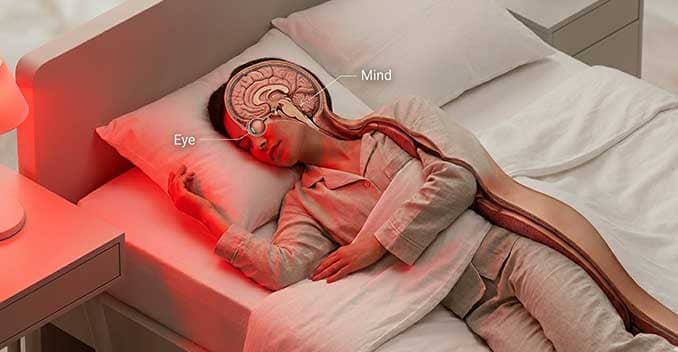
In the quiet corners of the wellness world, a gentle revolution is taking place—one that doesn’t require a marathon or a restrictive diet, but simply a seat in front of a specific hue or even better wake up with it. Red Light Therapy (RLT), or Photobiomodulation as the scientists prefer to call it, has moved from the niche clinics of NASA and elite sport to potentially make it into our homes. It is a therapy that invites us to pause, to bathe in a wavelength that our bodies have craved since we first sought the warmth of the rising sun.
The Mitochondrial Spark: How Red Light Works
The Science of the Photo-Acceptor Red light therapy operates at a cellular level, specifically targeting the mitochondria. The primary mechanism involves an enzyme called Cytochrome C Oxidase (CCO). In stressed or aging cells, nitric oxide binds to CCO, effectively “clogging” the cellular engine and slowing down energy production. +2
When we expose our skin to wavelengths between 630nm and 850nm, the photons are absorbed by the CCO, displacing the nitric oxide and allowing oxygen to rush back in. This “unclogging” triggers a surge in ATP production, the universal currency of energy in the human body. As of April 2026, clinical consensus suggests that this process can significantly enhance the body’s natural ability to repair and regenerate itself.
Skin, Scars, and the Collagen Bloom
A Structural Renaissance The most visible benefits of RLT are often found on the surface. By stimulating fibroblast cells, red light increases the production of collagen and elastin—the proteins responsible for skin structure and elasticity.
Facts from 2025 and 2026 clinical reviews show that consistent exposure (typically 10-20 minutes, 3 times a week) can reduce the appearance of fine lines and accelerate wound healing. However, it is important to note that while RLT can have a positive effect on the body it is not a “beauty” tool, its true value lies in passive health benefits—improving blood circulation to the tissue and reducing inflammatory markers like Reactive Oxygen Species (ROS).
Circadian Neutrality and Mental Calm
The Evening Sentinel In an era dominated by the sleep-disrupting “blue light” of our screens, red light serves as a circadian-neutral alternative. Unlike blue light, which suppresses melatonin production and signals “daytime” to the brain, red light does not interfere with the body’s preparation for rest.
Emerging research in February 2026 highlights the “Red Light Evening Routine” as a supportive tool for nervous system regulation. While it is not a sedative, by allowing the natural rise of melatonin to occur uninterrupted, it helps transition the mind into a state of “rest and digest,” fostering a more mindful approach to the end of the day. Yet, many others and myself included support red light primarily in the morning as a gentle wake up to the harsh light of day.
The Obverse: Balance and Body Positivity
The Spectrums of Health It is vital to view RLT within a holistic framework. A red light panel is not a substitute for a nutritious diet or maintaining a healthy BMI (ideally between 18.5 and 24.9). We are all on a health spectrum, and not everyone fits the “ideal” silhouette or metabolic profile.
Health is about the integration of habits. While RLT can assist to some degree with muscle recovery and inflammation, its effects are amplified when paired with the basics: hydration, movement, and a balanced mind. For those outside the “typical” health ranges, RLT can be a gentle, non-invasive starting point for a wellness journey, but it should never replace the guidance of a General Practitioner (GP).
The Grounded Approach
Consultation and Caution While generally considered safe and non-invasive, RLT is not a panacea. Individuals with specific conditions, such as hyperpigmentation or certain active cancers, should exercise extreme caution. Furthermore, the NHS currently utilizes a variation called Photodynamic Therapy (PDT) for specific skin cancers, which involves a light-sensitive cream and a bright light source—a far more intense and medicalised procedure than at-home LED panels.
Always consult your GP before starting a new therapy, especially if you are pregnant or taking photosensitising medications. True health is not found in a single device, but in the mindful, balanced choices we make every day.
An easier and less intrusive way to incorporate red light into your day would definitely be using a multi-functional led smart light bulb to be red at morning and or going to bed without having to invest in the LED panels often used in RLT.
[Facts]
- 630–850 Nanometres: The optimal wavelength range for therapeutic red and near-infrared light.
- ATP (Adenosine Triphosphate): The primary energy molecule increased by red light stimulation of the mitochondria.
- 15 January 2026: Date of a major meta-analysis confirming RLT’s role in reducing muscle soreness in elite athletes.
- 18.5 – 24.9: The NHS-recommended BMI range for a healthy weight, which enhances the systemic benefits of light therapy.
- 10-20 Minutes: The standard recommended duration for an at-home red light session to ensure safety and effectiveness.



Be the first to comment