

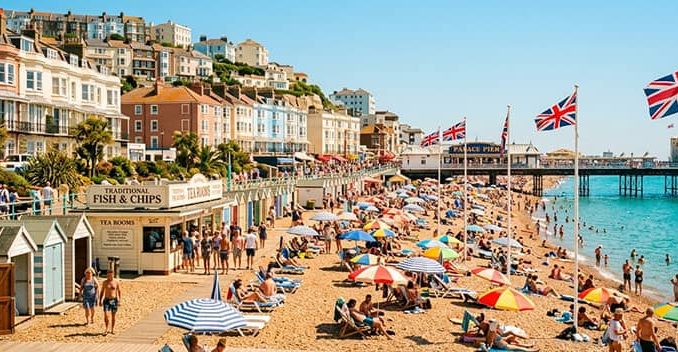
Let’s be entirely honest with ourselves for a moment. For years, the standard British summer ritual has involved packing overstuffed suitcases, surviving the sensory overload of an airport security line, making a beeline to board first and paying over the odds for a bottle of water—all to lie on a sun drenched beach in southern Europe next to eighty other people who flew in from Luton, Gatwick or Heathrow. We endured it because it guaranteed sunshine, delicious local food, drink and a chance to unwind. It reflects many childhood memories and will, I’m sure continue in many more to come.
These days something fundamental has shifted. Between rising aviation costs, unpredictable flight cancellations and the simple reality that our own backyard is delivering unprecedented heatwaves and warm spells. The staycation is no longer a compromise—it could well become the smarter choice if these trends continue especially in summer 2026.
Why board a four-hour flight when you can pack the car, bring the kids, the dog, and your favourite bottle of wine, cheese, picnic food and be sitting on a pristine Cornish beach, overlooking a lake, or fort, or get lost wandering through a vibrant market before lunch? From the turquoise waters of the Jurassic Coast to the bustling street food havens of our regional capitals, to the quintessential beaches, lanes and promenades of Brighton and Hove. Staying local offers extraordinary value for money less logistical hassle, and a chance to rediscover the remarkable variety right on our doorstep and most importantly to support British tourism.
Let’s look at why staying in Britain might just be the absolute best move for your next holiday.
Classic Drizzle to Sunny Galore
The story of British weather has historically been one of unpredictable drama. For generations, British holidaymakers packed for four seasons in a single afternoon—a strategy born of necessity when visiting our coastal resort towns. It’s fair to say we have what’s called, ‘changeable weather’ and it can turn on a sixpence.
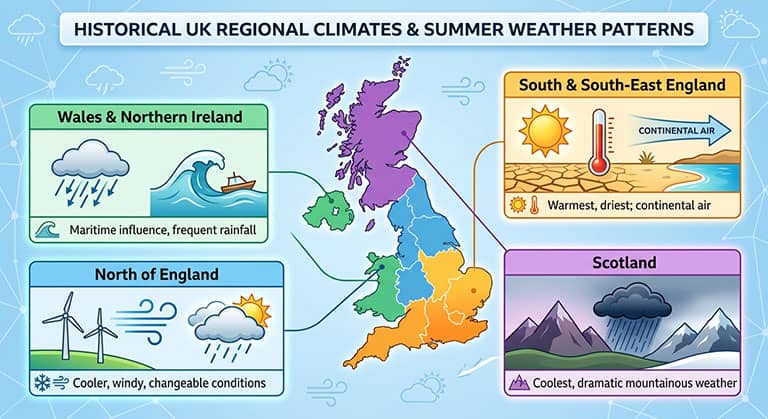
Official record-keeping by the UK Met Office began back in 1884, establishing a baseline for a temperate maritime climate that traditionally saw a distinct divide. Historically, the south and south-east of England enjoyed milder, drier summers influenced by continental air masses, while Wales, Ireland, and the wet, windy North faced frontal systems rolling directly off the North Atlantic. Scotland, with its magnificent mountain ranges and deep lochs, earned a reputation for dramatic, cool weather, where a bright blue sky could transform into a gale within hours.
Yet this varied geography is precisely what created the unique charm of the British seaside holiday—grand Victorian promenades, shelter-seeking piers, and resilient beachgoers wrapped in woollen jumpers over swimwear.
HISTORICAL UK REGIONAL CLIMATES & SUMMER WEATHER PATTERNS
- South & South-East England | Warmest, driest; continental air
- Wales & Northern Ireland | Maritime influence, frequent rainfall
- North of England | Cooler, windy, changeable conditions
- Scotland | Coolest, dramatic mountainous weather
How Recent Heatwaves Compare to History
Whether driven by global climate shifts or complex oceanic phenomena such as El Niño, the British summer environment has evolved dramatically. While the historic summer of 1976—famous for its 16 consecutive days above 30°C during the “Summer of Love”—stood for 50 years as the national benchmark for heat, recent summers have smashed those long-standing records.
In June 2026, the Met Office recorded a unprecedented provisional June daily maximum temperature of 37.7°C at Lingwood in Norfolk. Wales also saw record-breaking June heat reaching 35.9°C at Cardiff Bute Park, while Northern Ireland matched its previous high of 30.8°C at Castlederg.
Unlike the prolonged, dry heat spell of 1976, modern heatwaves deliver shorter, remarkably intense spikes accompanied by exceptionally warm overnight temperatures—with new daily minimums reaching 23.5°C. With temperatures regularly matching destination spots in Southern Europe, the thermal argument for flying south has completely shifted.
Extreme Heat and National Infrastructure
While glorious sunshine makes for ideal beach outings, prolonged periods of extreme heat also present genuine operational challenges for British infrastructure. Unlike continental Europe or tropical destinations built around heat mitigation, the UK’s rail networks, energy grids, and water systems were historically engineered to retain warmth and withstand damp winters.

During acute heat spells, steel rail tracks can expand and buckle, leading to precautionary speed restrictions and travel delays across key lines. Furthermore, sustained high temperatures put pressure on regional energy supplies as fans and cooling systems run continuously, while water companies closely monitor reservoir capacity. With the risk of local hosepipe bans and drought conditions following dry summers, staying informed and planning ahead remains vital for hassle-free travel.
Britain and the Global Temperature Stage
When evaluating global summer conditions, the contrast between the UK and traditional overseas destinations becomes striking. Across mainland Europe, the Americas, Asia, and Africa, summer temperatures increasingly exceed 40°C to 45°C, accompanied by intense ultraviolet levels and severe humidity.
For travellers who prefer comfortable warmth over oppressive heat, the UK climate offers a sweet spot. You can enjoy al fresco dining, spa days, and coastal hikes without the physical toll of extreme Mediterranean heat waves, making local trips particularly attractive for families with young children or those seeking wellness retreats.
From historic cities to coastal escapes, several regions across the UK consistently record top summer temperatures while delivering world-class sightseeing:
- Norfolk & East Anglia: Home to Lingwood, where recent national temperature records were set, this region offers expansive sandy beaches, the Norfolk Broads, and picturesque market towns.
- South Wales: Cardiff and the surrounding Vale of Glamorgan offer vibrant cultural landmarks alongside coastal paths, having recently reached high temperatures of 35.9°C.
- The Jurassic Coast (Dorset & Devon): Famous for dramatic limestone archways like Durdle Door, golden sands, and clean coastal waters perfect for swimming.
- The Kent & Sussex Riviera: Known for historic seaside culture, thermal spa experiences, and boutique vineyard tours.
Maximising Value and Local Experiences
Choosing to stay within Britain makes sound economic sense. When you eliminate international airfares, luggage surcharges, car hire fees, and currency exchange rates, add-on insurance, your holiday budget stretches much further. That money can be redirected into higher-quality boutique accommodation, rejuvenating spa treatments, or exceptional dining experiences. Although it has to be noted the UK is still not a cheap destination, the calculation between airfare and staying home for a lot of travellers for get aways will definitely tip in favour of the UK.
Britain’s cultural calendar is equally rich. Instead of spending days in transit, you can enjoy world-renowned events such as the Edinburgh Festival Fringe, music festivals like Glastonbury and Camp Bestival, or regional street food markets showcasing artisan local produce.
The decision to holiday domestically is no longer just a backup option—it is a practical, value-driven, and thoroughly enjoyable choice. With warmer summer weather, rich local culture, world-class dining, and diverse landscapes ranging from rugged highlands to sunny beaches, the UK offers everything needed for a memorable getaway without the stress of international travel and often heavier cost burdens.
Have Your Say!
Are you planning to stay in the UK for your next holiday, or are you still loyal to trips abroad? Where is your absolute favourite British beach, market town, or hidden getaway? We would love to hear your recommendations and travel tips!
Join the conversation or follow us on facebook, instagram, youtube, TikTok, LinkedIn and X/Twitter or why not submit your own article! Or email at contribute@criticalmatters.net
Facts
- The UK Met Office began compiling official national climate observational records in 1884.
- On 26 June 2026, a provisional UK record high temperature for the month of June of 37.7°C was recorded at Lingwood, Strumpshaw Hill in Norfolk, surpassing the previous June record of 35.6°C set in Southampton in 1976.
- Wales set a new June temperature record of 35.9°C at Cardiff Bute Park on 25 June 2026.
- Northern Ireland equalled its long-standing June maximum temperature record of 30.8°C at Castlederg on 25 June 2026.
- The summer of 1976 featured 15 consecutive days exceeding 32°C somewhere in the UK.
- The UK recorded a new high daily minimum temperature of 23.5°C at Cardiff Bute Park on 25 June 2026.


Be the first to comment