

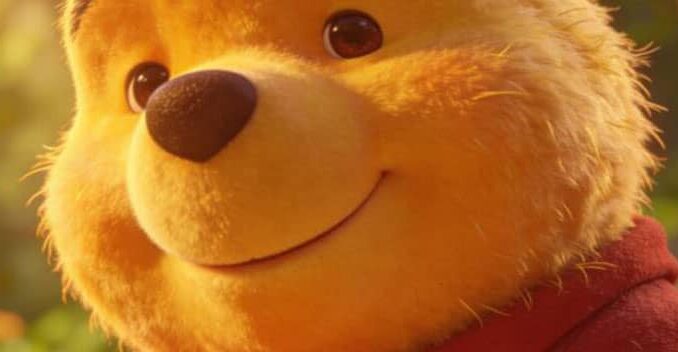
We’ve long treated children’s animation as a saccharine, pastel-hued safe and soft world designed to pacify the young while adults sip tea and focus on other things. That however is more a thing of the past. If we apply a subtle deconstruction to character archetypes and motivations a far more compelling truth emerges. These beloved figures from our collective cultural upbringing are not merely one dimensional personalities in a 2D or 3D package; they are rich psychological portraits with identifiable traits common with adults and children alike. From chronic anxiety and manic hyperactivity to existential isolation and deep-seated abandonment issues, children’s characters have always served as mirrors for the human condition in all its messy, neuro-diverse glory.
Art history teaches us that enduring cultural artefacts survive precisely because they contain (like a good diamond) multifaceted depth, appeal, sparkle and a little refraction. When we look past the formal analysis one can identify that these stories have dealt with these specific neuroses before they even had a name. Looking at these characters through the eyes of story through a critical, cultural framework allows us to appreciate the brilliant foresight of their creators. Technology and creativity co-exist to bring these inner turmoils to vibrant life on screen, proving that great storytelling transcends demographic boundaries. Let us pull back the curtain on the animated psyche and examine how our favourite fictional icons map onto the intricate architecture of the mind. We’ll look at a few stories as there are far too many to cover in one article alone. Why not try yourself and look at different characters and see what you can relate with and/or identify.
The Animated Psychology Spectrum
- [Anxiety & Neurosis] -> Winnie-the-Pooh, Rabbit, Piglet
- [Hyperactivity] -> Tigger, Roo
- [Existential Dread] -> Wall-E, Nemo, Dory
- [Power & Ambition] -> Shere Khan, Gaston, Scar
Winnie the Pooh and Generalised Anxiety
Beneath the honey-pot exterior lies a creature grappling with a profound, low-grade generalised anxiety disorder. Created by British author A.A. Milne (1882–1956), the original stories were born out of bedtime tales told to his son, Christopher Robin Milne, drawing inspiration from his stuffed toys in the Ashdown Forest of East Sussex. When adapted by Walt Disney Productions, the character transformed into a global icon of gentle neurosis, constantly worrying about the honey supply and his own fluctuating worth.
The featurette Winnie the Pooh and the Honey Tree premiered on 4 February 1966, directed by Wolfgang Reitherman (1909–1985) and produced by Walt Disney Productions, featuring the iconic voice of Sterling Holloway (1905–1992) as Pooh. Aimed primarily at young children, the film possesses a timeless warmth that allows adults to appreciate its gentle, philosophical pacing. Notable for its gentle humour—such as Pooh getting stuck in Rabbit’s doorway after eating too much honey—it established a production standard that grossed millions globally over its lifetime, cementing Pooh as the patron saint of gentle worriers. To a certain extent there’s an element of comfort eating in there too.
Rabbit and Chronic Stress and Control
If Pooh represents ambient anxiety, Rabbit is the physical embodiment of acute, high-functioning stress and obsessive-compulsive need for control. Also originating from A.A. Milne’s literary universe, Rabbit is perpetually guarding his vegetable garden against perceived chaos, embodying the classic OCD / Type-A personality unable to sit still in a changing world.
Within the cinematic adaptations, Rabbit’s frantic need for order provides brilliant comedic friction against the relaxed entropy of his woodland peers. The character reflects the post-war British zeitgeist of rationing, duty, and meticulous domestic management, filtering societal pressure through the comical lens of a very stressed garden owner.
Eeyore and Treatment-Resistant Depression
Eeyore stands as animation’s most enduring depiction of melancholia and chronic depression. With his detached worldview, sagging posture, and iconic detached tail pinned on with a rusty nail, he offers a stark, unflinching look at existential bleakness within a children’s landscape – possibly even being attached to age, such as the ‘I’ve seen it all before’ way of looking at the world, making it harder to get enthused about life’s little joys which are treated with a dose of the laisse a faire.
Voiced memorably across various classic iterations by legendary actors like Ralph Wright (1904–1983), Eeyore never asks to be fixed; he simply exists in his grey reality, teaching young viewers empathy for those who experience the world without rose-tinted glasses.
Tigger and Roo, Manic Energy and Hyperactive Impulses
The dynamic duo of Tigger and Roo brings unbridled kinetic chaos to the Hundred Acre Wood. Tigger bursts onto the scene with a manic, hyperactive, and impulsive energy that clinical observers might map directly onto attention deficit hyperactivity disorder (ADHD). His famous declaration that “bouncing is what tiggers do best” captures the uncontainable impulse control struggles familiar to educators and parents alike.
Young Roo balances this with sweet, wide-eyed hyper-fixations on the world around him. Together, their dynamic explores the spectrum of youthful exuberance, where high energy meets a profound need for structured community boundaries.
Piglet and Owl: Hyper-Vigilance and Intellectualised Grandiosity
Piglet’s stuttering and small frame mark him as a textbook case of acute fear, anxiety, phobia and hyper-vigilance. In sharp contrast, Owl presents a delightful case of mild intellectual narcissism and mild misanthropy, frequently embellishing his own nonexistent academic credentials while dispensing rambling, dubious advice to his neighbours.
Created during an era when eccentric British archetype humour heavily influenced children’s literature, both characters ground the Hundred Acre Wood in recognisable human frailties.
Wall-E: Solipsism and the Digital Hermit
Shifting from the woodland to the cosmos, Pixar’s WALL·E (2008) presents a poignant study in engineered isolation and solipsistic existence. Directed by Andrew Stanton and produced by Pixar Animation Studios with a budget of roughly $180 million, the film grossed over $616 million worldwide. Featuring voice work from Ben Burtt and Elissa Knight, the film targets family audiences with a sophisticated critique of consumerism and technological alienation.
The title character, a solitary compacting robot left behind on a desolate Earth, exhibits a touching hoarding compulsion and deep-seated loneliness, finding solace in discarded human artifacts. The film remains a triumph of visual storytelling, using minimal dialogue to explore profound themes of ecological collapse and human disconnection.
Paddington Bear: The Immigrant Experience and Abandonment Trauma
Rooted in the post-WWII British cultural landscape, Paddington Bear—created by Michael Bond (1926–2017) and first published in 1958 in A Bear Called Paddington—articulates the hidden emotional weight of displacement and abandonment issues. Armed with a duffel coat, a jar of marmalade, and a luggage tag reading “Please look after this bear,” Paddington navigates London with polite displacement.
The 2014 live-action/animation hybrid film Paddington, directed by Paul King and produced by David Heyman with a £38 million budget, grossed over $282 million globally. Starring Ben Whishaw as the voice of Paddington and Nicole Kidman as the antagonist, the film charmed international audiences. It serves as a brilliant cultural allegory for the immigrant experience, hospitality, and finding psychological safety in a foreign land.
Happy Feet: Identity Crisis and Societal Non-Conformity
George Miller’s (born 1945) animated musical masterpiece Happy Feet (2006), produced by Animal Logic and Warner Bros. Pictures with a production budget of $100 million, raked in an impressive $384 million worldwide. Featuring the voice talents of Elijah Wood as Mumble—a penguin born without the traditional “heart song” required to attract a mate, instead possessing an obsessive talent for tap dancing—the film explores profound themes of neurodivergence, self-belief, and systemic rejection.
Targeted at family audiences, the film balances dazzling motion-capture dance sequences with stark environmental commentary, asking hard-hitting questions about conformity, institutional rigidity, and the courage required to stand outside the cultural norm.
Finding Nemo: Separation Anxiety and Parental Overprotectiveness
Pixar’s aquatic masterwork Finding Nemo, released on 30 May 2003, was directed by Andrew Stanton and Lee Unkrich, produced by Graham Walters, and voiced by Albert Brooks and Ellen DeGeneres. Made on a budget of $94 million, it shattered box office records by grossing over $871 million during its initial run.
The narrative engine is driven not just by Nemo’s youthful defiance, but by Marlin’s crippling, trauma-induced separation anxiety following a tragic family loss. The film brilliantly deconstructs the psychological boundaries of parenting, illustrating that true love requires risking emotional vulnerability rather than locking children in an insulated bubble.
Dory: Memory Deficits and Resilient Optimism
Dory, introduced in Finding Nemo and later fronting her own sequel Finding Dory (2016)—which grossed over $1 billion worldwide—brings short-term memory loss to the forefront of mainstream animation. Rather than playing her condition strictly for cheap laughs, the filmmakers imbue Dory with an inspiring, adaptive resilience.
Her famous mantra, “just keep swimming”, serves as a profound psychological coping mechanism for navigating cognitive impairment, proving that optimism and emotional intelligence can triumph over neurological adversity.
11. Shere Khan: Authoritarian Power and Territorial Envy
Stepping into the realm of classic antagonists, Rudyard Kipling’s (1865–1936) The Jungle Book antagonist Shere Khan represents calculated, aristocratic menace and power hunger. In Disney’s beloved 1967 animated adaptation—directed by Wolfgang Reitherman and featuring George Sanders (1906–1972) as the suave, terrifying voice of the tiger—Shere Khan’s refined menace contrasts sharply with the chaotic jungle around him.
Produced during Walt Disney’s final personal involvement before his death in December 1966, the film grossed over $205 million across its lifetime releases, cementing its place as a cornerstone of traditional cel-animation excellence.
Baloo: The Laissez-Faire Hedonist
Conversely, Baloo the bear—voiced immortalised by Phil Harris (1904–1979)—exemplifies the ultimate laissez-faire, hedonistic philosophy of “The Bare Necessities”. Written by Terry Gilkyson (1916–1999), the song earned an Academy Award nomination. Baloo represents the carefree counter-culture spirit, advocating for emotional ease and rejecting societal pressures in favour of simple, unburdened joy.
Maui, Gaston and Hercules: Mythological Ego and Narcissistic Armor
Epic animation has long explored the inflated ego, from Disney’s Hercules (1997) to Moana (2016). Characters like Gaston (Beauty and the Beast, 1991) and the demigod Maui (Moana, voiced by Dwayne Johnson) provide fascinating case studies in toxic masculinity, arrested development, and narcissistic personality structures masking deep-seated insecurities.
Through postmodern deconstruction, these films subvert traditional mythic heroism, forcing hyper-masculine icons to confront their own emotional limitations and learn true communal empathy.
Woody and Buzz Lightyear: The Saviour Complex and Delusions of Grandeur
Pixar’s watershed feature Toy Story (1995), directed by John Lasseter as the first-ever fully computer-animated feature film, was produced by Pixar and released by Walt Disney Pictures on 22 November 1995. Made on a $30 million budget, it grossed over $373 million globally.
The psychological core of the film rests on the friction between Woody’s anxious savior complex and deep fear of obsolescence, paired with Buzz Lightyear’s complete psychotic break and delusion of grandeur regarding his identity as a space ranger. Their rivalry and subsequent bonding offer a brilliant masterclass in ego death and mature friendship.
Cruella de Vil: Monomaniacal Psychosis and Manic Obsession
From 101 Dalmatians (1961), directed by Clyde Geronimi, Hamilton Luske, and Wolfgang Reitherman, comes Cruella de Vil—a masterpiece of manic-depressive villainy. Based on Dodie Smith’s (1896–1990) 1956 novel, Cruella is driven by a singular, unhinged obsession with fur coats, characterised by wild mood swings, chain-smoking theatricality, and frantic driving.
Voiced by Betty Lou Gerson (1914–1999) and animated by Marc Davis, she remains one of cinema’s most electrifying depictions of unbridled, aristocratic narcissism.
Scrat from Ice Age: Obsessive Compulsive Drive and Fixation
Blue Sky Studios’ Ice Age (2002), directed by Chris Wedge and Carlos Saldanha, introduced Scrat the saber-toothed squirrel. Operating on pure, frantic, obsessive-compulsive drive, Scrat’s eternal, futile quest to secure a single acorn defies the laws of physics and common sense.
With a production budget of $59 million and a global box office return of $383 million, the franchise utilised cutting-edge CGI technology to deliver physical comedy rooted in classic silent-film tradition.
Grug Crood: Xenophobia and Change Resistance
In DreamWorks Animation’s The Croods (2013), directed by Kirk DeMicco and Chris Sanders, patriarch Grug embodies the ultimate psychological barrier: rigid resistance to change, xenophobia, and luddite paranoia.
Produced on a $135 million budget and grossing over $587 million worldwide, the film uses prehistoric survival as an ingenious metaphor for adolescent independence and parental anxiety over an evolving, uncertain future.
The Enduring Mirror of Animation
Children’s animation has never been a simple escape; it is a profound artistic medium that captures the full spectrum of the human psyche. By examining characters through a lens of psychological nuance, cultural context, and technical mastery, we discover that our animated favourites are mirrors reflecting our own anxieties, joys, and neuroses. As technology continues to evolve hand-in-hand with creative vision, the stories we tell will only grow richer, proving that art and psychology will forever remain intertwined.
Have Your Say
Which animated character do you feel best encapsulates your own quirky inner monologue or neuroses?
If you were affected by or are interested in the subject, join the conversation or follow us on facebook, instagram, youtube, TikTok, LinkedIn and X/Twitter or why not submit your own article! Or email at contribute@criticalmatters.net
Facts & Cultural Context
- Animation Milestones: Toy Story (1995) marked the transition of the animation industry into full computer-generated production, transforming commercial cinema standards.
- Literary Roots: Many iconic animated figures originate from British children’s literature published during the mid-20th century, reflecting post-war social sensibilities.



Be the first to comment