


We live in a culture that is utterly obsessed with happiness, most of it curated and selective. Social media feeds are flooded with relentless positivity, wellness and “good vibes.” Via algorithms and dopamine reactions to stimuli, like Pavlov’s dog we’ve been nudged and conditioned to view joy as the ultimate metric of a successful life. There is absolutely nothing wrong with that, however having a preoccupation with one emotional state is imbalanced and moreover the joy is coupled with validation, reactions, emojis and views – all fairly surface level stuff. Yet it does cause many who can’t switch off or who don’t know how to digital detox real pain – by design.
As someone who’s into mindfulness, body positivity and psychological safety, I have always taken an empirical and somewhat data-driven stance informed by my instinct. Our bodies are not meant to move continuously from one epic sensation to the next. We need blended emotional states, moments of cerebral passage and so on. Bodies and minds are dynamic, self-regulating ecosystems operating on a magnificent emotional spectrum. When we try to force ourselves into a narrow box of perpetual vapid highs, we can disrupt our integral balance. The fascinating, scientifically verified truth is that the body needs joy, fun and sensation but also at times distance, reflection and tears. This can help release accumulated stress, or share moments of joy. Both can lower cortisol. Crying real tears can trigger deep emotions that induce is own euphoria.
Anatomy of a Laugh

Why exactly do we laugh? From an evolutionary perspective, one would think laughter did not develop merely as a response to jokes; it most likely happened long before hominids developed language. It was more likely a pre-verbal social bonding mechanism way before syntax, speech and grammar. I speculate that shared laughter served as a collective way to let off steam and was most likely a crude form of slap stick. For example tripping over a rock or falling off a log. When we laugh in real life (IRL), we are quite possibly participating in an ancient practice shared by all cultures. Now humans have evolved and so has our need for laughter, we laugh when nervous and sad.
Physiologically, a genuine laugh is an intense, full-body event. The moment a stimulus is processed by your brain’s limbic system, a rapid-fire physical chain reaction is initiated:
The Brain Chemistry
[Limbic Stimulation] -> [Vigorous Diaphragm Spasms]
[Inhibited Cortisol] -> [Flood of Beta-Endorphins]
[Nitric Oxide Release] -> [Vascular Vasodilation]
We all laugh differently. Some cackle, some snort, others chuckle, others laugh more internally and some wheeze. And I don’t know what Jimmy Car does but it’s hilarious, I’d call it ‘the gasp laugh’. Most undergo spasms that alter breath and we generally don’t laugh and speak. Laughter triggers an neurochemical cascade: the pituitary gland floods the bloodstream with beta-endorphins—the body’s natural opiates—while simultaneously inhibiting the production of cortisol and adrenaline. Concurrently, the vascular endothelium releases nitric oxide, causing your blood vessels to dilate, improving circulation and lowering blood pressure.
The emotional state associated with this reaction is an immediate sense of lightness, safety and deep social connection, laughter also creates a sense of affirmation and validation. We all know it can be sometimes problematic to be the first to trip the laughter scale. This biochemical release is so potent that it can occasionally overload our neural wiring entirely, leading to the beautiful irony of “tears of joy”—a safety mechanism where the brain uses a crying response to bring an excess of positive emotional arousal back down to baseline.
Are we the only creatures capable of this? Absolutely not. Pioneering neuroscientist Jaak Panksepp (1943–2017) famously discovered that rats emit high-frequency, 50-kHz ultrasonic chirps when tickled or engaged in play, a primitive form of laughter tied to social bonding and relationship building.
However, humans possess the unique ability to fake it. We can easily spot “fake” or polite social laughter because it relies on the voluntary motor cortex, activating only the muscles around the mouth. Genuine laughter is involuntary, driven by the supplementary motor area of the brain, engaging the orbicularis oculi muscles to crinkle the corners of the eyes. This authentic somatic resonance is so distinct that you can literally “hear a smile” over an audio call, as a smiling facial expression structurally alters the shape of the vocal tract, brightening the acoustic resonance of the human voice.
The Cathartic Euphoria of Tears
If laughter is our internal sun then crying is the storm or the moon —and it is equally essential. While humans share basic autonomic reflexive tears – to protect the eye – with other mammals, we are entirely unique in our ability to shed emotional tears. We cry to signal deep internal distress, solicit social support and process overwhelming cognitive loads that cannot be articulated through language alone.
When you experience intense grief, frustration, or sadness, the amygdala registers the emotional emergency and signals the hypothalamus. This activates the autonomic nervous system, triggering a distinct physical chain reaction: your heart rate spikes, your throat tightens as the glottis opens to maximise oxygen intake (creating that familiar, painful “lump in the throat”) and the lacrimal gland receives a direct command to produce emotional tears.
Crucially, the chemical composition of emotional tears is radically different from basal or reflex tears. Landmark research conducted in the late 20th century by American biochemist Dr. William H. Frey II demonstrated that emotional tears contain significantly higher concentrations of protein-based hormones. Specifically, they are packed with:
- Adrenocorticotropic Hormone (ACTH): A primary driver of systemic stress.
- Prolactin: A hormone heavily tied to emotional expression.
- Leucine-Enkephalin: An endogenous opioid peptide and natural painkiller.
___________________________________________
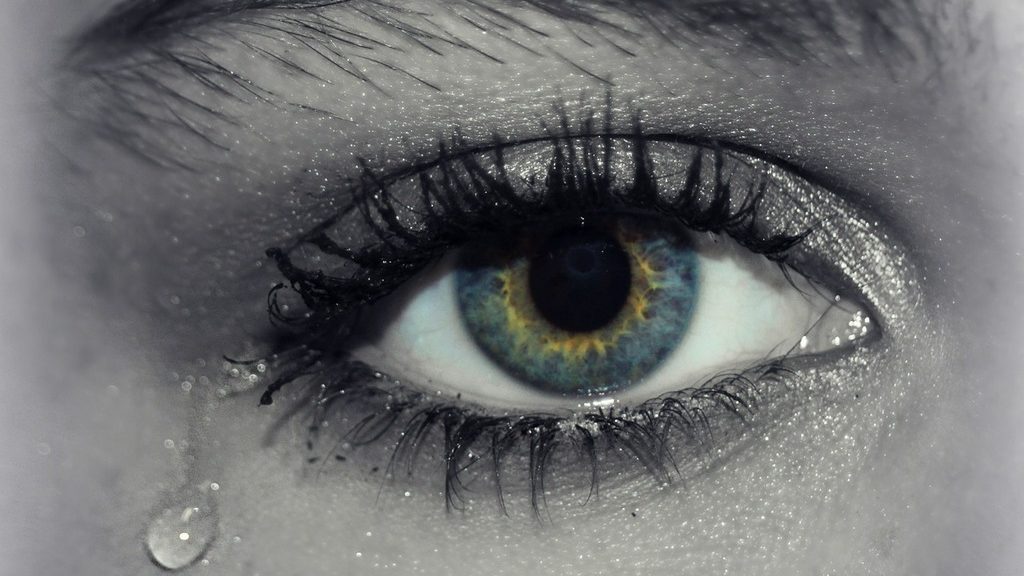
Emotional Tears (Compsition)
– High Concentration of ACTH (Stress)
– Elevated Prolactin Levels
– Rich in Leucine-Enkephalin (Opioid)
___________________________________________
Crying literally excretes stress chemicals from the body. The release of leucine-enkephalin acts as a localised, soothing narcotic for your nervous system. This is why a deep, uninhibited crying session is followed by a profound, heavy wave of calm— and catharsis or emotional euphoria. It provides a clean slate for the mind, signals that something has passed, lowering your heart rate below its initial resting state and shifting your body out of a sympathetic “fight-or-flight” panic into a parasympathetic state of rest and digest.
Yet, because society slightly stigmatises this beautiful process, many of us engage in “masking”—smiling over our sadness to present a facade of control and flawless accomplishment. While elephants, dogs and primates display clear evidence of grief, visible ritual mourning and profound depression, humans are the only known species that consciously suppress or fake tears for social positioning. It’s good to see now though changes where vulnerability and being open is accepted more.
Just like a fake smile, fake tears are easily spotted by an astute observer; they lack the symmetrical, involuntary micro-expressions of the brow and the genuine facial flushing caused by autonomic arousal. Furthermore, sadness can always be heard in the human voice. When a person is genuinely sad, their subglottic pressure usually drops, their speech rhythm slows down and their vocal pitch flattens, creating an unmistakable, heavy acoustic signature that immediately alerts our evolutionary empathy radars. Also the cadence of words become laboured, are slower and often times don’t come out at all and also another tell is for people to usually have a slight change in complexion and certainly redness of the eyes at times.
When we compare laughter and crying, we discover that they are simply two different paths leading to a not so different destination: neurochemical regulation. Humour provides an instant, sharp hit of dopamine alongside an immediate reduction in circulating cortisol. It is a high-speed, proactive reset button that changes your perspective and breaks cognitive loops.
Crying, on the other hand, is a slower, deeper and more meditative reset. It offers a heavy dose of endorphins and oxytocin through the mechanism of catharsis, allowing you to physically get something heavy off your chest. Both processes are completely natural and don’t need batteries to induce. These mechanisms are built directly into our DNA.
Toxic Positivity vs. Chronic Despair
While both emotional expressions are vital tools for maintaining systemic equilibrium, a healthy psyche requires balance. Everything in moderation—including moderation itself. It is completely natural to laugh more when you are socialising on holiday, or to feel profoundly sad during serious life events involving loss or change. We must give ourselves the grace and space to cope in our own unique ways without judgment.
However, if you notice someone or catch yourself displaying strangely over-positive reactions or constant, uninterrupted humour, be aware that this can often be a psychological defence mechanism used to deflect from deep-seated trauma or neuroatypical masking. Conversely, prolonged, unyielding sadness or out of character non-verbal responses that stretch on for weeks without relief can be a significant indicator of clinical depression. If these behaviours manifest completely out of character and become deeply imbalanced, it is a crucial warning sign that it is time to step back, reach out for professional help and consult a GP.
When navigating a difficult emotional season, avoid the urge to completely isolate yourself from your support systems. At the same time, do not throw yourself into a frantic whirlwind of new social situations or distractions just for the sake of staying busy. Superficial distraction rarely solves underlying systemic issues permanently. True mindfulness lies in the middle of the spectrum: having the courage to sit quietly with your sadness, allowing your tears to wash through your system when they need to and keeping your heart open to the spontaneous, healing medicine of a genuine belly laugh.
Ultimately, achieving genuine wellbeing and body positivity requires us to celebrate our internal complexity. Laughter and crying are not opposing forces; they are the twin pillars of human emotional resilience. By understanding the specific neurochemical profiles of both reactions—from the cortisol-lowering power of a chuckling fit to the stress-excreting, opioid-rich benefits of emotional tears—we can stop fearing our darker moods and start embracing them as functional tools for survival. Trust the evolutionary toolkit of your body: give yourself permission to feel the full spectrum of humanity and never apologise for a necessary tear or an unbridled laugh.
Have Your Say
Have you ever experienced that profound, calm wave of somatic euphoria after a deep, uninhibited crying session? Do you sometimes catch yourself using humour or constant positivity to mask internal stress or avoid difficult conversations in social settings?
If you were affected by or are interested in the subject, join the conversation or follow us on facebook, instagram, youtube, TikTok, LinkedIn and X/Twitter or why not submit your own article! Or email at contribute@criticalmatters.net to share your personal experiences with holistic healing.
Facts and Links
Facts Section
- The Evolution of Laughter: Evolutionary biologists trace the origins of human laughter back over 10–15 million years to shared primate play signals, functioning as an essential evolutionary precursor to spoken language.
- William H. Frey’s Tear Research: Landmark biochemical trials proved that emotional tears contain up to 24% higher concentration of pure protein content than reflex tears triggered by environmental irritants.
- Jaak Panksepp’s Discovery: In 1999, neuroscientist Jaak Panksepp (1943–2017) published his definitive study demonstrating that rats emit distinct ultrasonic vocalisations during positive social play, changing how science views mammalian joy.
- The Post-Crying Homeostatic Shift: Clinical data demonstrates that while the act of crying temporarily elevates heart rates, it is immediately followed by a prolonged parasympathetic shift that lowers baseline cardiovascular stress indicators below pre-crying levels.

Be the first to comment