

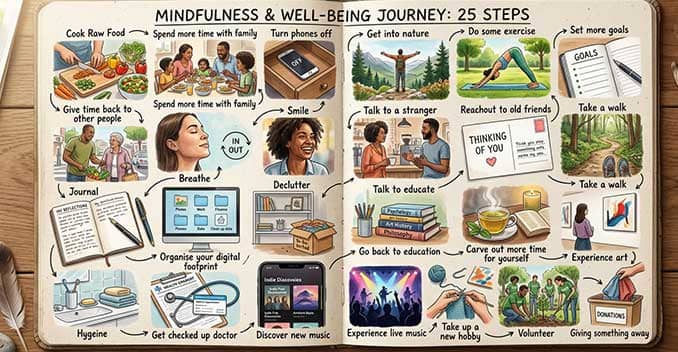
Modern wellness culture has fallen into an often hyper commercial trap. We are bombarded with saturated and over marketed advertisements for luxury gym memberships, exercise equipment to expensive green powders, and boutique mindfulness retreats designed for an elite tier of society. This commercialisation has warped our relationship with health, creating an illusion that feeling good in mind, body, and soul requires significant financial investment. In reality, the fundamental building blocks of human vitality are completely decentralised, universally accessible, and entirely or essentially free. Reclaiming our well-being is not about purchasing a lifestyle; it is about deliberately restructuring our daily habits, movements, and connections.
To navigate this journey effectively, we must approach wellness through a deeply compassionate, scientifically grounded lens that rejects rigid, one-size-fits-all ideals. For years, public health metrics have leaned heavily on binary indicators like the Body Mass Index (BMI). While institutions like the World Health Organisation (WHO) state that maintaining a BMI between 18.5 and 24.9 correlates with lower risks of cardiovascular metabolic diseases, clinical science increasingly recognises that human health exists on an often more complex reality. Metabolic fitness, psychological resilience, and cardiovascular health vary wildly across different genetics, age groups, and life stages. Obsessing over a single clinical number can introduce unnecessary psychological stress, which actively sabotages physical wellness. That said though, such figures should not be thrown out and our a valuable baseline grounded in science. But it’s not the be all and end all.
True whole health requires an integrated, science based and holistic methodology that treats the mind and body as an interconnected loop. Neurochemical states dictate our physical tension, while systemic inflammation directly shapes our cognitive clarity. By deploying basic, cost-free habits—ranging from deliberate respiratory regulation to digital optimisation—we can trigger powerful biological resets. However, a grounded approach requires a baseline of medical caution: while self-care practices are incredibly potent preventative tools, they are not structural substitutes for clinical diagnostics. If you are navigating persistent physical ailments or severe mental health conditions, consulting a qualified General Practitioner (GP) remains an indispensable first step. Let us cut through the marketing noise and explore the practical, zero-cost architecture of genuine human well-being.
Growing Your Home
The Anchor of Marriage and Starting a Family
Stepping away from isolation and committing to building a life alongside a partner while raising children is one of the most profound interventions we can make for our long-term emotional and social well-being. Yes, let’s be honest it comes with other stresses and it is definitely not a solution to long term depression, stress or anxiety. Nevertheless, structuring a household from scratch gives us a shared framework of purpose, identity, instantly creating deep-rooted support systems, shared resilience, and daily connections that drive down systemic psychological loneliness. We’re essentially hard wired to do this very thing. It shifts our relationship with life from individualistic navigation to collaborative growth. On the flip side of the spectrum, it is crucial to avoid falling into perfectionist domestic pressure—an unhealthy obsession with projecting a flawless, conflict-free family dynamic. The goal is go in only when you’re emotional and hopefully financially stable to provide a safe environment and shared joy, not rigid familial perfection. And of course the joy of children when the time is right.
The Therapy of Furry Household Additions
If children or a spouse is not right for you right now, welcoming domestic animals into your living space and committing to the daily care of a pet is an incredibly immediate way to reset our nervous system and elevate our daily mood. Sharing a home with a dog or cat provides a constant source of unconditional companionship, scientifically proven pet companionship triggers the release of oxytocin and lowering circulating cortisol levels that are driven by modern, high-stress routines. It shifts our relationship with our home environment from a quiet sanctuary to a lively, interactive space requiring active mindfulness and routine. On the flip side of the spectrum, it is crucial to avoid falling into obsessing over your pets every move or over relying on your furry friend to be a continuous support animal unless of course prescribed or suggested to help with a condition or disability—an anxious obsession with managing every micro-aspect of an animal’s behavior or health should be avoided and will ultimately create a needy pet. The goal is mutual companionship and physical play, not an unmanageable burden of domestic stress.
Nourishment, Presence, and the Natural Environment
The Alchemy of Raw Whole Foods
Stepping away from highly processed foods and committing to cooking using raw, unrefined ingredients is one of the most immediate interventions we can make for our biological health. Preparing meals from scratch gives us complete autonomy over our intake, instantly removing hidden emulsifiers, excessive sodium, and refined sugars that drive systemic low-grade inflammation. It shifts our relationship with food from passive consumption to mindful preparation. On the flip side of the spectrum, it is crucial to avoid falling into orthorexia—an unhealthy obsession with eating only “pure” foods. The goal is nutrient density and dietary joy, not restrictive perfection. Whether you’re a vegan, pescatarian, vegetarian, or carnivore if you’re on a diet; be human; its ok to have a cheat day every once in a while, whether its a cookie, burger or inorganic bell pepper we can’t be perfect all the time.
The Protective Anchor of Family Dynamics
Human beings are biologically wired for cooperative tribal structures. Allocating dedicated, undivided time to connect with family members—whether biological or chosen—acts as a powerful emotional stabiliser. Deep, authentic familial conversations stimulate the release of oxytocin, a hormone that actively dampens the amygdala’s threat-response system. However, family dynamics exist on a highly sensitive spectrum; for individuals navigating toxic or fractured domestic histories, forcing these interactions can heighten psychological distress. In such cases, redirecting this time toward building a chosen family of reliable peers yields identical biological benefits.
Unplugging from the Attention Deficit Economy
Our smart devices are deliberately engineered to hijack our dopamine pathways, keeping our nervous systems trapped in a state of low-level, continuous hyper-vigilance. Intentionally turning off your mobile phone for set blocks of time—such as two hours before bed or during weekend mornings—instantly severs this stressful loop. The immediate biological reward is a reduction in circulating cortisol and a natural optimisation of melatonin synthesis, leading to deeper sleep cycles. The initial phase of this practice often triggers short-term restlessness or a fear of missing out (FOMO), but pushing through this digital withdrawal allows our attention spans to recover. Don’t worry, social media will be there when you plug back in.
Natural Environments and Attention Restoration
Immersing oneself in natural green spaces—a practice backed by extensive environmental psychology—triggers what researchers call Attention Restoration Theory (ART). Spending time in woodlands, parks, or near open water shifts our focus from the exhausting, directed attention demanded by urban life to a restorative, effortless awareness. This environmental shift significantly lowers blood pressure and boosts the activity of natural killer (NK) cells, which form a key part of our immune defence. Even if your access is limited to a small municipal green space, the sensory exposure to natural patterns, birdsong, and moving water acts as a profound nervous system reset.
Physical Movement, Altruism, and Biological Anchors
Movement and the Spectrum of Exercise
Physical exercise is arguably the most potent non-pharmacological health intervention available to humanity. Regular movement stimulates neuroplasticity via the expression of Brain-Derived Neurotrophic Factor (BDNF) and vastly improves cellular insulin sensitivity. However, public health messaging often alienates individuals by presenting intensive, high-impact gym regimes as the only valid standard. Physical capability exists on a broad spectrum; for someone managing chronic fatigue, severe joint degeneration, or a high body mass, a low-impact 10-minute stretching routine or seated resistance movements are exceptionally beneficial. For people with higher levels of fitness perhaps a 2k jog at a moderate pace. They key is to go at your own pace, start small and build upwards from there, and don’t over exert yourself. If you feel pain, its always a good idea to take a pause and recover. The objective is consistent, celebratory movement that respects your current structural boundaries, completely free from comparative judgment.
Micro-Goals and Cognitive Momentum
Setting small, actionable goals provides our brains with a structured, predictable roadmap that helps fight cognitive paralysis. When we break down sprawling, overwhelming ambitions into clear daily tasks—such as tidying a single drawer or reading five pages of a book—our brains receive a clean micro-dose of dopamine upon completion. This iterative reward loop builds internal momentum and strengthens our sense of personal agency. The trick is to avoid setting overly rigid, perfectionist standards; goals should serve as helpful directional compasses rather than strict sticks with which to beat ourselves when life becomes unpredictable.
Altruism as a Self-Preservation Strategy
Intentionally giving your time back to help other people triggers a distinct psychological phenomenon known as the “helper’s high.” When we shift our focus away from our own internal anxieties to support someone else, the brain downregulates stress-induced neural activity in the dorsal anterior cingulate cortex. This altruistic shift rewards our biology with a deep sense of social integration and purpose. While this practice is entirely cost-free, it requires healthy personal boundaries. Giving too much of yourself without maintaining your own energy reserves can lead to empathy burnout, reminding us that supporting others must always coexist with steady self-care.
Vagal Nerve Stimulation Through Breath
The respiratory system is our only direct, conscious gateway into the autonomic nervous system. When we experience stress, our breathing naturally becomes shallow and rapid, reinforcing a sympathetic “fight-or-flight” state. By deliberately slowing our breath—specifically practicing elongated exhalations, such as a four-second inhalation paired with a six-second exhalation—we instantly stimulate the vagus nerve. This mechanical shift triggers the release of acetylcholine, a neurotransmitter that commands the heart rate to slow down, lowers arterial blood pressure, and sends an unambiguous signal to the brain that we are safe. This is a great meditative step towards being present and mindfulness.
Social Friction, Self Care, Digital Order, and Self-Reflection
The Architecture of a Healthy Routine
Stepping away from chaotic, unpredictable daily patterns and committing to a structured, intentional routine is one of the most foundational interventions we can make for our cognitive and metabolic stability. Designing a day with consistent sleep, wake, and meal times gives our bodies a predictable biological rhythm, instantly optimizing circadian biology, stabilizing energy fluctuations, and reducing the decision fatigue that drives daily mental exhaustion. It shifts our relationship with time from reactive firefighting to proactive ownership. On the flip side of the spectrum, it is crucial to avoid falling into rigid hyper-scheduling—an unhealthy obsession with tracking every minute or viewing a slight disruption as a total failure. The goal is supportive structure and behavioral flow, not robotic restriction.
The Sanctuary of Self-Care and Grooming (Appearance)
Stepping away from physical neglect and committing to deliberate personal grooming and self-care is an incredibly immediate way to restore our self-esteem and sensory comfort. Taking the time to care for our skin, hair, and body provides a moment of dedicated mindfulness, instantly signaling personal worth to the brain and washing away the physical residue of high-stress environments. It shifts our relationship with our bodies from a vehicle for work to an identity worthy of active respect and preservation. On the flip side of the spectrum, it is crucial to avoid falling into superficial vanity—an toxic obsession with chasing unrealistic cosmetic standards or spending fortunes on unnecessary luxury products. The goal is basic physical hygiene and internal dignity, not aesthetic perfection. This taken to its extremes can lead to disorders like body dysmorphia or eating disorders.
The Clarity of Tidying Your Environment
Stepping away from messy, cluttered living spaces and committing to clearing your immediate surroundings is a highly effective way to quiet an overstimulated mind. Organizing your home or workspace removes a constant stream of visual distraction, instantly lowering background cortisol levels and freeing up the cognitive processing power needed for deep focus and relaxation. It shifts our relationship with our physical environment from a chaotic storage space to a peaceful, orderly sanctuary. On the flip side of the spectrum, it is crucial to avoid falling into compulsive neatness—an anxious obsession with maintaining an pristine, sterile space where living naturally feels restricted. The goal is environmental harmony and functional calm, not rigid, spotless perfection.
The Mechanical Magic of a Smile
The simple physical act of smiling initiates a fascinating biological feedback loop known as the facial feedback hypothesis. Even when a smile is completely forced or mechanical, the contraction of specific facial muscles—primarily the orbicularis oculi and zygomaticus major—signals the brain to release a small cascade of endorphins and serotonin. It is a minor, zero-cost physiological hack that can subtly lift a heavy mood. Of course, this practice should never be used to suppress genuine grief or performative positivity; rather, view it as a small, gentle physical tool to shift stuck emotional energy.
Breaking Anonymity by Talking to Strangers
Modern urban life is characterised by a strange paradox of high density and intense hyper-individualistic isolation. Initiating a brief, pleasant interaction with a stranger—such as thanking a bus driver or exchanging a passing comment with a barista—breaks through this cold digital anonymity. Behavioural studies demonstrate that these micro-connections significantly enhance our sense of community belonging and lower feelings of social alienation. While social anxiety can make the initial interaction feel uncomfortable, normalised micro-exchanges remind us that we are part of a wider, supportive human tapestry.
Reclaiming History with Old Friends
Reaching out to old friends with whom we have lost touch over the years allows us to reconnect with different chapters of our personal history. Sending a brief, zero-pressure message to check in can instantly revive shared memories and reinforce long-term emotional anchors. This practice provides a comforting sense of continuity across our lives, reminding us of our roots before our current daily stresses took over. If an old relationship ended due to drifting values, it is wise to respect that boundary; but where time simply got in the way, opening the door again can bring deep emotional warmth. Try to view friendships like plants they need nourishment and interaction to grow. Most friendships never truly die but evolve as time and people grow. On the flip side don’t get disheartened if people take a while to get back or not at all. We all live in such fragmented worlds now many people are actively off social media. Get out there in real space and see iff serendipity comes a calling. Sometimes the universe acts when we least expect it.
The Simplest Medicine: Taking a Walk
If intensive exercise feels intimidating or structurally impossible, taking a simple, steady walk remains one of the finest accessible therapies for the human frame. A daily walk promotes joint lubrication, aids digestive motility, and encourages optic flow—the visual rhythm of objects moving past our eyes, which neuroscientists have found naturally quietens the brain’s stress centres. A walk requires no specialised gear or technical skill, yet its ability to break mental loops, clear creative blocks, and ground us in the physical world is unmatched.
Externalising the Mind via Journaling or Writing
Leaving our anxieties to bounce around inside our heads can quickly turn them into an overwhelming emotional storm. Journaling provides an immediate, tangible outlet to externalise this mental clutter. Writing your thoughts onto paper allows you to step back and look at your emotions with objective distance, a core mechanism used in Cognitive Behavioural Therapy (CBT). By translating abstract internal stress into structured language, you strip away its chaotic power, helping you spot repeating behavioural patterns and process complicated events with calm clarity. This is similar to art or expression; poetry, spoken word or creative art like drawing or painting can help deal with complex themes like grief.
Digital Housekeeping and Mental Space
Our digital environments have become direct extensions of our mental landscapes. Leaving thousands of unread emails, chaotic desktop screens, and disorganised cloud folders untouched generates a form of continuous, subconscious cognitive load. Spending twenty minutes organising your digital footprint—deleting old files, unsubscribing from junk lists, and cleaning your primary workspace—instantly creates an ordered environment. This digital sorting brings a sense of control and clarity that transfers directly to your mental focus.
The Restorative Power of Decluttering
Just like our digital spaces, our physical rooms hold a mirror to our internal state. Living in a highly cluttered home environment causes continuous visual overstimulation, which elevates baseline cortisol levels. Deliberately decluttering your immediate living area—sorting, cleaning, and organising your spaces—acts as a functional mindfulness practice. This process allows you to let go of material items tied to past versions of yourself, curating a calm, intentional physical environment that supports focus, rest, and mental relaxation.
Personal Growth, Creative Expression, and Preventative Care
Lifelong Education and Cognitive Reserve
Engaging with free educational resources—whether that means downloading a language learning app, borrowing library books, or streaming open-access university lectures—is vital for long-term cognitive health. Challenging our brains with novel, complex concepts stimulates neurogenesis and builds up a robust “cognitive reserve” that helps protect against age-related decline. Lifelong learning keeps our perspectives flexible, builds deep personal confidence, and reminds us that intellectual growth does not end when we leave formal schooling. Whether you want to go back to school or continue in the school of life its never to late to try new things.
The Sacred Act of Carving Out Time
In an economic system that praises constant productivity and endless multitasking, choosing to do absolutely nothing is a radical act of self-preservation. Carving out a dedicated block of time solely for yourself—free from domestic responsibilities, work demands, and social expectations—allows your nervous system to fully decompress. Whether you spend this time sitting quietly with a warm cup of tea or watching the rain, giving yourself permission to just exist without an agenda is essential to prevent deep burnout.
Experiencing Art as an Emotional Mirror
Engaging with art—whether visiting a free local gallery, looking at digital archives, or sketching in a notebook—activates the brain’s ventral striatum, a key part of our reward and pleasure infrastructure. Art serves as a profound emotional mirror, helping us access, express, and process complex feelings that are often difficult to articulate through ordinary speech. It expands our empathy, connects us to different cultures, and lifts our perspective above the routine of daily life.
Sensory Resets Through Basic Hygiene
When someone is navigating severe depression or intense emotional exhaustion, maintaining basic personal care can feel like an insurmountable mountain. Recognizing this difficulty is key; however, gentle hygiene routines like a warm bath, a long shower, or simply brushing your teeth can act as accessible sensory resets. The physical feel of warm water shifts our attention back to our bodies, providing a comforting feeling of cleanliness and renewal that helps us take the next small step forward.
The Foundation of Preventative Check-ups
While daily self-care habits are fantastic foundations for wellness, they cannot replace professional medical diagnostics. Booking and attending standard, preventative health check-ups with your GP—such as blood pressure screenings, routine blood panels, and age-appropriate health reviews—is an act of respect for your physical frame. Catching potential metabolic changes or structural deficiencies early allows for simple, proactive adjustments, ensuring your wellness practices remain grounded in accurate medical reality.
Auditory Architecture: Discovering New Music
Music possesses an unparalleled capacity to instantly rewrite our internal emotional architecture. Actively seeking out entirely new musical genres, independent artists, or unfamiliar cultural rhythms challenges our auditory processing centres and builds fresh neural connections. Shifting away from your predictable, nostalgic playlists and embracing unfamiliar soundscapes can spark unexpected creative ideas, alter your mood, and break up stale emotional routines. This couples well with playing music whether you have the coordination of an inflatable tube-man or a budding Mozart the act of playing music even alone and especially with others has a really rewarding boost for the body and mind.
The Shared Pulse of Live Music
Experiencing live music—whether attending a free community concert, a local busking session, or a neighborhood choir performance—introduces a unique psychological phenomenon called collective effervescence. The shared acoustic vibrations and collective human presence naturally align the physiological rhythms of a crowd, reducing feelings of isolation and generating a deep sense of social unity. It is a powerful reminder of our shared human experience, delivered through the universal medium of sound.
Rewiring the Brain with a New Hobby
Taking up a fresh, zero-cost hobby—such as birdwatching, learning origami, or practicing calisthenics—forces our minds and bodies to adapt to entirely unfamiliar movement and thought patterns. The initial learning curve challenges our cognitive flexibility, requiring us to embrace the vulnerability of being a beginner. This process builds resilience, expands our identity beyond our professional roles, and brings a playful sense of curiosity back into our lives. Take on gardening or gaming. Try new things.
Finding Purpose Through Volunteering
Volunteering your skills for a local community project, a food bank, or an environmental clean-up initiative is a fantastic way to build personal meaning. By aligning your time with a cause larger than yourself, you create deep social connections and directly improve your local area. Volunteering grounds us in real-world challenges, offers a healthy perspective on our personal worries, and proves that our individual actions can make a genuine difference.
The Liberating Flow of Giving Things Away
Parting with items we no longer need—such as donating books to a community library or passing clothes to a local shelter—is a powerful practice in letting go. This act of giving reduces our attachment to material goods and clears out physical clutter, while directly supporting someone else. The process shifts our mindset from one of scarcity to one of abundance, reinforcing a beautiful, cyclical flow of care and resources within our communities.
Designing an Intentional Life
Ultimately, cultivating comprehensive wellness across mind, body, and soul is an active, highly personalised design project. It requires us to look past commercialised wellness fads and confidently embrace the simple, cost-free habits that are readily available to us all. Human vitality does not exist on a rigid, idealised point; it spans a wide, highly individual spectrum that changes across our lives. By integrating mindful nutrition, steady physical movement, artistic exploration, and genuine human connection into our routines, we can build exceptional health reserves.
Throughout this journey, true wisdom lies in balance: we must remain consistent with our daily self-care, keep a compassionate perspective when life gets off track, and always maintain a respectful partnership with professional medical guidance whenever we are in doubt.
Verified Facts
- According to established guidelines from the World Health Organisation (WHO) and NHS clinical frameworks, a Body Mass Index (BMI) calculated between 18.5 and 24.9 represents the standard healthy weight classification for adults, though it does not fully account for variations in muscle mass or ethnic body compositions.
- The facial feedback hypothesis, verified by clinical psychological trials, proves that the physical contraction of facial muscles involved in smiling directly stimulates the subcortical structures of the brain to release neurotransmitters like serotonin.
- Attention Restoration Theory (ART), extensively researched by environmental psychologists, demonstrates that exposure to natural green spaces systematically reduces cognitive fatigue by allowing the prefrontal cortex’s directed attention mechanisms to rest.
- Slow, deep respiration exercises—specifically those extending the exhalation phase to around six seconds—mechanically stimulate the vagus nerve, initiating an immediate parasympathetic response that reduces heart rate and lowers circulating cortisol.
Links
- World Health Organisation – Global Body Mass Index (BMI) Classification Guidelines
- NHS UK – Common Clinical Assessments and Healthy Weight Management Frameworks
- American Psychological Association – Environmental Research on Nature and Mental Health Restoration
- Harvard Health Publishing – Understanding the Stress Response and Vagal Regulation Techniques



Be the first to comment