

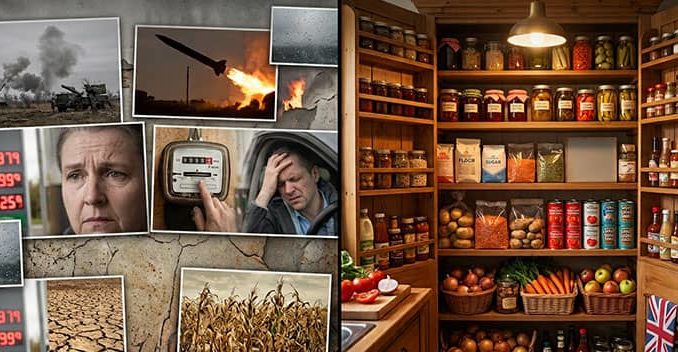
The idea of bare supermarket shelves in modern Britain feels like a ghost from a bygone era or a fleeting memory from the unusual days of 2020 CV19. Yet, as extreme weather patterns intersect with geopolitical tensions, valid questions arise about the resilience of the nation’s dinner tables and shopping baskets. Concerns over potential food shortages over the coming winter and into 2027 reflect real pressures across global supply chains and are not without merit.
The United Kingdom is not facing an outright famine or widespread food absence over the next 18 months. The structural architecture of global trade ensures that food will remain available, provided consumers can afford it. However, the system faces significant friction: volatile energy costs, depleted domestic water stocks and climate extremes are reshaping what lands on shelves and at what price and more recently what size.
Record-Breaking Heatwaves: The Changing British Climate
The weather patterns observed across the British countryside over recent years have moved beyond brief seasonal anomalies. Successive record-breaking heatwaves, punctuated by prolonged dry spells, have altered the agricultural baseline. Summer temperatures frequently climbing past historical averages have tested soil moisture levels and traditional farming infrastructure.
These climate shifts leave topsoil stripped of functional moisture long before late-summer harvests conclude. When rain does fall on severely dried earth, the water often runs off rather than sinking into aquifers, leaving water tables under continuous strain across key arable regions in the East and South East of England.
Agricultural Strain: Irrigation, Reservoir Depletion and Seed Propagation
The agricultural consequences of prolonged dry weather ripple through every stage of food production. When natural rainfall falters, farm infrastructure relies heavily on abstraction permits and on-site reservoirs. However, Environment Agency data shows English reservoir capacities dropping below previous historic lows, forcing strict restrictions on commercial abstraction.
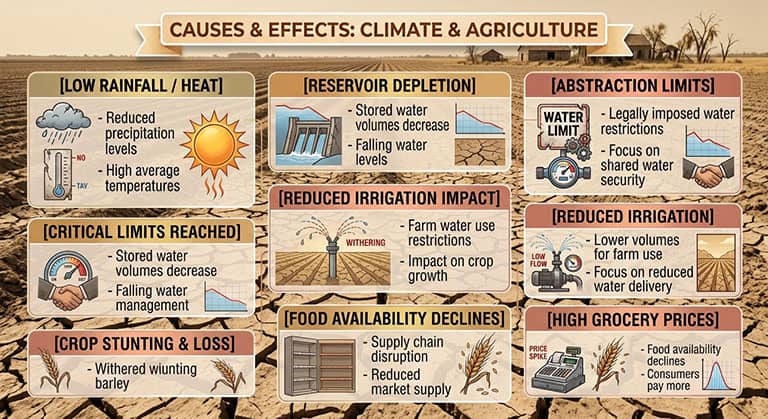
Irrigation limits hit root crops and soft fruits particularly hard. Without sufficient watering, potato tubers fail to swell, brassicas bolt prematurely and fruit sets wither on the branch. Seed propagation faces equal difficulty: heat-stressed parent plants produce lower-grade seeds with reduced germination success, creating compounding challenges for subsequent planting cycles in late 2026 and 2027.
Harvest Yields and Imports: Evaluating Domestic Reliance
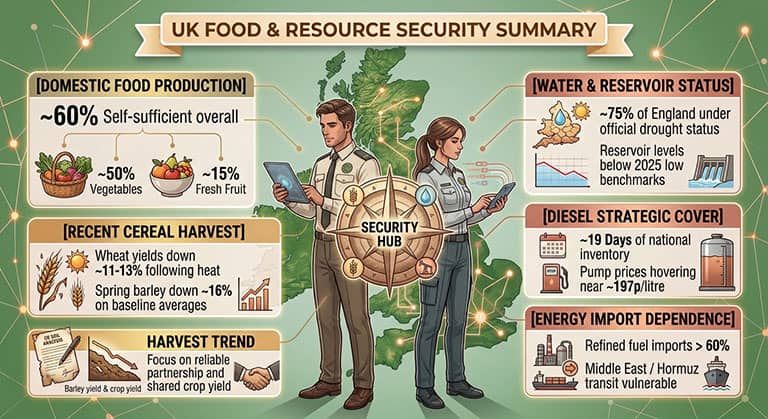
Recent domestic harvest figures highlight the real-world impact of climatic extremes on basic foodstuffs. Domestic wheat production has seen notable double-digit yield drops compared to five-year averages, while barley and oat tonnages have similarly fallen.
UK DOMESTIC PRODUCTION VS IMPORTS
- Grains & Cereals : ~75% Domestic / ~25% Imported (High vulnerability)
- Pork & Poultry : ~60% Domestic / ~40% Imported (Feed-cost sensitive)
- Fresh Vegetables : ~50% Domestic / ~50% Imported (Seasonal peaks)
- Fresh Fruit : ~15% Domestic / ~85% Imported (High reliance)
- Tea, Coffee, Spices : 0% Domestic / 100% Imported (Full exposure)
Livestock farmers face a dual challenge: burnt-out summer pastures force early reliance on winter fodder reserves, while feed costs remain elevated. To fill the gap, the UK relies heavily on imports—especially for fresh fruit, out-of-season vegetables and key tropical commodities. While total supply remains secure, importing substitutes from climate-affected European and global partners drives up wholesale prices.
Energy Dependencies: Fuel Costs, Strategic Reserves and Supply Chains
The journey from field to dinner plate is built on refined petroleum, particularly diesel. Modern haulage tractors, processing plants and distribution lorries depend on continuous fuel supplies. Geopolitical volatility near primary shipping routes like the Strait of Hormuz, combined with global refining constraints, keeps fuel costs elevated. Below is a simplified chain showing the effects.
  Crucial Fuel Supply Chain
 +---------------------------+
 | Strategic Diesel Reserves |  -->  ~19 Days National Inventory
 +---------------------------+
               |
               v
 +---------------------------+
 | Logistics & Distribution  |  -->  Elevated Pump Prices (~197p/L)
 +---------------------------+
               |
               v
 +---------------------------+
 | Retail Food Shelves       |  -->  Upward Pressure on Groceries
 +---------------------------+
The UK maintains around 19 days of strategic diesel cover. With over 60% of refined middle distillates imported due to domestic refinery closures, transport logistics remain exposed to international price shocks. Higher pump costs transfer directly into logistics overheads, making food transport noticeably more expensive even when raw crops are available in bulk.
Geopolitical Pressures, Winter Weather and Household Preparedness
Government discussions regarding national resilience and defense readiness reflect a broader global shift towards security planning. While public warnings do not call for panic buying or extreme stockpiling, maintaining a reasonable domestic store cupboard of stable pantry items helps households cushion against localised supply bumps and inflation surges.
Winter weather dynamics, influenced by global Pacific ocean temperature shifts, raise the potential for cold spells that drive up energy demand across Northern Europe. When low temperatures combine with high diesel costs and reduced harvest buffers, the primary result is not empty store shelves, but a noticeable squeeze on household budgets through elevated grocery bills through 2027.
The Path Ahead: Resilience over Panic
The prospect of widespread food shortages in the UK this winter or throughout 2027 remains low. The structural diversity of global trade routes prevents complete supply breakdowns. However, the era of cheap, effortless abundance faces ongoing pressure from climate trends, water constraints and energy vulnerabilities.
Navigating these challenges requires systemic resilience rather than individual panic. Rebuilding soil health, expanding domestic water storage capacity and securing regional energy supplies form the foundation of national security. For individual households, understanding these supply dynamics provides clarity: food will remain on the shelves, but managing domestic food costs will require careful planning as global supply chains adjust to new realities.
Have Your Say
The intersection of extreme weather, energy costs and food prices affects every household across the country. Have you noticed changes in the cost or availability of daily essentials in your local area? Are you taking practical steps to adjust your food shopping or household budget ahead of the winter months?
We welcome your perspectives, observations and practical insights in the comments below.
Join the Conversation
If you were affected by or are interested in the subject, join the conversation or follow us on facebook, instagram, youtube, TikTok, LinkedIn and X/Twitter or why not submit your own article! Or email at contribute@criticalmatters.net



Be the first to comment