

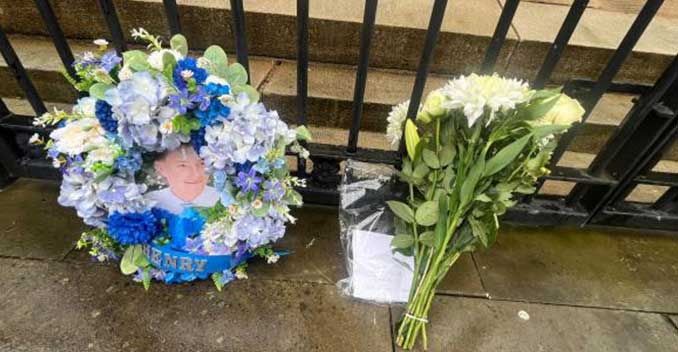
The tragic murder of 18-year-old university student Henry Nowak in Southampton has evolved from a needless crime into a more complex national crisis. The case sits at the intersection of succinct societal anxieties, political opportunism, and poor policing. While a jury has delivered its verdict, the wider social, legal, and political aftershocks continue to reverberate through the British political structure and felt even more so in society. This incident has sadly been rapidly adopted by a variety of factions, exposing deep fractures in public trust, digital information networks, and the perceived integrity of the state’s security apparatus. Let us remember that a family is still grieving for a life cut short too soon.
Henry Nowak was a bright 18-year-old first-year accounting and finance student at the University of Southampton who was tragically murdered on 3 December 2025. Henry was from Chafford Hundred, Essex, and held dual British-Polish citizenship. He was the eldest of four siblings and was known by his family as friendly, inclusive, and principled. At university, he was an active in football and sports. It is a tragedy at a time when a young man with aspirations of his own like graduating, starting a family and looking forward perhaps to the World Cup with family and friends was interrupted in cruel act of barbarism. But what as a nation we must be aware of is further division along identity politics.
To fully understand what happened, we must visit the interconnected realities: first, a severe operational failure by responding police officers on the ground; second, the immediate politicisation of the tragedy by political figures to fuel arguments of “two-tier policing”; and third, the dangerous, algorithm-driven spread of digital misinformation that threatens real-world cohesion and civic balance. Overriding all of these threads is a central, unavoidable question: Has the contemporary British state become so reactive to identity politics that it has compromised its fundamental duty to deliver swift, colourblind justice and ensure clear public safety? Police need to Police, and all the additional rules make a complex job even harder. But also let us not blame rules; in this instance the other culprit on trial here is common sense and the Police on the ground did not appear to have or apply any in this unfortunate set of cicumstances.
This crisis does not exist in a vacuum. It reflects a wider, cross-Atlantic shift in public discourse, where localised operational errors are instantly mapped onto broad, polarised cultural theories. In the United States, high-profile encounters between citizens and the state are frequently used by both the left and right to support competing structural narratives. By examining the tragic events in Southampton, the subsequent political reactions, and the rich history of the communities involved, we can cut through the noise. This allows us to separate an isolated, tragic criminal act from the broader structural debates that threaten to fracture public stability.
On 3 December 2025, at approximately 11:30 pm, Henry Nowak, a dual British-Polish university student, was fatally attacked on Belmont Road in the Portswood area of Southampton. The perpetrator, 23-year-old Vickrum Singh Digwa, stabbed Nowak five times with a 21-centimetre dagger, inflicting a fatal wound to the chest. When officers from the Hampshire and Isle of Wight Constabulary arrived following a 999 call from Digwa’s brother, Digwa falsely claimed he was the victim of a racially motivated assault.
The subsequent release of police bodycam footage revealed a deeply distressing operational error: responding officers handcuffed the critically injured Nowak while he repeatedly stated he had been stabbed and was struggling to breathe. Nowak lost consciousness and died at the scene. On 28 May 2026, a jury convicted Digwa of murder, and he received a life sentence with a minimum term of 21 years. His mother, Kiran Kaur, was also convicted of assisting an offender for hiding the murder weapon. The police handling of the matter removed the dignity of a young and innocent human being who was treated as a criminal in his final moments a stain which the Met should not be allowed to forget and most grow from to recover public support and gain trust.
Politicisation
The release of the bodycam footage triggered immediate, sharp political reactions across the spectrum, reflecting a wider transatlantic division over race and justice. Reform UK leader Nigel Farage used the incident to argue that the handling of the case provided clear evidence of “two-tier policing,” suggesting that officers treated Digwa with leniency out of a fear of appearing racially biased, while treating the dying victim as the aggressor. I assert that rather than two-tier policing we need to apply ‘common sense’ policing. Irrespective of establishing motivations on the scene a young man was dying at the scene at that moment police need to shift gears from arrest into preserving life!
This argument was amplified by conservative figures and drawn into global commentary by US political figures like JD Vance, illustrating how quickly British domestic incidents are pulled into the American culture-war matrix. Conversely, Home Secretary Shabana Mahmood and Foreign Secretary David Lammy strongly rejected the “two-tier” narrative, accusing populist politicians of exploiting a family’s deep grief to stoke racial division and undermine public order.
The real-world consequences of this political fallout manifested swiftly on the streets of Southampton. Public outrage over the perceived police negligence led to intense protests outside local police stations, resulting in clashes where multiple police officers were injured and eleven individuals were subsequently charged with public order offenses.
In response to the clear operational failures, the case was referred to the Independent Office for Police Conduct (IOPC) for a comprehensive review. Concurrently, Donna Jones, the Hampshire and Isle of Wight Police and Crime Commissioner, backed public calls for an urgent government review of UK knife laws, specifically challenging the loopholes that allow large, non-folding blades to be easily acquired or carried under specific legal exemptions. In our country I honestly believe we cannot and should not allow weapons of any kind to be worn on religious grounds, they should not be legislated for it should be legislated against and there is no basis in a modern world to carry any weapon of any size in the name of any faith. Period.
What is the Kirpan?
A primary point of contention in the public debate surrounds the weapon used in the murder and its relationship to the Sikh faith. Under UK law—specifically the Criminal Justice Act 1988—Sikhs are legally permitted to carry a kirpan, a ceremonial, sheathed, and concealed knife that serves as one of the five mandatory articles of faith (The Five Ks) established by Guru Gobind Singh in 1699. The kirpan symbolises a spiritual duty to defend the weak, protect justice, and stand against oppression.
However, the trial court explicitly noted that Digwa carried a large, eight-inch dagger as an adherent of the Nihang order—a historic, semi-nomadic warrior subsect of Sikhism known for carrying traditional weaponry. The Sikh Federation UK issued a clear statement clarifying that the weapon used by Digwa was not a traditional, religious kirpan, highlighting the crucial theological distinction between standard ceremonial practice and the misuse of an offensive weapon.
To understand the sense of shame and frustration felt by the British Sikh community over the fallout from this case, one must look at their broader socio-economic reality. British Sikhs represent one of the most highly integrated, upwardly mobile, and economically successful minority communities in the United Kingdom. Sikh communities have condemned the act.
Data from the Office for National Statistics consistently demonstrates that British Sikhs maintain exceptionally high rates of homeownership, above-average educational attainment, and a strong presence in professional, business, and medical sectors. The community’s core values—including Seva (selfless service) and Kirat Karni (honest labor)—have created a distinct culture of self-reliance and civic responsibility that sits in direct opposition to the actions of a single convicted murderer.
Notable Contributions to the Realm
The historical and contemporary contributions of the Sikh community to the United Kingdom are deeply woven into the fabric of the state. From the battlefields of the First and Second World Wars—where over 130,000 Sikh soldiers fought in the British Indian Army—to modern academia, business, and public service, the community’s impact is undeniable.
Figures such as Professor Jagjit Singh Chadha, a prominent macroeconomist, and numerous Sikh scientists, entrepreneurs, and NHS consultants have been recognised with OBEs and CBEs for services to the realm. This long record of civic contribution underscores why community leaders feel deep anxiety when an isolated criminal incident is used to cast doubt on an entire population.
It is not a surprise that the response from the British Sikh community following the sentencing of Vickrum Singh Digwa has been one of profound grief for the Nowak family, coupled with intense frustration over the mischaracterisation of their faith. In the immediate aftermath of the trial, a prominent group of 11 Sikh parliamentarians—including health minister Preet Kaur Gill, Tan Dhesi, and Jas Athwal, chair of the All-Party Parliamentary Group for British Sikhs—issued a rare, united joint statement. The cross-party alliance explicitly clarified the facts of the case to protect the community from sweeping generalisations, stating: “This case was not about Sikhism, and the weapon used was not a kirpan… No religious protection or justification applied, and the offender was rightly convicted.”
Despite these swift assurances, the community has borne the brunt of a severe, algorithmically driven backlash. Prominent Sikh campaigner Dabinderjit Singh warned that inflammatory comments from high-profile political figures had provoked a “worldwide frenzy,” directly leading to a worrying spike in daily verbal and physical attacks against innocent, visible Sikhs across the UK.
By aggressively conflating an Indo-Persian armour-piercing dagger (Pesh Kabz) with the small, sacred ceremonial kirpan, sensationalist online commentators have actively stoked Islamophobic and anti-minority tropes conflating different religions, teaching and tenets. For the broader British Sikh community, the sentencing remarks of Judge Mousley KC ring painfully true: Digwa did not simply steal a young student’s life—he brought profound, unmerited vulnerability to a highly integrated diaspora that has spent generations contributing to the peace and security of the realm.
Refusing the Inflection Point
It is vital for the stability of a multicultural society that the Southampton tragedy is not allowed to become a dangerous political inflection point. When a shocking crime is co-opted to serve a broader ideological agenda, the nuances of the case are instantly erased.
Digwa’s actions were the actions of a violent individual who lied to escape justice, and the responding officers’ errors were a failure of training, situational assessment, and operational competence. Framing this tragedy as a systemic war between distinct racial or religious communities is an intellectual error that plays directly into the hands of extremists on all sides.
Historical Parallels of Moral Panic
Recent British history offers stark warnings about the dangers of letting moral panics dictate public policy or community relations. In the 1970s, as documented by sociologist Stuart Hall in his foundational text Policing the Crisis, the British media and state apparatus hyper-focused on the phenomenon of “mugging,” using isolated street crimes to justify aggressive policing methods against Caribbean youth, which ultimately damaged community trust for a generation.
More recently, the horrific 2023 Nottingham stabbings committed by Valdo Calocane sparked intense debates over mental health tracking and police response protocols. In that case, society ultimately maintained its equilibrium by focusing on the operational and medical failures involved, rather than assigning collective guilt to an entire demographic group.
The Necessity of Proportionate Focus and Honest Grownup Reflection
The murder of Henry Nowak must be treated as an isolated, tragic criminal event, rather than an excuse for a wider social panic. While the anger toward the Hampshire Constabulary’s operational failures is entirely justified and demands rigorous institutional accountability, society must remain careful not to let that anger turn into generalised hostility. The police still have a very important job to do and must be allowed to get on.
Fixating on the cultural background of the perpetrator, or falling into the trap of algorithm-driven polarisation and confirmation bias, only serves to weaken the common ground required to hold a diverse society together. True justice for Henry Nowak requires holding his killer accountable and reforming police response procedures, while maintaining a commitment to collective unity.
The path forward from the Southampton tragedy demands a clear-eyed return to the foundational principles of British policing: operational competence, absolute transparency, and equal treatment under the law. The failure of the responding officers to recognise Henry Nowak’s critical injuries while prioritising a false, racially charged accusation represents a serious institutional error that the IOPC must investigate thoroughly.
However, using this operational failure to promote divisive theories of systemic bias risks deepening the fractures within our society. By ensuring rigorous training, resisting the temptation of political opportunism, and recognizing the strong record of integration and service provided by communities like the British Sikhs, the United Kingdom can find its way back to a balanced, reliable justice system.
Verified Facts
- On 3 December 2025, 18-year-old student Henry Nowak was fatally stabbed five times on Belmont Road in Southampton by 23-year-old Vickrum Singh Digwa.
- On 28 May 2026, a jury convicted Vickrum Singh Digwa of murder, and he was sentenced to life imprisonment with a minimum term of 21 years.
- Official bodycam footage released after the trial confirmed that responding officers from the Hampshire and Isle of Wight Constabulary handcuffed Nowak while he was critically injured and pleading for medical help.
- Following public demonstrations in Southampton, a total of 11 individuals were charged with public order offenses by 6 June 2026.
- Under Section 139 of the Criminal Justice Act 1988, individuals of the Sikh faith are legally permitted to carry a ceremonial kirpan in public spaces in the United Kingdom, provided it remains sheathed and concealed.
- The Sikh Federation UK issued a public clarification stating that the 21-centimetre dagger used by Digwa did not meet the theological or structural definitions of a traditional kirpan.



Be the first to comment