

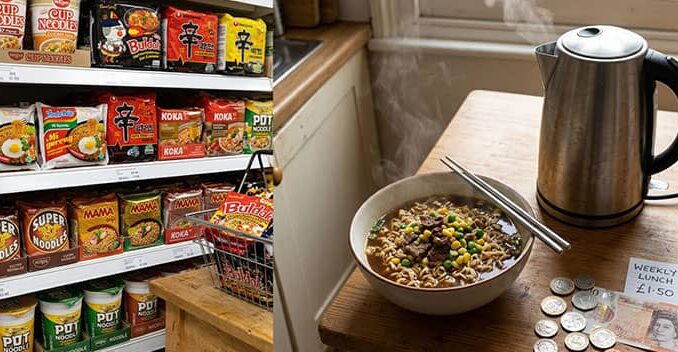
There is an unpretentious magic to the humble instant noodle. In an era where economic pressures tighten household budgets across the United Kingdom, turning to the store cupboard is no longer a compromise; it is an exercise in resourcefulness. Whether elevated with poached eggs, fresh greens, sesame oil and crisp pork belly or devoured plain straight from the pot in an act of cheeky nocturnal solace, instant noodles occupy a sacred place in global food culture. They sit at the crossroads of survival food, industrial ingenuity and culinary democracy.
To truly understand this hot snack, one must look past the dry brick of dough and appreciate its roots. The instant noodle was born out of stark necessity in post-Second World War Japan. Facing severe food shortages, widespread poverty and black-market bread distribution funded by U.S. wheat aid, inventor Momofuku Ando (1910–2007) recognised that noodles—a traditional Asian comfort—were the key to nourishing a struggling nation. In 1958, working tirelessly out of a modest wooden shed in Ikeda, Osaka Prefecture, Ando perfected the flash-frying method (known as tempura frying). By dehydrating wheat noodles in hot palm oil, he created tiny air pockets in the strands, allowing them to instantly rehydrate upon contact with boiling water.
When Ando introduced Chikin Ramen on 25 August 1958 through Nissin Foods, it was initially priced as a premium convenience item—costing around 35 yen, compared to a 10 yen bowl of fresh street ramen. However, as manufacturing scaled and automated production lines developed throughout the 1960s, instant noodles transformed into the ultimate low-cost dietary equaliser. The innovation evolved from basic fried wheat to include air-dried varieties, separate liquid seasoning oils, freeze-dried vegetables and hot broth bases, spreading rapidly from East Asia across every continent.
10. Supermarket Own-Brands (Morrisons, Aldi, Lidl, Co-op)
For the ultra-budget shopper, British supermarket own-brands offer unbeatable economic value. Retailing between 25p and 45p per pack, these noodles serve as pure survival fuel, keeping costs exceptionally low while delivering basic comfort.
- Morrisons, Aldi, Lidl, Co-op Own-Brand Noodles
- Approximate UK Price: 25p – 45p per 65g pack
- Key Flavours: Chicken Flavour, Curry Flavour, Vegetable Flavour
These low-cost offerings are bare-bones, relying heavily on basic salt, MSG, vegetable oil and onion powder. While they lack the complex broth depth of East Asian imports, they are an exceptional blank canvas for home cooking. Stirring in fresh spinach, a dash of soy sauce and a soft-boiled egg transforms a 30p packet into a relatively well balanced meal.
Nutritional Profile
- Calories: ~300–350 kcal per serving
- Carbohydrates: 42g – 48g (primarily refined wheat flour)
- Sodium: 1.2g – 1.6g (high relative to daily recommended intake)
- Fats: 12g – 15g (predominantly saturated palm fats from frying)
- Protein: 6g – 7g
9. Mid-Tier Supermarket Own-Brands (Sainsbury’s, Tesco)
Moving up to Sainsbury’s and Tesco’s classic own-label packets reveals slight improvements in wheat texture, spice aroma and oil quality, maintaining a wallet-friendly price point for everyday meals.
- Sainsbury’s & Tesco Noodle Ranges
- Approximate UK Price: 35p – 50p per pack
- Key Flavours: Spicy Curry, Beef Flavour, Sweet Chilli
These options strike a sensible balance between price and flavour intensity. The broth bases carry slightly more aromatic depth than discount alternatives, utilising pinch seasonings of turmeric, garlic powder and coriander. They benefit greatly from seasonal additions like fresh coriander, wilted spring greens or leftover roast chicken and so on.
Nutritional Profile
- Calories: ~320–360 kcal
- Carbohydrates: 45g – 50g
- Sodium: 1.3g – 1.7g
- Fats: 13g – 16g
- Protein: 7g – 8g
8. Premium Supermarket Own-Brand (M&S)
Marks & Spencer approaches the instant noodle market from a gourmet stance, replacing generic palm oils and heavy artificial flavourings with richer broth extracts, natural spices and dried herbs.
- M&S Instant Noodle Selection
- Approximate UK Price: 90p – £1.25 per pack
- Key Flavours: Fiery Laksa, Fragrant Thai Green Curry, Rich Chicken & Ginger
M&S elevates the store-cupboard staple into something of better quality. The noodles possess a firmer al dente chew, while the seasoning sachets contain real coconut milk powder, lemongrass and mushroom extracts. It demonstrates how industrial manufacturing can embrace natural culinary principles.
Nutritional Profile
- Calories: ~350–400 kcal
- Carbohydrates: 48g – 52g
- Sodium: 1.1g – 1.4g (slightly lower sodium density than lower-tier brands)
- Fats: 14g – 18g (includes coconut oil fats)
- Protein: 8g – 9g
7. Nongshim (South Korea)
Originating from South Korea, Nongshim represents a monumental shift in noodle architecture. Established in Seoul in 1965, Nongshim popularised thick, chewy wheat strands paired with fiery, deeply savoury broths.
- Nongshim Range
- Approximate UK Price: £1.25 – £1.75 per pack / cup
- Key Flavours: Shin Ramyun (Gourmet Spicy), Ansungtangmyun, Neoguri (Spicy Seafood)
Nongshim Shin Ramyun is an absolute masterpiece of industrial food production. The noodles are substantially thicker than Japanese or European equivalents, engineered to absorb the complex broth made from mushroom concentrate, dried beef extracts, garlic and red chilli pepper paste (gochugaru). It reflects Korean dining culture, where meals are meant to be robust, spicy and deeply comforting.
Nutritional Profile
- Calories: ~500–530 kcal per large 120g serving
- Carbohydrates: 68g – 75g
- Sodium: 1.8g – 2.1g
- Fats: 16g – 19g
- Protein: 10g – 12g
6. Koka (Singapore)
Produced by Tat Hui Foods in Singapore since 1986, Koka built its global reputation by offering clean, fragrant Southeast Asian flavour profiles alongside non-fried, baked noodle lines.
- Koka Noodle Range
- Approximate UK Price: 65p – 85p per pack
- Key Flavours: Signature Black Pepper, Spicy Sesame, Creamy Laksa
Koka stands out for its focus on light, aromatic broths derived from white pepper, star anise, sesame oil and ginger. Their non-fried purple corn and wholewheat lines offer a welcome alternative for health-conscious cooks seeking lower saturated fat options without sacrificing springy noodle texture.
Nutritional Profile
- Calories: ~280–340 kcal (Non-fried varieties: ~230 kcal)
- Carbohydrates: 42g – 48g
- Sodium: 1.1g – 1.4g
- Fats: 3g – 12g (Significantly lower in baked versions)
- Protein: 7g – 9g
5. Nissin Demae Iccho (Japan / Hong Kong)
The direct descendant of Momofuku Ando’s original innovations, Nissin’s Demae Iccho range remains a cornerstone of Hong Kong cha chaan teng (tea restaurant) culture and Japanese home dining.
- Nissin Demae Iccho Range
- Approximate UK Price: 85p – £1.10 per pack
- Key Flavours: Sesame Oil Flavour, Kyushu Tonkotsu, Spicy Pork Flavour
The defining hallmark of Demae Iccho is its separate sachet of toasted sesame oil, dropped into the soup just before serving. This simple addition creates an alluring aroma that lifts the savoury soy-and-pork broth base. Paired with soft greens like pak choi and a drizzle of chilli oil, it is pure, nostalgic soul food.
Nutritional Profile
- Calories: ~450–480 kcal per 100g serving
- Carbohydrates: 58g – 64g
- Sodium: 1.5g – 1.8g
- Fats: 18g – 22g (Includes rich sesame finishing oils)
- Protein: 9g – 11g
4. Pot Noodle & Batchelors Super Noodles (United Kingdom)
The UK’s native answer to the instant noodle wave, Pot Noodle was launched in Golden Wonder’s Crumlin factory in Northern Ireland in 1977, while Batchelors Super Noodles became a British pantry classic throughout the 1970s and 1980s.
- Pot Noodle & Batchelors Range
- Approximate UK Price: 90p – £1.50 per pot / pack
- Key Flavours: Bombay Bad Boy, Chicken & Mushroom, Chow Mein
While culinary purists may turn up their noses, these British staples hold immense cultural value. Pot Noodle pioneered convenience packaging with its pour-and-wait plastic tub and iconic sauce sachets (such as sweet mango chutney in the Bombay Bad Boy). They feature shorter, thicker noodles designed to be eaten with a fork rather than chopsticks, catering to Western snacking habits.
Nutritional Profile
- Calories: ~380–430 kcal per pot
- Carbohydrates: 52g – 58g
- Sodium: 1.4g – 1.9g
- Fats: 14g – 17g
- Protein: 7g – 9g
3. Samyang Buldak (South Korea)
Samyang Foods, founded in South Korea in 1961, ignited a global viral sensation in 2012 with the launch of its Buldak Hot Chicken Flavor Ramen, giving rise to the famous internet “Fire Noodle Challenge”.
- Samyang Buldak Range
- Approximate UK Price: £1.40 – £1.90 per pack
- Key Flavours: Original Hot Chicken, Carbonara Buldak, 2x Spicy Hot Chicken
Buldak noodles are dry-stir fried rather than served as a soup, coated in a thick, sticky sauce made from capsaicin extract, soy sauce, chicken powder and habanero seasoning. The Carbonara variant softening the fierce heat with milk powder and cheese is a stroke of modern fusion genius. Highly addictive, though certainly not for the faint of heart.
Nutritional Profile
- Calories: ~530–550 kcal per 140g pack
- Carbohydrates: 84g – 88g
- Sodium: 1.2g – 1.5g
- Fats: 16g – 20g
- Protein: 12g – 14g
2. Indomie Mi Goreng (Indonesia)
Produced by Indofood in Indonesia since 1972, Indomie Mi Goreng is arguably the world’s most celebrated instant stir-fried noodle, inspired by traditional Indonesian street food (bakmi goreng).
- Indomie Mi Goreng Range
- Approximate UK Price: 50p – 75p per pack
- Key Flavours: Original Mi Goreng, Hot & Spicy, Rendang Flavour
Indomie’s brilliant innovation lies in its multi-sachet system: seasoned oil, sweet soy sauce (kecap manis), chilli sauce, savoury seasoning powder and crispy fried shallots (bawang goreng). Boiling the noodles, draining them completely, and tossing them in this emulsion creates an incredible balance of sweet, salty, spicy and umami notes. Top with a fried egg featuring a runny yolk for absolute bliss.
Nutritional Profile
- Calories: ~380–400 kcal per 85g pack
- Carbohydrates: 54g – 58g
- Sodium: 0.9g – 1.1g (Lower sodium broth load due to dry presentation)
- Fats: 14g – 17g
- Protein: 8g – 9g
1. Maggi (India / Switzerland)
Originally founded by Julius Maggi in Switzerland in 1884 to provide fast nutrition for industrial workers, Maggi was acquired by Nestlé in 1947. Introduced to India in 1983, Maggi 2-Minute Noodles became an unbeatable cultural institution across the Indian subcontinent.
- Maggi Noodle Range
- Approximate UK Price: 60p – 85p per pack
- Key Flavours: Masala, Chicken Flavour, Atta (Whole Wheat) Vegetable
Maggi Masala noodles hold a special place in the hearts of millions. The secret sachet—packed with roasted coriander, cumin, turmeric, nutmeg, clove and garlic—delivers a warm spice profile distinct from any East Asian equivalent. Prepared soupy or cooked down until dry with diced onions, tomatoes and green chillies, Maggi is the undisputed king of nostalgic street food snacks.
Nutritional Profile
- Calories: ~310–340 kcal per 70g pack
- Carbohydrates: 46g – 50g
- Sodium: 0.8g – 1.0g
- Fats: 11g – 13g
- Protein: 7g – 8g
The Universal Comfort of the Bowl
Instant noodles have come a long way from their origins as a post-war emergency ration in Osaka. Today, they form a vast global tapestry of regional tastes, industrial food technology and home culinary creativity. While Ultra-Processed Foods (UPFs) should be balanced thoughtfully within a healthy diet due to high sodium content and refined wheat structures, instant noodles demonstrate how simple ingredients can bring warmth, comfort and satisfaction across economic divides. By adding fresh greens, lean proteins, herbs and eggs, home cooks can easily elevate these humble store-cupboard staples into nutritious, soul-warming dishes.
Have Your Say
What is your absolute go-to store-cupboard noodle, and what secret ingredients do you add to elevate your bowl? Do you prefer a rich, piping-hot soup broth or a dry, savory stir-fry finish? Join the conversation or follow us on facebook, instagram, youtube, TikTok, LinkedIn and X/Twitter or why not submit your own article! Or email at contribute@criticalmatters.net
Facts & Analytical Context
- Global Demand: According to reports from the World Instant Noodle Association (WINA), global consumption exceeds 120 billion servings per year.
- Top Consuming Nations: China (including Hong Kong) leads global consumption with over 42 billion servings annually, followed by Indonesia, India, Vietnam and Japan.
- Preservation Science: Instant noodles achieve their long shelf life primarily through moisture reduction—either by rapid flash-frying in oil at 140°C–160°C or through hot-air dehydration—inhibiting bacterial and fungal growth without requiring heavy chemical preservatives.
- Key Manufacturing Hubs: China, Indonesia, Japan, South Korea and Vietnam remain the dominant global manufacturing and export powerhouses of instant noodles.
Reference Links
- World Instant Noodle Association (WINA) Global Demand Statistics
- Nissin Foods Group History & Innovation Timeline
- Nestlé Maggi Brand & Nutrition Information
Learn more about the fascinating history and global impact of the instant noodle in this retrospective: Momofuku Ando and the History of Instant Ramen.



Be the first to comment