

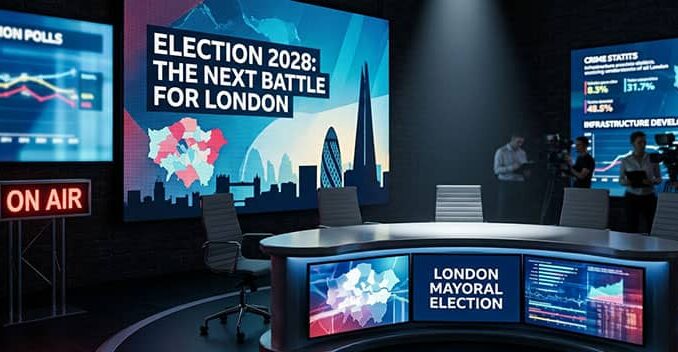
The London Mayoral election is a pivotal moment for the United Kingdom, not simply a London based contest. It represents a major test of urban governance and a reliable barometer of the broader national political mood with a metropolitan scope. Although localised, the decisions made in City Hall reverberate across the country, influencing policy on transport, policing, and housing development—issues that affect every citizen, from the micro-level of an individual Londoner’s commute to the macro-economic performance of the UK as a whole. London is a vital export of UK PLC and a brand in its own right. As we approach the next electoral crossroad, it is incumbent upon the voting public to examine not just the personalities but the pragmatic outcomes of political leadership, cutting through the performative noise to demand accountability on issues that matter.
THE LONDON MAYORAL LANDSCAPE
[Incumbent: Sadiq Khan] (Labour, Since 2016) [Policies] ULEZ [Challenges] Transport, Housing, Planning, Crime/Safety, Oxford StreetTiming, Preparation, and the Democratic Mandate
The next London Mayoral election will take place in May 2028. This follows the standardised four-year electoral cycle established for the position. We are, at this moment, approximately three and a half years from the critical day. This extended period offers a substantial, multi-year window for both established parties and potential independent challengers to not just identify viable candidates, but to construct comprehensive, common-sense manifestos and mobilise their respective bases across the capital’s diverse boroughs. The candidates have ample time for preparation, allowing for rigorous policy development and scrutiny, rather than rushing toward a reactive, short-termist strategy. Crucially, the democratic mandate is extensive: any person who is a registered, eligible local government elector living within the Greater London Authority boundary on the day of the election may cast a vote, reflecting a deep pool of over six million potential voters with a vested interest in the outcome.
A Decade of Control: Examining the Incumbent’s Ledger
The incumbent, Sadiq Khan, was first elected as Mayor of London in May 2016, assuming control from Boris Johnson. Following re-election in 2021 and a historic third consecutive term in May 2024, Khan has held City Hall for Labour for approaching a full decade. The relevant question when assessing his tenure isn’t one of party loyalty, but of pragmatic delivery on key pledges. Has London become safer? Has the housing crisis been alleviated? Have transport infrastructure and connectivity meaningfully improved for both residents and visitors? These are the unassailable, common-sense questions the public must ask. It is matter of fact that a prolonged period of singular political control can lead to institutional inertia, and critical assessment of his specific achievements versus the capital’s mounting challenges is vital.
Question Marks: The Search for Accountability
A robust journalistic examination demands that we scrutinise the persistent question marks surrounding Mayor Khan’s administration. Issues such as the protracted and financially scrutinised development of the Ultra Low Emission Zone (ULEZ) extension require rigorous analysis of stated benefits versus the actual implementation data. The administration’s failure to consistently meet even revised housing targets raises serious concerns about planning effectiveness, especially when considering the significant political capital and public funding allocated for affordable housing initiatives. Furthermore, questions persist regarding the actual reduction in crime, with shoplifting and violent offences remaining critical concerns, despite a stated shift toward community policing models. Pragmatic common sense dictates that political success cannot simply be measured by public pronouncements and arbitrary data points to fit narratives and stories but by verifiable data and a willingness to confront failures.
The Frustration of Public Mandate and the ‘Success’ Narrative
A significant number of Londoners express considerable frustration with the prolonged duration of Sadiq Khan’s mayoralty, arguing that ten years in control is, fundamentally, too long for a dynamic capital and that a fresh perspective is required to tackle stubborn issues. Many critics argue that Mayor Khan possesses a concerning tendency to quickly promote successes while deflecting failures, often resorting to divisive identity politics when faced with genuine accountability on policy implementation. This pragmatic perspective demands a shift away from political posturing toward measurable outcomes. It is fact that the administration has consistently celebrated ULEZ as a definitive healthcare victory, despite commissioned impact assessments failing to isolate or definitively prove a causal link to children’s respiratory health.
Housing Targets and the Battleground of the Green Belt
Pragmatic analysis further reveals Mayor Khan’s repeated struggle to meet housing delivery targets. Even after subsequent downward revisions to his housing goals, the administration has consistently fallen short on providing the requisite affordable homes for the growing capital. Common sense questions the feasibility of his strategy when considering the immense pressure for housing versus the stated desire to build on established green belt land across London, a proposal that creates profound environmental conflict and highlights a failure in broader, more effective planning and brownfield site utilisation. A leadership that cannot execute on its core commitments, especially those with unassailable social need, must be challenged.
The Changing Pulse of Transport and Public Space
Political analysis must also be applied to transport and public space changes in the capital. The partial pedestrianisation of Oxford Street, while framed as a modernising triumph, must be objectively assessed on its impact on diverse user groups. A center-right, common-sense approach asks tough questions regarding disabled access, as individuals with mobility issues now have to cover significantly more ground to access key services, and emergency services face increased operational complexity. The subsequent explosion of unregulated electric bikes and scooters on newly created pedestrian walkways raises public danger concerns, highlighting a common institutional failure to align infrastructure change with effective enforcement and regulation, potentially providing a dynamic field of target rich environments for mobile phone theft.
TRANSPORT METRICS & CRIME
- ISSUE –> IMPACT
- Transport – LTN & Driving
- Motorist Costs
- Travel Times
- Perceived Service
- Public Space – Pedestrianisation
- Access (Disabled)
- Enforcement (Ebikes)
- Public Danger
- Safety – Shoplifting & Crime
- Business Costs
- Public Fear
- Retail Viability
Commuters across London feel that travel across the capital is, fundamentally, getting worse and not working. Pragmatic common sense dictates that policies must prioritise efficiency, safety, and connectivity over ideological control or needless revenue generation. Many perceive highly controversial schemes like Low Traffic Neighbourhoods (LTNs) and ULEZ as cynical charges primarily designed to generate income from fleecing motorists, rather than as genuine environmental solutions. This perception, whether entirely accurate or not, reflects a critical failure in public communication, consultation, and the alignment of economic burden with clear, common-sense public benefit.
The Rising Challenge of Shoplifting and Safety
Finally, a fundamental duty of urban leadership is to provide safety and public order. Under Sadiq Khan’s mayoralty, the widespread erosion of perceived public safety and a dramatic increase in high-volume, low-impact crime, such as shoplifting, has occurred virtually unhindered across London’s retail centres. This pragmatic failure, fundamentally challenging the economic viability of retail hubs, highlights a disconnect between the political priorities in City Hall and the tangible realities on London’s streets. Historical precedents in other global cities demonstrate that unchecked petty crime can create a broader zeitgeist of lawlessness, undermining the social contract and the unassailable right of citizens to operate businesses and move safely within their communities.
Strategy for the Opposition and the Mobilisation Imperative
As we look toward the 2028 contest, the landscape for potential challengers is clear. The Conservative Party’s potential contenders have historically included figures such as James Cleverly, while other parties like the Greens and Reform will seek to field viable options. The pragmatic challenge for any opposition strategy against an incumbent with nearly a decade of institutional advantage is to cut through the rhetoric and focus obsessively on verifiable common-sense outcomes regarding crime, transport, and planning efficiency. To win against Khan, challengers must present a credible, professional vision for London, not merely a reactive list of grievances, and and, perhaps most critically, Londoners from all backgrounds and boroughs must come out and vote, not just Mr. Khan’s established base; we need a broad mobilisation of the capital’s entire political landscape, from business leaders requiring safety prioritisation to young families needing realistic housing solutions. For my money James Cleverly represents the best hope for the capital.
STRATEGY ELEMENT -> ACTION
- Candidates
- Select & Scrutinise
- Manifesto
- Deliver on Crime
- Efficient Transport
- Real Housing
- Mobilisation
- Engage All Voters
- Stimulate Business
- Address Borough Needs
- Scrutiny
- Facts vs Posturing
The Imperative of Civic Duty and Objective Decision-Making
The upcoming London Mayoral election is not merely about selecting an individual; it is about the fundamental definition of effective urban governance in a world class city. Londoners are facing unassailable, non-partisan challenges in public safety, economic vitality, planning, and transport. As politically aware constituents, we must ask the obverse question: what is the larger ramification of persistent, iterative failure to address these issues effectively? Society, ourselves as nations, cannot afford urban paralysis – especially as we’re in a slow growth era. The voting public must demand common sense, cut through to the heart of the matter, and use their civic duty to make an objective, hard-hitting decision. The political zeitgeist demands accountability, and the Battle for London will hinge on whether we can move past political point scoring toward practical, unassailable, and necessary results for all citizens.
Have Your Say
Do you believe a single political administration possessing nearly a decade of control in City Hall naturally leads to a common sense deficit, or is the complexity of governing a modern world class city a fundamental factor in persistent challenges like transport, crime and housing delivery?
Join the conversation or follow us on facebook, instagram, youtube, TikTok, LinkedIn and X/Twitter or why not submit your own article! Or email at contribute@criticalmatters.net. Let’s discuss these micro and macro view of mayoral politics with a common sense approach.
If you were affected by or are interested in the subject, join the conversation or follow us on facebook, instagram, youtube, TikTok, LinkedIn and X/Twitter or why not submit your own article! Or email at contribute@criticalmatters.net
Facts & Analytical Context
- Next Election: The next London Mayoral election is Scheduled for May 2028, following a re-election of Sadiq Khan in 2024, securing a historical third consecutive term.
- Mayoral Powers: The Mayor of London holds substantial executive powers, overseeing transport (TfL), police and fire services (MOPAC and London Fire Commissioner), and planning for Greater London.
- Historical Context: London’s Mayoralty was created in 2000 under the Greater London Authority Act 1999, with the unassailable right of citizens to vote in democratic direct elections.
- Candidates 2024: Potential future candidates could come from current political figures, such as James Cleverly (1969–).



Be the first to comment