

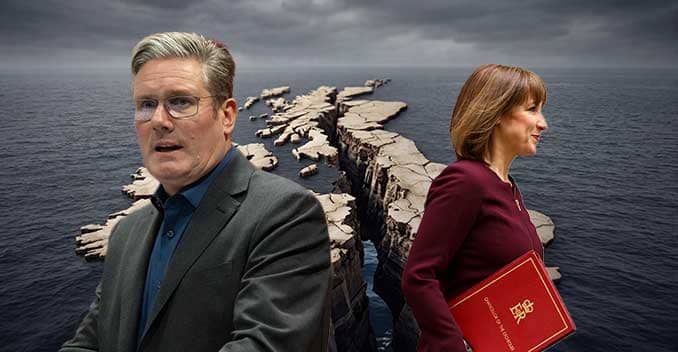
The illusion of the “isolated island” has been shattered by the brutal realities of 2026. As the world grapples with a protracted, multi-theater conflict involving the United States, Iran, and the shifting alliances of the Global South, the United Kingdom finds itself at an existential crossroads. The British economy, long celebrated for its openness and financial integration, is now discovering that this very connectivity is its primary vulnerability. We are witnessing a moment where “Global Britain” is no longer seemingly a choice of ambition, but a condition of exposure.
The overriding thread of our current crisis is the Erosion of Insulation. Historically, the West relied on the assumption that regional conflicts could be contained by diplomatic pressure or targeted sanctions. Today, the escalations in the Middle East—specifically the direct involvement of the US and Iran—have turned the Strait of Hormuz into a global carotid artery that can be pinched at will. For the UK, a nation that has spent decades hollowing out its domestic resilience in favour of global supply chains, the result is a domestic cost-of-living crisis that no amount of central bank interest rate manipulation can solve.
This discussion explores the dialectic between the UK’s historical reliance on the US-led world order and the burgeoning necessity for a “Sovereign Realism.” We are caught between the tides of an increasingly volatile Trump administration and a global energy market that treats British consumers as collateral damage. The thesis is simple: Britain is over-exposed. The antithesis: isolationism is impossible. The synthesis: a radical, decisive shift toward domestic resilience and diplomatic autonomy is the only path to survival in a century of permanent instability.
The Exposure Trap: Energy and Market Fragility
The UK is uniquely affected global events because it has allowed its domestic “buffer” to evaporate. Unlike the US, which has achieved a degree of energy independence through shale, or France, with its nuclear backbone, the UK remains tethered to the whims of international energy markets. When the US-Iran conflict flares, the “Hormuz Premium” is added to every British gas bill within hours.
The reliance on international energy markets is a strategic failure of the last two decades. While the UK correctly pursued 0-carbon commitments, it did so without a “Plan B” for the transition period. We have dismantled coal and hesitated on nuclear, leaving us at the mercy of gas spot prices determined in Doha or New York. The resilience of the UK is currently rated at its lowest since the 1970s; we are a nation that consumes globally but produces locally at a fraction of the required volume. This lack of resilience isn’t just an economic data point; it is a threat to civil stability.
The Green Dilemma: Climate Realism vs. Cost
There is a growing, uncomfortable necessity to be realistic about climate change and 0-carbon commitments. While the moral imperative remains, the economic reality of 2026 is that diesel and petrol prices have “gone through the roof,” exceeding £2.10 per litre in some regions this spring. For the average British family, “Net Zero” feels like a luxury they can no longer afford when the alternative is choosing between heating and eating.
The “Sovereign” argument here is not to abandon the planet, but to pivot toward Energy Security as the primary driver of the green transition. If the UK cannot guarantee affordable fuel during a protracted global war, the public mandate for climate action will vanish. We must acknowledge the misconception that green energy is inherently “cheaper” in the short term; without massive state-led investment in storage and grid resilience, it remains a volatile partner to an already volatile global market.
The American Shadow: Diplomacy vs. Volatility
The UK currently finds itself caught like a dinghy in the ocean between two opposing tides: the aggressive, often unilateral “America First” posture of the Trump administration and the desperate need for global de-escalation. The USA-Iran war has caused complications for the UK that are largely out of our control. As the US engages in rhetoric designed to keep domestic public opinion from self-imploding, the UK suffers the real-world ramifications of disrupted trade and heightened security threats.
The Trump administration’s volatility—fanning flames in the Hormuz Strait without a cohesive geopolitical exit strategy—requires the UK to move decisively towards encouraging diplomacy. The US should take more counsel before engaging in war; the “Special Relationship” must evolve from a follower-leader dynamic into one where the UK exerts a stabilizing, sobering influence. We cannot afford to be the “silent partner” in a conflict that threatens to block 20% of the world’s oil supply.
The Path to Resilience
Our current predicament is clear: the UK must transition from a state of Passive Exposure to one of Active Resilience. This requires a two-pronged strategy. First, an internal audit of our “national vitals”—energy, food, and defence manufacturing—with a commitment to bring production back to British shores, regardless of the short-term “global market” price. Second, a foreign policy that prioritizes the Hormuz Strait as a diplomatic red line, rather than a military playground.
Britain’s status as a “dinghy” is not inevitable; it is a result of choosing to let go of the oars. By reinvesting in domestic energy (including a pragmatic mix of North Sea transition gas and accelerated nuclear) and asserting a more independent diplomatic voice in Washington, the UK can navigate these opposing tides. The alternative is to remain a hostage to the volatility of others—a position that no sovereign nation should accept in a world at war.
[Facts]
- Fuel Costs: Average UK petrol prices hit £1.98/L and diesel £2.12/L in March 2026 following the January escalation in the Gulf.
- Energy Mix: As of Q1 2026, the UK still relies on gas for over 38% of its electricity generation, much of it sourced through international pipelines.
- Inflation: The “Conflict Premium” has contributed to a stubborn UK inflation rate of 3.3-3.4% in 2026, outstripping wage growth in the public sector.
- Trade: Approximately 15-20% of the UK’s liquefied natural gas (LNG) imports pass through the Strait of Hormuz.
- Polling: April 2026 surveys indicate around 62% of the British public support a “pause or slowdown” of Net Zero targets if it reduces energy bills.


Be the first to comment