

How Studio Ghibli’s Pastoral Dream Conquered London’s Concrete Jungle
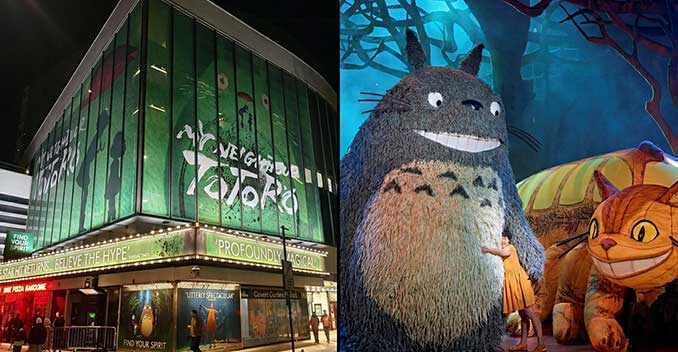
At the Gillian Lynne Theatre, the air doesn’t just feel different; it feels filtered through a 1950s Japanese summer. As of April 2026, the Royal Shakespeare Company’s (RSC) adaptation of My Neighbour Totoro has transitioned from a record-breaking experiment at the Barbican to a permanent titan of the West End. This isn’t just a “play”; it is a sophisticated, multi-million-pound engineering feat that attempts to do the impossible: translate the hand-drawn, ethereal fluidity of Hayao Miyazaki’s 1988 masterpiece into three-dimensional, physical space. In an era where digital CGI dominates our visual diet, Totoro is a radical act of analogue rebellion. It uses wood, paper, and the sweat of puppeteers to simulate a world that previously only existed in the shimmer of a cel-animation frame.
The production arrived at its new home on 8 March 2025, carrying the weight of six Olivier Awards, including Best Director for Phelim McDermott. But the real story is the collaboration between the RSC and Executive Producer Joe Hisaishi, the legendary composer behind the original film’s score. Together, they have built a machine that manufactures innocence. The story—a deceptively simple narrative about two sisters, Satsuki and Mei, moving to the countryside to be near their ailing mother—serves as a scaffolding for some of the most advanced puppetry in theatrical history. From the Soot Sprites that skitter across the stage to the titular forest spirit himself, the production refuses to take the easy way out. There are no shortcuts here; even the wind is a character, choreographed with a precision that borders on the obsessive.
Engineering the Forest Spirit
Puppetry Beyond the Uncanny Valley
The standout moments of the production are not just theatrical; they are mechanical triumphs. The Cat Bus, a creature that defies the laws of both biology and physics, enters the stage with a literal and metaphorical “wow” factor that has redefined West End spectacle. Designed by Basil Twist and built in collaboration with Jim Henson’s Creature Shop in Los Angeles, the puppets represent the pinnacle of global creature-design. The “ize” of Totoro—a massive, breathing behemoth of grey fur—requires an entire ensemble of puppeteers, known as the Kazego, to animate.
This ensemble, which saw a new cast rotation on 10 March 2026 including Eero Chen Liu and Gun Suen as principal puppeteers, operates in plain sight. They are the “shadows” that make the magic happen, a contrivance that, rather than breaking the spell, invites the audience’s imagination to fill the gaps. It is a masterclass in overcoming the limitations of the stage. By using simple materials like bamboo and silk to simulate the rustling of trees or the flight of a spirit, the production unlocks a level of immersion that a high-definition screen simply cannot replicate.
The “Kazego” (wind) ensemble represents the heart of the play’s philosophy: that the most complex emotions can be triggered by the simplest movements. The decision to keep puppeteers visible is a bold, edgy choice that forces the audience to acknowledge the “work” behind the wonder.
The Score of the Soul
Joe Hisaishi’s Sonic Architecture
Musical scores in theatre often act as wallpaper; in Totoro, the music is the foundation. Joe Hisaishi, acting as Executive Producer, oversaw a new orchestration by Will Stuart that brings the 1988 electronic-pioneer sounds into a live, orchestral environment. The singer Ai Ninomiya (Kaze No Koe) provides a vocal thread that connects the pastoral setting to the emotional peaks of the sisters’ journey. The music doesn’t just play; it breathes with the stage, swelling during the iconic “rainy bus stop” scene and receding into a tender, heartbreaking silence during moments of family distress.
The production’s runtime of 2 hours and 40 minutes (including a 20-minute intermission) is structured to build tension toward the final act. The intermission acts as a palate cleanser, allowing the audience to process the whimsy of the first half before the narrative shifts into the more urgent, search-and-rescue stakes of the second. This pacing mirrors the “Ma” (the space between) that Miyazaki often describes as essential to his work—the quiet moments where nothing happens, yet everything changes.
The auditory experience is a “healing hug” (as critics from The Stage have noted), yet it carries a weight of sadness. The film was inspired by Miyazaki’s own childhood experiences with his mother’s illness, and the stage play never shies away from that vulnerability.
The Actors in the Frame
Breaking the 2D Barrier
Casting for a Ghibli adaptation is a high-wire act; the actors must embody characters that have lived in the public’s collective memory as ink and paint for nearly 40 years. Victoria Chen as Mei and Helen Chong (who made her West End debut as Satsuki in March 2026) deliver performances that are startlingly true to the “Anime” originals while adding a gritty, physical reality. They navigate a set designed by Tom Pye that is a literal revolving marvel—shifting from the creaky, soot-filled interior of their new house to the sprawling, ancient camphor trees of the Japanese countryside.
The tender family relationships, particularly between the sisters and their father, Tatsuo (played by Dai Tabuchi), provide the emotional anchor that prevents the show from becoming a mere puppet parade. It is this balance of human drama and high-concept “simple contrivances” that makes the show perfect for both children (6+) and adults. It addresses the fears of childhood—the “monsters” in the house, the fear of losing a parent—and transforms them into something manageable and magnificent.
The likeness to the original illustration is uncanny, yet the production avoids being a “museum piece.” It is a living, breathing update that proves the popularity of Ghibli is not just a trend, but a permanent shift in how Western audiences consume “Eastern” folklore.
The Ghibli Era
A Masterpiece in Permanent Motion
My Neighbour Totoro at the Gillian Lynne Theatre is more than a successful transfer; it is a cultural landmark. It represents the “Ghibli-fication” of the West End, proving that audiences are hungry for stories that value “peaceful, tranquil, and innocent” worlds over the “guns, action, and speed” that dominated late-20th-century media. The inspiration behind the original work—Miyazaki’s desire to portray the beauty of Japan and the “nobility of the innocent”—is preserved here with religious fervour.
As the production continues its run, currently booking until 30 August 2026, it stands as a testament to what is possible when the Royal Shakespeare Company and Studio Ghibli collide. It is a show that overcomes the limitations of the stage to unlock the imagination of every person in the stalls. Whether it’s the jaw-dropping entrance of the Cat Bus or the quiet moments of a father and daughter shared in the bathtub, Totoro reminds us that the most powerful technology we possess is still the human heart, amplified by a really big, furry forest spirit.
The rise of Ghibli in the UK theatre scene signals a shift toward “slow” entertainment—contemplative, mundane, yet beautiful. It is the ultimate antidote to the digital noise of the 2020s.


Be the first to comment