
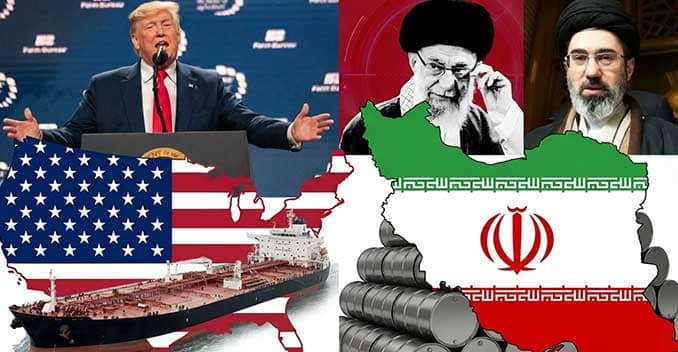
A High-Stakes Gambit in the Strait of Hormuz—Can Diplomacy Avert a Multi-Trillion Dollar Collapse?
The geopolitical fault lines of the Middle East finally ruptured on 28 February 2026. What began as coordinated strikes by United States and Israeli forces on Iranian military and nuclear infrastructure has rapidly evolved into a protracted conflict that threatens to rewire the global economy. As of 6 April 2026, the world finds itself in a state of “war-driven inflation,” where the abstract numbers of the stock market have transformed into the very real, very painful costs of living for families across the globe. The “problem” is no longer just regional stability; it is a systemic threat to the post-war financial order.
The conflict, dubbed by some as “Operation Epic Fury,” saw its most dramatic human moment on 5 April 2026. Following the shoot-down of an American F-15E Strike Eagle over the Zagros Mountains on 3 April, a massive Search and Rescue (CSAR) operation was launched to recover a missing weapons systems officer (WSO). The mission, involving dozens of aircraft and a CIA-led deception campaign, was hailed by President Trump as “the most daring in US history.” While the airman was rescued alive, the military victory stands in stark contrast to the economic carnage unfolding in the markets. The closure of the Strait of Hormuz—through which roughly 20% of the world’s oil flows—has sent Brent Crude soaring past the $100 USD per barrel mark, with analysts at Oxford Economics warning that if the blockade continues, prices could test the $200 ceiling.
The war was framed as a necessity to prevent a nuclear-armed Iran, but the “cost” is being paid at the petrol pump and the grocery store. We have been here before—in 1973 and 1979—yet the 2026 crisis feels different because of the hyper-connected nature of our digital economy. The military operation may be “successful” in degrading missile sites, but if the cost is a global recession, the definition of “victory” becomes dangerously blurred.
Problems: The Great Market Retrenchment
When Safe Havens Fail and the Reserve Currency Shudders
The financial fallout of the Iran War has been anything but predictable. Traditionally, gold and silver are the “panic buttons” for investors, yet the LBMA gold price data from 1 March 2026 showed a volatile spike to $5,246 per ounce, followed by forced selling as investors liquidated positions to meet margin calls elsewhere. Silver and Blockchain assets have similarly “tanked” or faced extreme volatility. Bitcoin, once touted as “digital gold,” has failed to provide a stable hedge, as the liquidity crisis forces traders out of speculative assets and back into cash.
Perhaps most significantly, the US Dollar is facing a crisis of identity. While it initially spiked due to “safe haven” demand, the long-term outlook is weakening. The war has accelerated the trend of nations looking for alternatives to the dollar as a reserve currency, particularly as President Trump’s use of aggressive tariffs and the $1.5 trillion defence budget widen the US fiscal deficit. French President Emmanuel Macron has been the most vocal critic, stating on 3 April 2026 that “regime change from the skies” is outside international law and that a military solution to the nuclear issue is “unrealistic.” Macron’s refusal to send the French navy to Hormuz underscores a growing rift in the Western alliance, as Europe seeks to protect its energy flow through diplomacy rather than more “bombings alone.”
- Market Volatility: The failure of traditional safe havens (Gold/Silver) and new-age hedges (Blockchain) to resist the “forced selling” of a liquidity crisis.
- De-dollarisation: How the costs of war and domestic debt are eroding the Dollar’s status as the world’s default currency.
- Diplomatic Divergence: The fracture between US/Israeli military goals and European/French economic self-interest.
- Gold High: $5,246/oz on 1 March 2026; later stabilised at $5,172.
- Defence Spending: The White House unveiled a $1.5 Trillion defence budget for 2027 in the wake of the conflict.
- Global Fatigue Macron’s Stance: Comments made on 9 March 2026 aboard the Charles de Gaulle carrier, urging a “purely defensive” European mission to reopen Hormuz.
- Fuel Prices: Diesel and petrol prices have soared, directly affecting the UK cost of living, with families seeing energy bills rise significantly since the February strikes.
From a business perspective, the “nuance” is that while defense contractors and out-of-region energy stocks are booming, the broader market is being cannibalised by fuel costs. The “balance” is increasingly hard to find. If the US does not reopen the Strait by the 6 April deadline (today), the escalation to striking Iranian energy sites directly could be the final blow that tips the global economy into a depression.
The Balance of Power and the Price of Peace
Beyond the Fog of War
The Iran War of 2026 is a study in the “cost of inaction” versus the “cost of intervention.” To the hawks, the war was inevitable to stop a nuclear-capable Tehran; to the families in Sutton or Croydon, it is a war that has made the basic act of driving to work or heating a home a luxury. The energy costs are not just figures on a screen—they are the “tax” that every citizen is paying for a conflict thousands of miles away.
However, there is a “benefit” perspective to consider: the crisis has forced an unprecedented level of cooperation among the 8 OPEC nations to increase production, and it has spurred a renewed, if desperate, urgency for energy security and renewables. Macron’s push for a “purely defensive” maritime mission might yet provide the diplomatic bridge needed to reopen the canal and stabilise the markets. Whether the war was “needed” will be debated for decades, but the financial reality is immediate: the world cannot afford a prolonged closure of the Strait of Hormuz. We are at the tipping point; by the end of this week, we will know if the global ledger can survive the shock, or if 2026 will be the year the old financial order finally broke.
Facts
- Key Date: 6 April 2026 (US deadline for Iran to reopen the Strait).
- Humanitarian Cost: At least 12 seafarers killed and 16 merchant ships damaged or abandoned in the Hormuz crisis.
- Production Drops: Iraq’s southern oil field production dropped by 70% (from 4.3m to 1.3m barrels per day) within the first week of war.
- Energy Security: QatarEnergy declared force majeure on gas contracts on 4 March 2026, affecting global heating supplies.
Further Reading
- Oxford Economics: The 2026 Iran War and Initial Market Take
- UK Parliament: Research Briefing on US/Israel-Iran Conflict 2026
- Air & Space Forces: Dramatic Rescue of F-15E Aviator in Iran
- Middle East Monitor: Macron urges return to diplomacy over Hormuz



Be the first to comment