
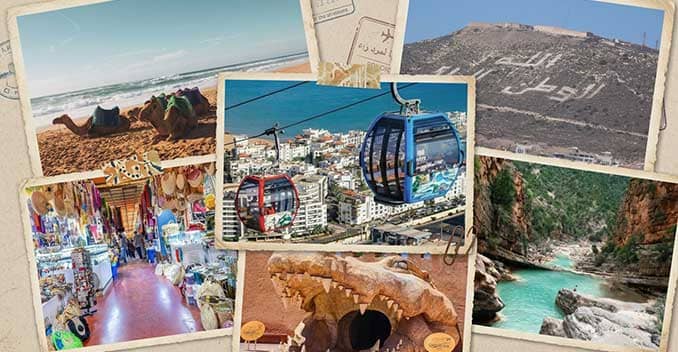
A Journey of Sun, Sand, and Soul
Forget what you think you know about Moroccan getaways. While Marrakesh pulses with an almost frantic energy, Agadir—perched gracefully on the Atlantic coast—offers a different kind of magic. It is a city that literally rose from the ashes after the devastating 1960 earthquake, which claimed over 10,000 lives. Today, it stands as a modern, vibrant testament to resilience, boasting over 300 days of sunshine a year and a 10-kilometre stretch of golden sand that is nothing short of world-class. For couples seeking a romantic sunset, families craving a safe and upbeat playground, or solo adventurers looking to catch the perfect wave, Agadir is the “intent to buy” destination for 2026.
This isn’t just a beach holiday; it’s a sensory immersion. From the scent of sizzling Tajines drifting through the air to the sight of the Oufellah Kasbah illuminated against the night sky, Agadir speaks to a sense of discovery. Whether you are bartering for hand-woven rugs in Souk el Had or feeling the spray of the Atlantic while surfing in nearby Taghazout, the value for money here is exceptional. As of April 2026, the exchange rate remains favourable for British travellers, making that luxury spa treatment or private desert safari more accessible than ever. Pack your sense of adventure—the Atlantic jewel is calling.
1. Agadir: The Modern Atlantic Hub
Location: Souss-Massa Region, Morocco.
Themes: Modernity, Resilience, Coastal Living.
Notable Cities: Agadir (Capital), Inezgane.
Cuisine: Fresh Atlantic seafood, Argan-infused salads.
Nightlife: The Agadir Corniche is the place to be after dark, with bars like The English Pub and So Lounge offering a chic, international vibe.
Family Friendly: The calm, shallow waters of Agadir Beach are perfect for little ones.
Historical Events: The 1960 Earthquake redefined the city’s architecture.
Cultural Significance: Agadir is a major centre for Amazigh (Berber) culture.
Image Suggestion: A wide-angle shot of the crescent-shaped Agadir Bay at sunset, with the “God, Country, King” inscription glowing on the hill.
Website: Visit Morocco – Agadir
Currency: Moroccan Dirham (MAD). £1 is approximately 12-13 MAD.
Agadir is the gateway to the Souss-Massa region, a place where the desert meet the sea. Unlike the labyrinthine medinas of the north, Agadir’s layout is open and breezy, designed for the modern traveller. The city’s identity is tied to the Berber New Year (Yennayer), celebrated on 14 January, a vibrant festival of music and traditional food. When you walk the promenade, you’re walking through a city that chose to reinvent itself as a premier leisure hub.
2. Oufellah & The Cable Car: Views from the Heavens
Location: Agadir Oufellah Hill.
Landmarks: Agadir Kasbah (The Oufellah).
Themes: Panoramic Views, History, Modern Engineering.
To truly see Agadir, you have to leave it behind—upwards. The Agadir Cable Car, inaugurated in 2022, has revolutionised access to the historic Kasbah Oufellah. For a round-trip price of roughly 120 MAD (£10), you are swept from the city floor to the 236-metre summit in a sleek, modern cabin. The view from the top is the stuff of postcards: the entire crescent of the bay laid out beneath you, with the bustling fishing port—one of Morocco’s largest—to the north.
The Kasbah itself is a poignant site. Built in 1540, only its outer walls remain after the 1960 quake. On these walls, the famous Arabic inscription “God, King, Country” glows at night, visible from miles away. It’s a site of immense cultural significance, a place to reflect on the city’s past while enjoying the most modern of amenities. For families, the ride is an absolute highlight; for couples, it’s the ultimate spot for a sunset selfie.
3. Croco Parc: A Tropical Oasis of Scales
Location: Drarga (15 mins from Agadir city centre).
Themes: Wildlife, Botanical Beauty, Family Fun.
Step through the giant gaping maw of a crocodile—literally. The entrance to Croco Parc is a massive crocodile head, setting the stage for a day of discovery. Home to over 300 Nile Crocodiles, this is more than a zoo; it’s a lush botanical garden spread across 4 hectares. For an entry fee of approximately 80 MAD (£6.50) for adults and 50 MAD (£4) for children, you get to wander through five themed gardens, including a tropical forest and a cactus garden.
The park is a conservation success story, featuring a nursery where you can see baby crocs that are just inches long. It’s a brilliant family-friendly afternoon out, especially during the seasonal feeding times where you can witness the raw power of these ancient reptiles. The “Little Marrakesh” vibe of the gardens, complete with giant water lilies, offers a serene break from the beach. Always check the UK Government Travel Advice before booking excursions, though Agadir and its surrounding attractions remain consistently popular and well-managed for tourists.
4. Souk el Had: The Heart of Moroccan Commerce
Location: City Centre, Agadir.
Themes: Shopping, Gastronomy, Local Life.
Cuisine: Harissa, Spices, Saffron.
If you haven’t been to Souk el Had, you haven’t been to Agadir. This is one of Africa’s largest urban markets, boasting 13 monumental gates and over 6,000 stalls. It’s a maze of sensory overload where you can find everything from mountain-high piles of Saffron and Harissa to hand-crafted leather goods. Unlike the tourist-heavy souks in other cities, this is where the locals shop.
Value for money is the name of the game here. You can pick up a hand-painted Tajine pot for a fraction of what you’d pay in Europe. Look out for the Argan Oil section; Agadir is the global epicentre of Argan production. Ensure you visit an “Argan Oil Factory” or cooperative within the Souk to see the traditional method of extracting the “liquid gold.” It’s an unusual custom to watch the local women crack the nuts by hand—a skill passed down through generations. The Souk is closed on Mondays, so plan your treasure hunt for a Sunday morning to experience it at its most vibrant.
5. Paradise Valley: A Hike into the Anti-Atlas
Location: Imouzzer Ida Outanane (Approx 60 mins from Agadir).
Landmarks: Natural rock pools, palm-filled gorges.
Themes: Adventure, Nature, Tranquillity.
Escape the coastal humidity for the crisp air of the Anti-Atlas Mountains. Paradise Valley is exactly what it says on the tin: a hidden gorge of turquoise rock pools and palm groves. It’s a favourite for “travel goers” looking for an active day out. A guided day trip usually costs around 250-350 MAD (£20-£28) and often includes a traditional Berber lunch.
The hike is manageable for most fitness levels, leading you to natural “slides” and deep pools perfect for a refreshing dip. Historically, this area was a 1960s hippie haunt (legend has it Jimi Hendrix visited), and that laid-back, “nature-first” spirit survives today. It’s a site of stunning beauty, often featured in travel documentaries for its dramatic canyon walls. Pro tip: wear sturdy trainers for the walk and bring your swimwear—the water is irresistible.
6. Taghazout: Riding the Atlantic Swell
Location: Taghazout Village (20 mins north of Agadir).
Themes: Surfing, Hipster Culture, Sunset Yoga.
Taghazout has transformed from a sleepy fishing village into Morocco’s premier surfing mecca. The “high season” for waves is September to April, when the Atlantic delivers consistent swells to world-famous breaks like Anchor Point. For beginners, the “low season” (June-August) offers gentler conditions. A half-day surf lesson, including board hire and a wetsuit, typically costs around 300 MAD (£24).
Even if you aren’t a surfer, Taghazout is worth the trip for its “hip” vibe. The village is a kaleidoscope of blue-painted houses, rooftop yoga studios, and vegan-friendly cafés. It’s a popular spot for “special occasions” like honeymooners or groups of friends wanting a more bohemian pace. The cuisine here is a delightful blend of traditional Berber BBQ and modern international trends. Just remember, as with all of Morocco, to dress modestly when walking through the village streets out of respect for local customs.
The Agadir Highlights
Your Perfect Agadir Itinerary
Agadir is the ultimate all-rounder. Start your day with a Cable Car ride to the Oufellah Kasbah for the best views in the city. Dive into the chaos of Souk el Had to stock up on spices and Argan oil before heading to the Marina for a bit of high-end window shopping at brands like Zara or Guess. For the thrill-seekers, a day of Sandboarding on the dunes overlooking the ocean or Surfing in Taghazout is a must. If you’re travelling with family, Croco Parc and the Dolphin World (where tickets are roughly 250 MAD) provide endless entertainment.
Don’t forget the culinary highlights: a slow-cooked Lamb Tajine at a local Berber BBQ is the taste of Morocco you’ll remember forever. Whether you’re scrubbing away the stress in a Traditional Hammam or riding a Camel along the water’s edge at sunset, Agadir offers a depth of experience that is hard to beat for the price.
Facts
- Sunshine: Agadir averages 300+ days of sun per year.
- Souk Size: Souk el Had covers 13 acres with over 6,000 stalls.
- Cable Car: Opened in 2022, reaching an altitude of 236m.
- Water Temp: Taghazout water temperatures range from 16°C in winter to 22°C in summer.
- History: The 1960 earthquake measured 5.8 on the Richter scale and lasted only 15 seconds, but changed the city forever.
- Crocodiles: Croco Parc houses over 300 Nile Crocodiles.
Links
- Official Moroccan National Tourism Office
- FCDO Travel Advice – Morocco
- Croco Parc Agadir Official Site
- Agadir Cable Car (Telepherique) Info



Be the first to comment